
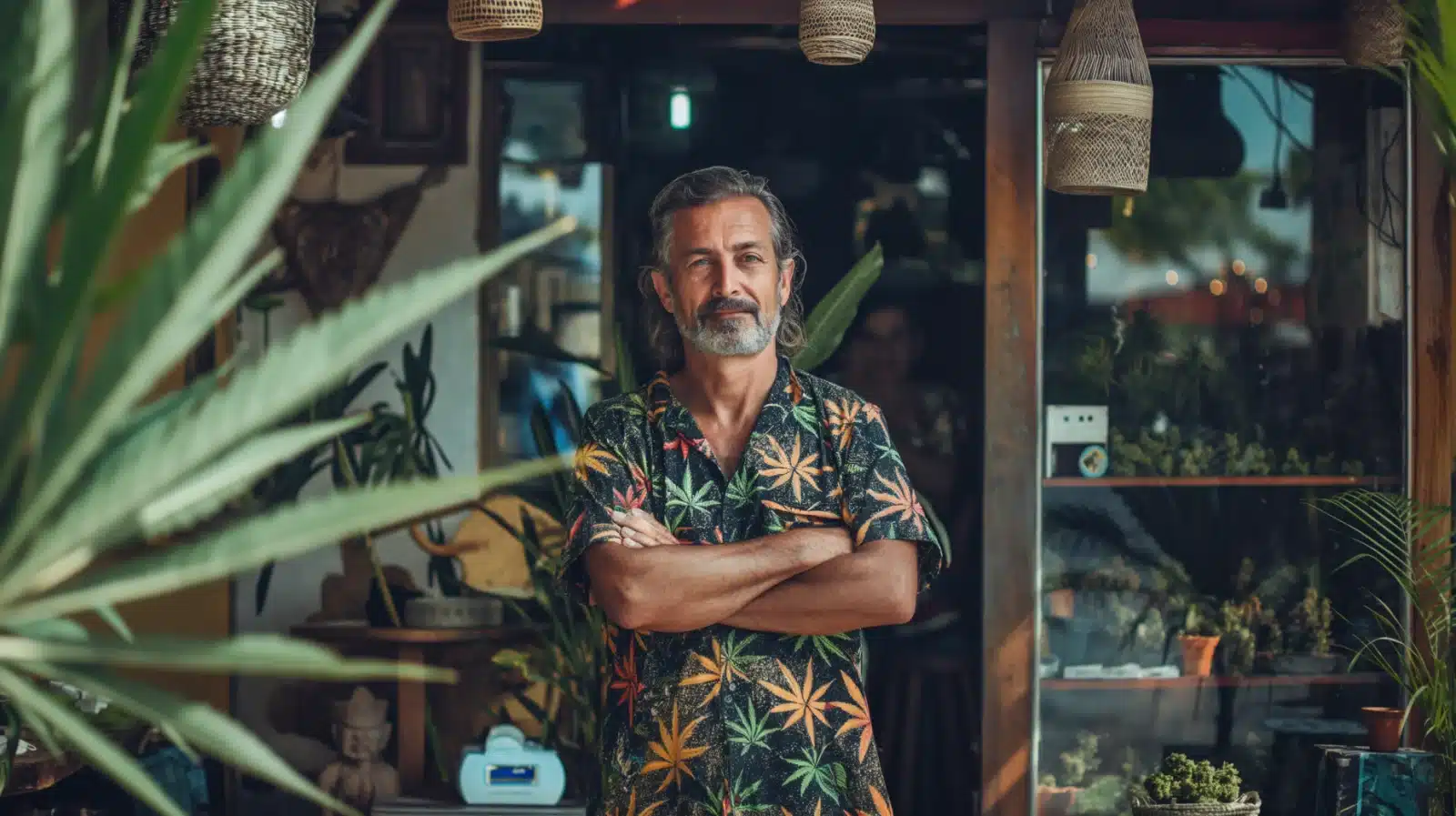
In June 2022, Thailand became the first Asian country to proceed with decriminalizing cannabis. Although in 2025, the Thai government has restricted its use to “medical purposes” only, it is still set to reach between USD 7.1 billion to over USD 9.6 billion by 2030. This presents a unique opportunity for foreign investors to tap into Thailand’s cannabis market.
In this article, we will provide you with unique insights about the cannabis trade in Thailand, new restrictions imposed in 2025, and a guide to starting a cannabis business in the country.
An overview of the cannabis market in Thailand
Like many of its neighboring countries, cannabis is categorized as a dangerous narcotic in Thailand under the Cannabis Act of 1935 and reinforced by the Narcotics Act of 1979. But starting around 2018 became the first in Asia to legalize medical cannabis, reflecting changing social and medical perspectives.
A major breakthrough came in June 2022 when Thailand officially decriminalized cannabis, allowing personal cultivation and use, except for extracts with more than 0.2% THC. This move was highlighted by the government’s distribution of one million free cannabis plants to households, promoting cannabis as a cash crop. The decriminalization led to the release of prisoners convicted of cannabis-related offenses and spurred a growth in cannabis businesses across the nation.
New Cannabis Regulations in Thailand in 2025
However, in 2025, the Thai government reclassified cannabis as a controlled herb, imposing new restrictions that prohibit recreational sale while still allowing medicinal use. The Ministerial Notification on Controlled Herbs (Cannabis), B.E. 2568 has imposed the following regulations on the sale and advertising of marijuana in the country:
- Sale of cannabis without a licensed medical prescription is banned. Buyers must obtain a prescription from authorized medical professionals.
- Cannabis cannot be sold through vending machines, online platforms, or in designated public places like temples, parks, zoos, and amusement parks.
- Licensed cannabis businesses must operate from owned or leased premises with adequate odor control, storage conditions, and sanitation. Lease agreements must typically be at least three years or have written consent from owners.
- Advertising of cannabis products is prohibited.
- Growers and sellers must comply with Good Agriculture and Collection Practices (GACP) certification regulated by the Department of Thai Traditional and Alternative Medicine.
- Licensed cannabis businesses must operate from owned or leased premises with adequate odor control, storage conditions, and sanitation. Lease agreements must typically be at least three years or have written consent from owners.
- Cannabis dispensaries must maintain meticulous record-keeping, report to authorities monthly, and ensure cannabis products come from GACP-certified farms.
Licenses Needed to Operate a Cannabis Business in Thailand
With new restrictions in place, businesses need to obtain specific licenses and permits to legally operate a cannabis business in Thailand. These include the following:
Medical Cannabis Dispensary License
Required to legally sell cannabis products in Thailand. Dispensaries must be licensed under the Thai Traditional Medicine Act and are only allowed to sell cannabis to patients with valid medical prescriptions.
To obtain this license, you must fulfill the following key requirements:
- The dispensary must be formally registered and licensed under the Thai Traditional Medicine Act.
- The business premises must meet hygiene, security, and odor control standards, suitable for medical use and product storage.
- The dispensary must have certified medical personnel on-site at all times during operating hours. These can be licensed medical doctors, pharmacists, or traditional Thai medicine practitioners authorized to prescribe cannabis.
- Sales of cannabis products are allowed only to patients who present valid medical prescriptions using the standardized Phor Thor 33 prescription form.
- The dispensary must implement prescription verification systems to confirm patient eligibility and ensure that cannabis products dispensed do not exceed the maximum 30-day supply allowed per prescription.
Cultivation Certification (GACP)
Cannabis growers must obtain Good Agriculture and Collection Practices (GACP) certification. A GACP ensures that cannabis is cultivated, harvested, and collected following strict quality, safety, and environmental standards consistent with international guidelines. It is issued exclusively by the Department of Thai Traditional and Alternative Medicine (DTAM) under the Ministry of Public Health.
The certification process involves detailed documentation, maintaining hygienic conditions, staff training, and environmentally friendly agricultural practices. Growers must ensure air quality, pest control, soil safety (free of harmful chemicals), water purity, and proper lighting and temperature control in growing facilities.
This certification is valid for 3 years and is required for all cannabis cultivation intended for medical use, supply to licensed dispensaries, and export.
Commercial Processing and Sales License
Businesses that research, processing, export, or commercial sale of cannabis products must obtain this license under the Thai Traditional Medicine Wisdom Protection and Promotion Act.
To obtain this license, you need to meet the following requirements:
- The business premises must be a licensed medical facility, pharmacy, licensed herbal product production or sales location, or registered workplace of a licensed traditional healer. This condition does not apply to cultivation sites.
- Applicants must own the premises, hold at least a three-year lease, or have written permission from the property owner.
- Premises must have effective odor and smoke control systems to prevent nuisance to neighbors.
- Sanitary storage facilities are required, with protection from sunlight, temperature and humidity control, no direct contact with the floor, and physical separation from other substances.
- At least one trained staff member certified by the Department of Thai Traditional and Alternative Medicine (DTAM) must be present during operating hours.
How to register a cannabis business in Thailand
Currently, cannabis businesses can only be started by Thai-majority businesses that have more than 51% local shares. This is primarily an effort by the Thai government to protect local entities against more established foreign competitors. This is also because the majority of cannabis-related activities are restricted under the FBA, notably farming and retail activities.
As stated previously, it is still possible for a foreign investor to start a cannabis business in Thailand by incorporating a Thai majority limited company. This entity type limits foreign shares at 49%, however, it is possible to retain control over your Cannabis business through the common practice of establishing preferential shares (which have increased voting rights).
Emerhub can assist you throughout the entire company registration process and will ensure that your cannabis business remains entirely compliant with Thai regulations.
Contact us via the form below and one of our advisors will get in touch to get the process started!
FAQs About Starting a Cannabis Business in Thailand
Foreigners cannot own 100% of a cannabis business in Thailand under the Foreign Business Act. Thai law mandates that cannabis businesses must be registered under Thai law with majority Thai ownership, typically requiring foreign investors to partner with Thai nationals or form joint ventures.
The cannabis industry in Thailand is regulated primarily by the Ministry of Public Health, specifically through the Department of Thai Traditional and Alternative Medicine (DTAM). DTAM oversees licensing, cultivation standards, medical cannabis prescriptions, and compliance enforcement under the Thai Traditional Medicine Act and the Ministerial Notification on Controlled Herbs (Cannabis), B.E. 2568.
Cannabis cannot be sold without a medical prescription in Thailand as of 2025. The new regulations require that all cannabis sales be conducted through licensed dispensaries strictly to patients who present valid medical prescriptions issued by certified doctors or licensed traditional medicine practitioners. Recreational sales are explicitly prohibited under this framework.
The maximum supply of cannabis per prescription in Thailand is limited to a 30-day supply. The prescription must be issued using the standardized Phor Thor 33 (ภ.ท. 33) form, which includes detailed information such as the patient’s details, intended medical purpose, daily dosage, total quantity prescribed, and the prescribing practitioner’s credentials. This form is valid for a maximum period of 30 days, after which a new prescription is required for further purchases.
Yes, cannabis products are strictly limited to medical use and must be sold only through licensed dispensaries to patients with valid medical prescriptions. Both flower-based and extract-based cannabis products are allowed, but the quantity dispensed per prescription is capped to a 30-day supply.
Smoking cannabis in business premises or public spaces is heavily regulated and generally prohibited unless part of supervised medical treatment by licensed professionals. Additionally, any cannabis product with THC content exceeding 0.2% is classified as a narcotic under the Narcotics Act and is subject to tighter controls.
