
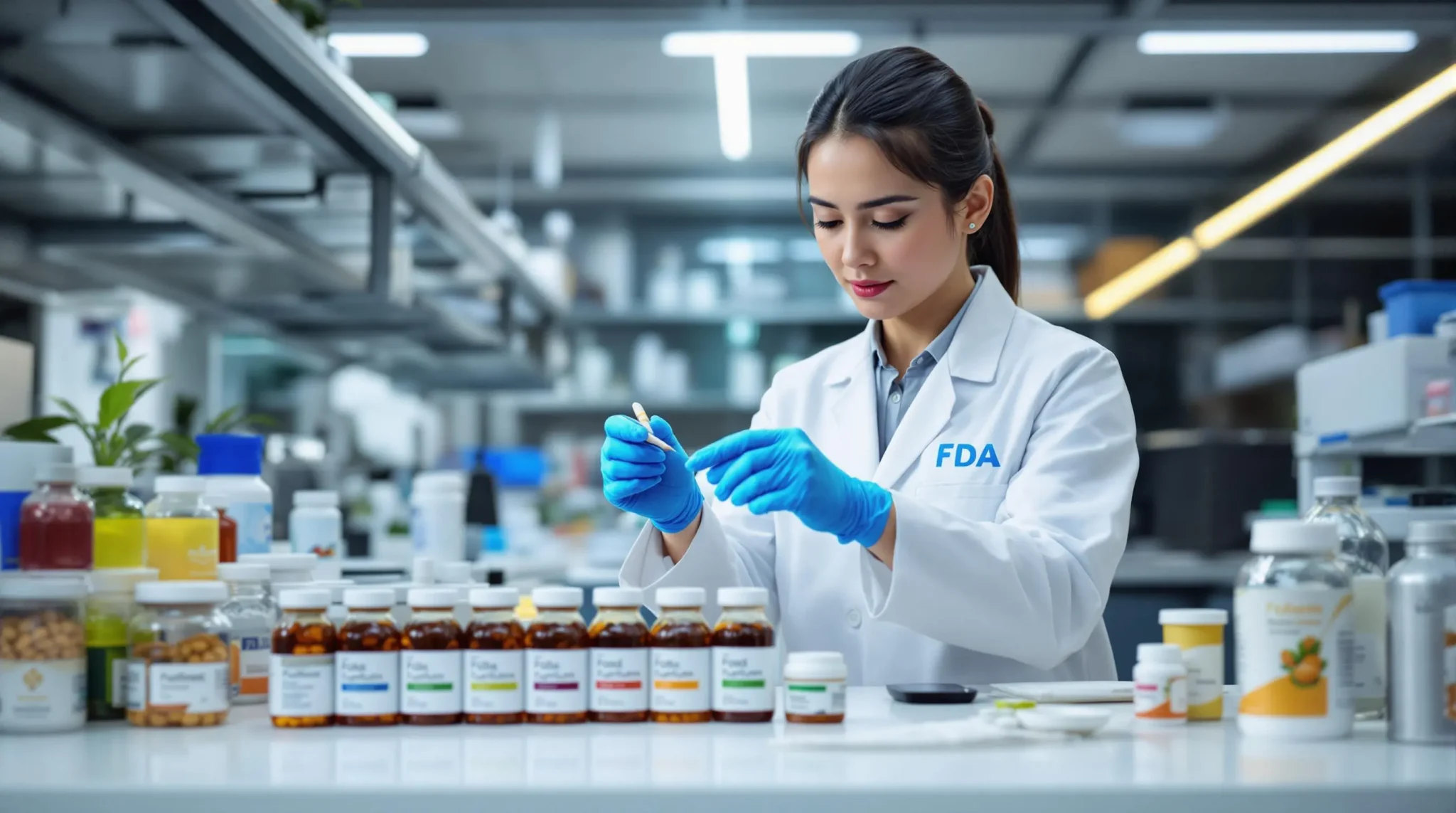
If you want to enter the food supplement market in Thailand, you must register your products with the Thai FDA. Without approval, you are not allowed to import, distribute, and sell your products in the country. You need to adhere to Thailand's strict food supplement guidelines to ensure the public’s health and safety.
In this article, we will cover what is considered as food supplements by the Thai authorities. We will also cover requirements for registration (including required documents and labeling), as well as the registration process.
Difference Between Food Supplements vs. Food Products (F&B)
According to the Ministry of Public Health (Notification No. 293), a food supplement is defined as:
"A product consumed in addition to conventional food, containing nutrients or other substances as ingredients, in the form of tablets, capsules, powders, liquids, or other concentrated forms which are not conventional foods and are intended for consumers who expect health promotion benefits."
Here’s a comparison between standard F&B vs food supplements:
Food & Beverage
- To provide energy, hydration, or basic nutrition.
- Conventional forms of food e.g. bread, snacks, bottled drinks, etc.Registered as “general food” or “standardized food”
- Very limited health claims e.g. “good for thirst”
- Features only standard nutrition facts on the label.
Food Supplements
- To supplement the diet and promote specific health functions.
- Often in concentrated forms e.g. tablets, softgels, sachets, drops, etc.
- Registered as “specifically controlled food” with the highest level of scrutiny.
- Possible health claims but requires scientific substantiation and approval.
- Needs to include Supplement-specific warnings and the "5 Food Groups" disclaimer on the label.
If your product is intended to be swallowed in a concentrated dose to provide a health benefit, the Thai FDA will almost certainly classify it as a food supplement.
This means it falls under the "Specifically Controlled Food" category, requiring a formal recipe registration and a food serial number.
Pre-requisites to Food Supplement Registration in Thailand
Food supplement registration in Thailand requires prior preparation to ensure safety and compliance of your products. It requires that you have the right facilities, documentation, and pre-approved ingredients by the Thai FDA before you can register. Let's take a look at these requirements in detail.
1. Appoint a Product Holder (For Foreign Companies)
The Thai FDA does not allow foreign companies to register products directly. Instead, you must work through a "Product Holder" (also known as a License Holder or Marketing Authorization Holder). They are responsible for:
- Post-Market Surveillance: Monitoring reports of side effects.
- Ad Compliance: Ensuring marketing materials don’t make illegal claims.
- Product Recalls: Managing the removal of defective batches from the market.
The Thai government requires a locally registered entity to take full legal responsibility for the product's safety and compliance once it enters the country. For example, if a consumer has an adverse reaction or if a product is found to be contaminated, the Thai FDA must have a "person-in-charge" within Thai jurisdiction to contact, fine, or prosecute. Emerhub can act as your Product Holder in Thailand to help you register your food supplements with the Thai FDA.
2. Comply with Food Supplement Labeling Requirements
Thailand has very specific laws regarding what must be shown on a supplement bottle. Under Notification No. 450 (B.E. 2567) effective July 19, 2024, all labels for food supplements in Thailand must be in the Thai language and include:
- Product Name – The name of your food supplement must clearly indicate that it is a food supplement.
- Food Serial Number – A unique 13-digit identification number assigned by the Thai FDA.
- Manufacturer/Importer Information – For domestically produced supplements, include the name and address of the manufacturer or re-packer.
- Net Weight/Volume – The quantity of the product must be expressed in metric units (grams, liters, etc.).
- Key Ingredients – Names and quantities of main ingredients, particularly those that are claimed to provide health benefits. Ingredients must be in descending order by weight.
- Allergen Information – Any potential allergens must be clearly indicated on the label. Under the 2024 update, shellfish and squid have been added to the list of allergens that must be clearly declared (e.g., "Contains...").
- Function Group Name – The functional class title of food additives used, along with their specific names.
- Expiration/Best Before Date: The 2024 update clarified that "Best Before" means the date until which the food maintains its quality. English date formats (DD/MM/YYYY) are permitted if accompanied by Thai text.
Under Notification 450, labels must be permanently affixed and proportionate to the packaging. One major change is that color additives no longer need to be specified as "natural" or "synthetic". You can simply state the functional class and the specific name/INS number.
3. Obtaining an Establishment License
Before the FDA reviews a single ingredient, they must approve your company and your facilities in Thailand. This stage is less about the science of your product and more about your operational infrastructure and legal presence in the country. To ensure you have the right facilities, the Thai FDA would require you to have the correct Establishment license whether you are importing or manufacturing.
Your establishment license is tied to a specific physical warehouse location. To ensure your warehouse has the proper hygiene and structural standards, an FDA officer will conduct a formal site visit for verification.
The inspector will look for specific features such as non-porous flooring (to prevent bacterial growth), adequate lighting, and proper ventilation to ensure product integrity.
For Manufacturers (Form Orr. 2)
You must obtain a Food Production License, which requires adherence to Notification of the Ministry of Public Health No. 420 (B.E. 2563) regarding GMP (Good Manufacturing Practices).
The focus shifts from your warehouse to your production facility. This includes environmental controls, quality control labs, and zoning and flow of your factory.
The Step-by-Step Registration Process for Food Supplements in Thailand
If all requirements are met, you can start the food supplement registration process. This step is focused primarily on the technical science of your products such as formulation, safety of your ingredients, and the accuracy of your labels.
Step 1: Dossier Compilation & Pre-Screening
Before formal submission, a preliminary classification and ingredient list must be checked. Emerhub’s local experts can help you review your formula against the Thai FDA's permitted ingredient list. If we find "High Risk" ingredients or prohibited substances, we advise on formula adjustments before you spend money on the application.
The process begins with an initial "Pre-Screening" by the FDA’s Food Division. This is a cursory check to ensure all required fields in the e-Submission portal are filled and that the physical documents match the digital data. If any document is blurry, incorrectly translated, or missing a signature, the application is rejected immediately at this gate.
Step 2: Formal Submission & Fee Payment
Once pre-screening is successful, the application is formally logged into the Thai FDA system, and the government processing fee is paid. This starts the official "clock" for the review timeline.
Fees can vary based on the complexity of your product. In general, food supplement registration can cost from THB 10,000 to THB 30,000 per SKU for the product registration itself, excluding lab testing and translation costs.
Our regulatory experts in Thailand specialize in FDA registration and ensure that all submissions are complete and compliant with local regulations.
Step 3: Scientific & Technical Review
After submission, the Thai FDA will conduct initial screening to check all documentation for your food supplement registration. The Thai FDA will reject the application if any document is missing or incomplete.
An FDA officer scrutinizes the formulation against the Thai RDI (Recommended Daily Intake) and the "Positive List" of ingredients. If your product contains herbal extracts, they will verify the Latin botanical names and the specific plant parts used (e.g., "root" vs "leaf"). Any ingredient not previously recognized by the Thai FDA may be flagged for a Safety Assessment, which requires additional toxicological data.
If the initial screening is successful, your application will proceed to a document review phase. The Thai FDA may allow one-time amendments to the submitted documents within 15 calendar days if any compliance issues are identified during this review.
Step 4: Laboratory Analysis (If Applicable)
For supplements with complex claims or those containing certain high-risk ingredients, the FDA may require physical samples to be sent to the Department of Medical Sciences or an accredited local laboratory. They test for heavy metals (Lead, Mercury, Arsenic), microbiological contaminants, and to verify that the active ingredients (e.g., total Vitamin C) match the claims on the label.
Be Careful with "Nutraceuticals": If your product has a very high concentration of active ingredients, the Thai FDA might reclassify it as a "Traditional Medicine" or "Drug." This changes the registration path entirely and makes it much more difficult.
Step 5: Final Approval & Issuance
Once all technical and safety concerns are satisfied, the Director of the Food Division signs off on the application. The system then generates your 13-digit Food Serial Number, and you are granted the Certificate of Food Recipe Registration (Form Orr. 18 for high-risk products) or a Certificate of Food Detail Declaration (Form SorBor. 7/1 for others). You can now print your final Thai labels and begin importing/distributing food supplements in Thailand.
Advertising Health Claims: When marketing your food supplements with health benefit claims, you are required to have an Advertising License (SorBor. 4). This includes advertisements on social media (e.g. Facebook ads, TikTok videos) or traditional media (billboards, broadcasting, etc.)
To streamline this process, Emerhub can act as your local partner in Thailand. With our regulatory experts, we can help you cross-check your ingredients list and documents before submission. We can help secure FDA approval and other necessary registrations on your behalf, especially in obtaining an Establishment license.
For more details about food supplement registration, fill out the form below for a free consultation with our local compliance experts in Thailand!
Frequently asked questions
Can I register a food supplement that contains CBD or Hemp?
As of 2025, the regulation of cannabis and hemp in Thailand has become significantly stricter. While CBD extracts containing less than 0.2% THC are technically legal for sale, they are subject to a high level of scrutiny by the Thai FDA. Products containing cannabis flowers are now classified as "Controlled Herbs" and generally require a medical prescription for sale. For food supplements specifically, the use of hemp seed oil or CBD requires a specialized registration process and must comply with strict THC limits. It is highly recommended to consult with a regulatory expert before attempting to import any cannabinoid-based supplement.
Is it possible to import samples for market testing without a full registration?
Yes, the Thai FDA does allow for the "Importation of Samples" for research, display, or laboratory testing purposes. However, these samples cannot be sold to the public. You must still apply for a specific "Sample Import Permit," providing an invoice and an affidavit stating that the items are for non-commercial use. If the quantity exceeds a reasonable threshold (usually more than a few units), the FDA may still require extensive documentation from the manufacturer to ensure the samples do not pose a public health risk.
What happens if my product's vitamin levels exceed the Thai RDI?
Thailand follows its own Recommended Daily Intakes (Thai RDI). If your supplement's dosage for a specific vitamin or mineral (such as Vitamin B12 or Zinc) significantly exceeds the RDI set for food supplements, the Thai FDA may reclassify the product as a "Drug" or "Traditional Medicine." Reclassification can lead to a much longer registration timeline (often 12–24 months) and requires the product to be sold only in pharmacies. In many cases, it is more efficient to reformulate the product slightly to stay within the supplement dosage caps.
Can a foreign individual apply for an FDA license personally?
No. To obtain an Import License or a Food Serial Number in Thailand, the applicant must be a legal entity (company) registered in Thailand. The company must have at least one Thai director or a person authorized to act on behalf of the company who is a resident of Thailand. This is why many international brands partner with a professional "License Holder" like Emerhub. We hold the licenses on your behalf, allowing you to enter the market without the overhead of setting up a full local corporate structure and warehouse immediately.
How do the 2024 labeling updates affect existing products?
The July 2024 update (Notification 450) provides a transition period for businesses. Products that were already registered and manufactured before the enforcement date are typically allowed to continue being sold until their current stock is depleted or their license expires. However, any new batches produced or imported after the transition window must feature the updated labels, including the new allergen declarations and the clarified "Best Before" text. Failure to update your label designs in time can lead to shipments being blocked at customs.