
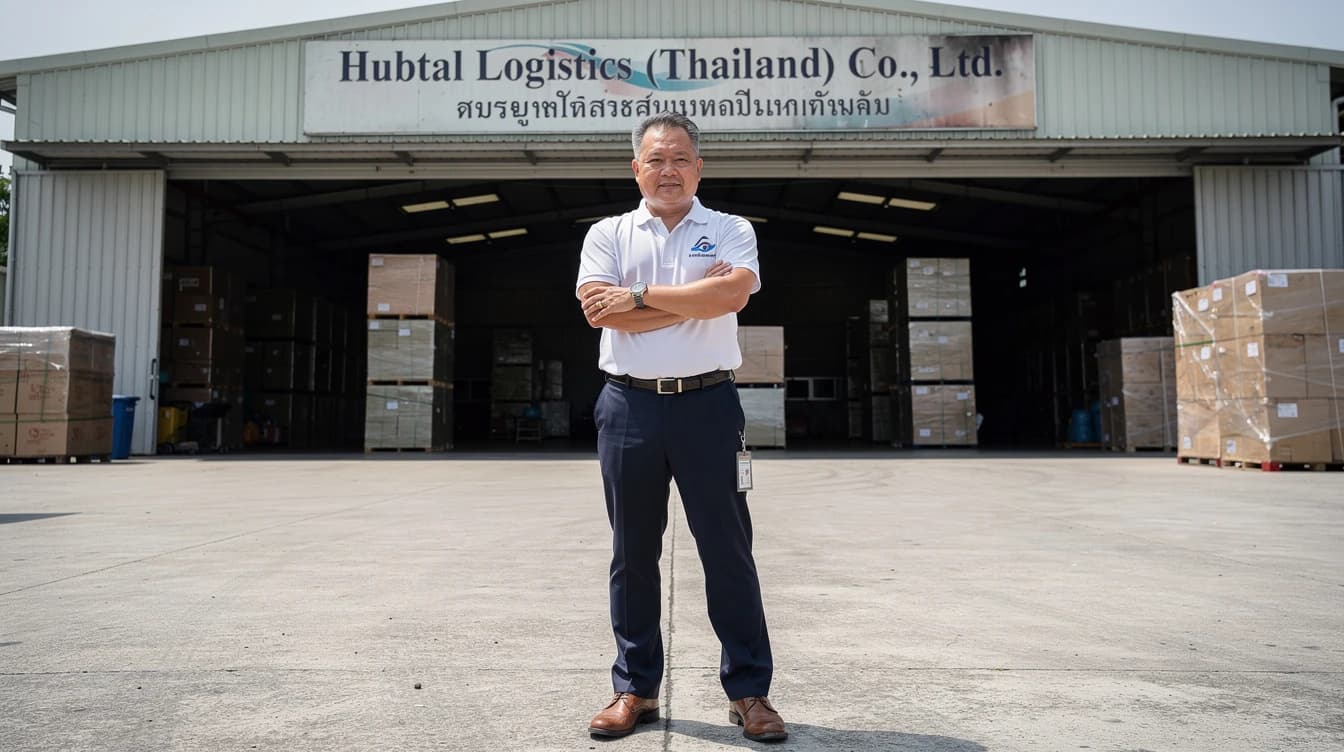
A Multimodal Transport Operator business in Thailand is different from the typical freight forwarder. As an MTO, you are the “principal” and assume full legal responsibility for the performance of the transport contract from origin to destination. This applies even when the journey involves at least two different modes of transport (such as road and sea) under a single, unified document.
Starting an MTO business or transitioning into one from a traditional logistics background can be a major regulatory challenge. You need to meet specific requirements and obtain the right licenses, particularly an MTO license before you can operate in Thailand.
In this article, we’ll walk you through the legal framework of starting an MTO business, compare ownership structures, and outline the steps to getting your MTO license.
Benefits of the MTO Model
Most small forwarders act as "agents." They find a carrier, book space, and charge a service fee. However, the legal liability stays with the actual carrier (the shipping line or airline).
As an MTO, you become the Principal. You are the one signing the contract with the shipper. While this increases your liability, it also allows you to handle high-value contracts for multinational corporations that demand a single point of accountability.
What Can You Do When You Issue Your Own House Bill of Lading (HBL)
The MTO license grants you the legal right to issue your own Multimodal Transport Document or House Bill of Lading (HBL). This indicates you are the commercial carrier for their goods. This document serves as evidence of the contract and receipt of goods, and it can be issued in either negotiable or non-negotiable form.
An HBL allows you to:
- Consolidate Cargo: You can group smaller shipments into a single container under your own document, significantly increasing your profit margins.
- Control the Data: You own the relationship with the shipper and the consignee, keeping your carrier's pricing and identities confidential.
- Speed Up Handoffs: Under a single MTO contract, you eliminate the administrative bottlenecks of switching liability every time a container moves from a truck to a ship or a plane.
For instance, if you contract to move electronics from a factory in Ayutthaya via truck to Laem Chabang Port and then by sea to Osaka, you are liable to the shipper for the entire journey. Even if the damage occurs while the goods are in the custody of a third-party trucking sub-contractor, the shipper holds you directly accountable as the principal carrier.
Issuing HBL gives you control, but also liability. As MTO, you are responsible for:
- Loss or damage of cargo
- Delays
- Multimodal risks
When is the Best Time to Transition to MTO?
If you’re a logistics agent who wants to break away from the standard freight forwarding model, you may want to consider being an MTO. The best time to transition is when:
- Volume Stability is Reached: You have consistent, recurring cargo volumes that make consolidation (LCL to FCL) profitable under your own House Bill of Lading.
- Client Demand Increases: Your key clients are large multinational corporations (MNCs) that require a single "Principal" to assume end-to-end liability for their supply chain.
- Regional Expansion is Planned: You intend to use Thailand as a hub to manage cross-border shipments (e.g., transit cargo from China to Malaysia via Thailand), necessitating a unified multimodal contract.
- Equity is Secured: You have the necessary THB 3–4 million in paid-up capital and are ready to commit to the long-term compliance requirements of the Marine Department for an MTO license.
Reach out to our local experts in Thailand on how you can transition your business to an MTO.
Legal Framework for Starting an MTO Business in Thailand
The Multimodal Transport Act B.E. 2548 (2005) specifically defines “multimodal transport” as the carriage of goods by at least two different modes of transport (e.g. truck and ship) under a single transport contract.
Here are key information you should know about:
- The MTD Document: You are required to issue a Multimodal Transport Document (MTD) or House Bill of Lading (HBL) which can be negotiable or non-negotiable.
- Statutory Liability: The Act sets specific limits on your financial exposure. Unless a shipper declares a higher value, your liability is capped at 666.67 SDR (Special Drawing Rights, 1 SDR is approximately THB 46–47) per package or 2 SDR per kilogram, whichever is higher.
- The Nine-Month Time Bar: A unique feature of this Act is that any legal claims against you must be filed within nine months of delivery. If a client waits ten months to sue for damage, the claim is legally barred which is a vital protection for your business.
Can an MTO Business have Foreign Equity?
Under the Foreign Business Act Be 2542 (1999), service businesses including logistics falls under List 3 of the FBA which is restricted to foreigners. This means that if you want more than 49% foreign ownership, you need to obtain an Foreign Business License (FBL). However, the Multimodal Transport Act does allow for foreign applicants to apply for an MTO license.
Read more about how to start a business in Thailand as a foreigner.
Choosing a Business Structure: Thai-Majority vs. 100% Foreign
A key decision you need to make when starting an MTO company is its core business structure. Because logistics is a conditional sector in Thailand, you must either have Thai majority shareholders or obtain a Foreign Business License (FBL) for 100% foreign equity.
100% Foreign-Owned + FBL (Full Control)
If you want to establish a 100% foreign-owned MTO company, you must apply for an FBL. An FBL is a permit issued by the Ministry of Commerce (MoC) that allows a foreign company to legally operate in conditional sectors.
Unlike a standard business registration, getting an FBL is not automatic. Your application is reviewed by the Foreign Business Committee. They look for "pros" such as technology transfer, specialized knowledge being brought into Thailand, and whether the business will create jobs for Thai citizens.
Since an MTO acts as a principal carrier and handles international revenue, the MoC scrutinizes these applications to ensure the company has the financial backing and expertise to handle the associated risks. An FBL takes 4-6 months to process and is a requirement before you can apply for an MTO License.
Read more about our guide on how to obtain an FBL in Thailand.
Thai-Majority Structure (Fastest Market Entry)
Under Section 4 of the FBA, a company is considered "Thai" (non-alien) if more than 50% of its capital is held by Thai nationals. By staying at 49% foreign ownership, your business is exempt from the restrictive licensing requirements for foreigners.
This allows you to bypass the discretionary Foreign Business License (FBL) process entirely. Your MTO business can be operational in 2-3 months under a Thai majority structure.
Warning: However, we don’t recommend a Thai Majority set up if you don’t have genuine Thai partners. Thai authorities are increasingly vigilant about "nominee" arrangements where Thai shareholders are just names on paper without genuine investment or participation.
Which Pathway Should I Take?
Deciding between these two structures depends on your operational priorities and your long-term vision for the business. In Thailand’s logistic sector, large international freight forwarders are typically 100% foreign-owned while smaller regional operators often choose Thai-majority for faster market entry.
Here is a summary of which pathway you should take:
Choose Thai-Majority If:
- You have trusted Thai partners and reliable local associates ready to invest and participate in the business.
- You want faster market entry: You need to be operational and bidding on contracts within 2–3 months.
- You accept shared equity: You are comfortable with shared decision-making and minority ownership.
- You want to avoid FBL uncertainty: You prefer a straightforward registration process over a discretionary licensing committee.
Choose 100% Foreign + FBL If:
- You want full control: You require 100% equity and absolute decision-making power.
- You are building a long-term regional logistics hub for a large-scale regional investment.
- You need strong group consolidation: Your global parent company requires full ownership for financial reporting and audits.
- You plan to expand into sensitive sectors: You intend to branch out into airline representation or high-tech advanced logistics.
- You want clean exit flexibility: You want the ability to sell the company or transfer shares without local shareholder complications.
To summarize, large international freight forwarders obtain an FBL to operate as 100% foreign-owned. It takes longer to set up but offers stability. In contrast, smaller regional operators often choose Thai-majority for speed.
How Long is the Establishment Process?
One of the most important factors for investors is the time required to become fully operational. The table below outlines the benchmarks for both structures based on information from our local experts in Thailand.
| Stage | Thai-Majority | 100% Foreign-Owned |
|---|---|---|
| Company Registration | 1–2 weeks | 1–2 weeks |
| Foreign Ownership | Maximum 49% | Up to 100% |
| FBL Process | Not required | 3–6 months |
| Paid-up capital | ~THB 3-4M | ~THB 3-4M |
| MTO Approval | 30–60 days | 30–60 days (Post-FBL) |
| Control of the company | Shared with Thai shareholders | Full foreign control |
| Corporate tax | 20% | 20% and 10% dividend withholding tax rate |
| Total Estimate | ~2–3 months | ~4–6 months |
Key Requirements for MTO Operations
To successfully launch and maintain an MTO business in Thailand, both Thai-majority and 100% foreign-owned structures must satisfy a set of core requirements. These requirements are pre-requisite to obtain an MTO license from the Marine Department.
Company Registration
Before applying for transport-specific licenses, you must complete your Company Registration with the Department of Business Development (DBD). This includes defining your business objectives to explicitly include multimodal transport and international freight services. For 100% foreign entities, the Foreign Business License (FBL) must be obtained and attached to your corporate profile before moving to the next stage.
Emerhub can help you register your company with the DBD with the help of our local experts in Thailand.
Paid-up Capital Requirements
Under the Multimodal Transport Act B.E. 2548 The Marine Department typically expects a minimum of THB 3–4 million in fully paid-up capital to qualify for an MTO License after company registration. The Thai government requires this amount to ensure your company is financially capable of covering potential liabilities for cargo loss.
If you are 100% foreign-owned, the FBA requires a minimum of THB 3 million for the restricted activity. Furthermore, if you employ foreign staff, you generally need THB 2 million per work permit. Most MTOs align their capital at approximately THB 4 million to THB 10 million to meet all these regulatory overlaps simultaneously.
Physical Office in Thailand
You must have a physical office that serves as your genuine place of business. This location must be inspectable by officials and equipped to manage logistics operations, house your statutory records, and host your authorized signatories and staff. Virtual offices are not permitted.
Carrier Liability Insurance Coverage
Perhaps the most critical requirement for MTO operations is having a Carrier Liability Insurance (often called Multimodal Freight Liability Insurance). This policy must explicitly cover your liabilities as the principal carrier under the Multimodal Transport Act. It’s a way to ensure that if goods are damaged during any leg of the journey, you have the financial backing to settle claims up to the statutory SDR limits. Market practice minimum premium is around THB 30,000–100,000+
MTO License Approval
The final step is the MTO License Approval from the Marine Department. This process involves a thorough review of all the above including your corporate structure, financial standing, office legitimacy, and insurance validity. Once approved, you are issued an MTO Registration Certificate, legally authorizing you to act as a principal carrier and issue your own Multimodal Transport Documents.
Ready to build your logistics company in Thailand? Whether you are looking for 100% control or a fast-track partnership, Emerhub’s experts can guide you through every step of the MTO setup.
Frequently asked questions
Do I need an MTO license if I only do domestic trucking?
Domestic road transport is governed by the Land Transport Act. You only need an MTO license if your contract involves at least two modes of transport (e.g., truck and ship) and crosses an international border.
Can I use a virtual office to register my MTO business?
The Marine Department requires a physical office address where they can verify your operations and staff. Virtual offices are generally rejected during the MTO application phase.
What is the "9-month time bar" mentioned in the Act?
It is a statutory limitation period. Any person wishing to sue an MTO for loss or damage under a multimodal contract must do so within 9 months. This is much shorter than the standard Thai civil statute of limitations (which is often 10 years), making it a significant protection for the MTO.
Is a Foreign Business License (FBL) hard to get for logistics?
It is more "discretionary." Unlike company registration which is a right, the FBL is a privilege. You must prove that your business offers something unique to the Thai economy. Working with a specialist like Emerhub is crucial for drafting a winning justification.
Do I need a Thai director to get the MTO license?
For an FBL-licensed company, at least one authorized director must reside in Thailand (regardless of their nationality). For the MTO license specifically, the Marine Department looks more at the technical expertise of the staff rather than the nationality of the board.