
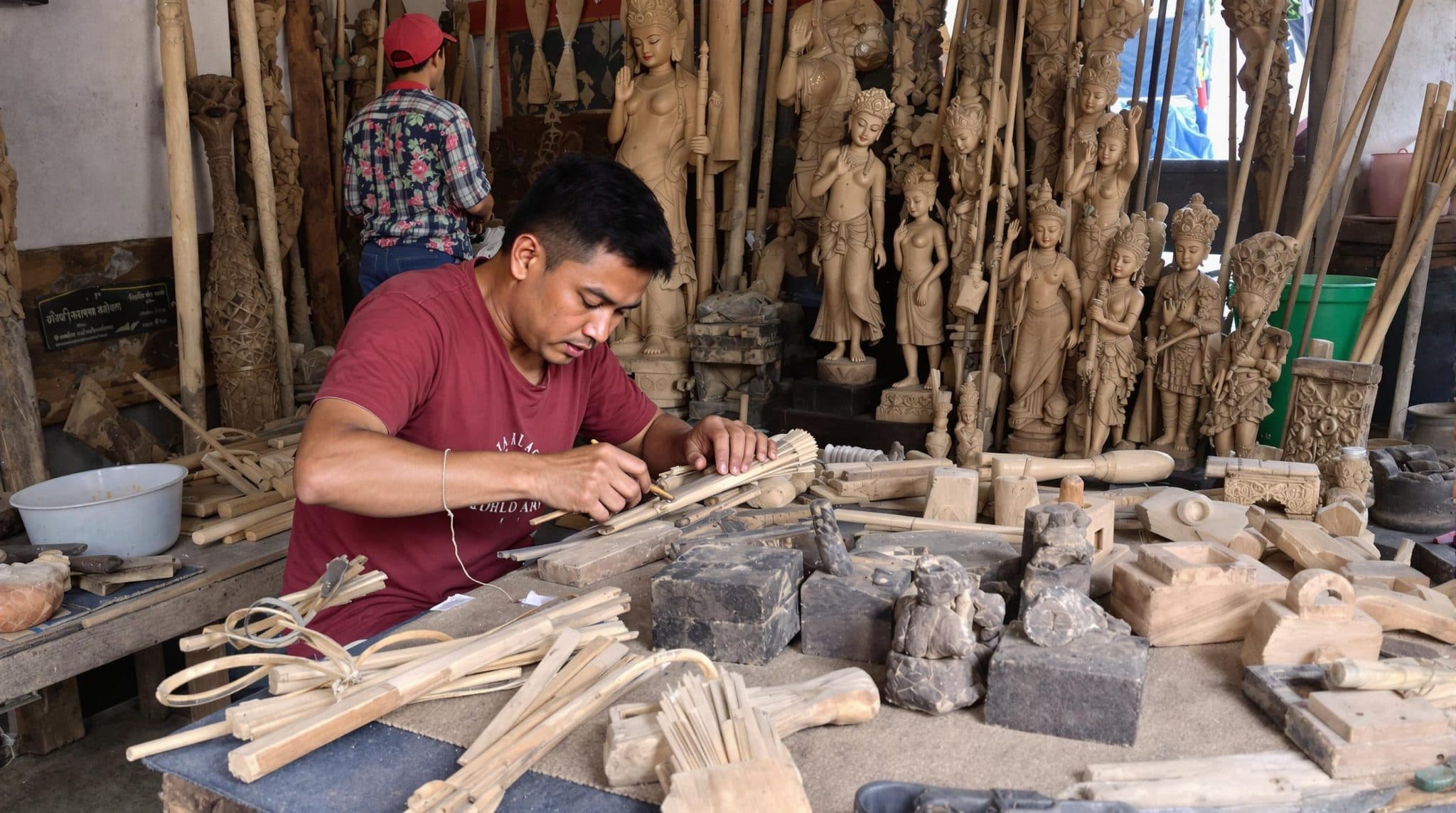
Planning to start a Thai handicraft business as a foreign entrepreneur? One of your first critical steps is correctly structuring your company according to Thai regulations.
You'll need to navigate the Foreign Business Act (FBA) and explore potential Board of Investment (BOI) incentives, as these significantly impact your ownership rights and operational benefits.
In this article, we will walk you through the essentials of starting your own Thai handicraft business, including key regulations, and requirements for foreign-owned companies.
Overview of Thailand’s Handicraft Industry
Incentives for Operating a Handicraft Business in Thailand
Operating a handicraft business in Thailand offers plenty of benefits designed to support local cultural industries and appeal to international entrepreneurs. These incentives can help budding handicraft and artisanal businesses in Thailand a head start. Here are some incentives you can benefit from opening a Thai handicraft business:
- Government Support and Initiatives – programs like the Sustainable Arts and Crafts Institute of Thailand (SACIT) and One Tambon One Product (OTOP) aims to promote handicraft businesses and enhance product standards. Furthermore, the Department of International Trade Promotion (DITP) helps expand markets for Thai products by organizing events and trade fairs and exhibitions to showcase your products.
- Thailand Board of Investment (BOI) Incentives – offers both tax and non-tax incentives to promote investment in creative industries, including handicrafts. These incentives include corporate income tax exemptions for up to eight years for certain activities like functional fibre and creative design. Non-tax incentives facilitate business establishment, certification processing, entry of international talents, and access to consulting services.
- WIPO Initiatives – The World Intellectual Property Organization (WIPO) has collaborated with the Thai government and local universities to support rural communities in using intellectual property (IP) and branding to enhance the commercial value of their handicrafts. This initiative helps artisans develop brands that communicate the origin, quality, and local materials used in their products, making them more competitive in the global market.
Key Regulations for Operating a Thai Handicraft Business
The Foreign Business Act (FBA) of 1999 is the primary law governing foreign-owned businesses in Thailand. It specifies the rights and limitations of foreign-owned companies in the country based on their business activities.
Handicrafts belong on List 2 where foreigners are allowed to operate but with heavy restrictions. Other sectors that belong on this list include businesses related to national safety, security, arts, culture, traditions, customs, folklore, handicrafts, and natural resources. As a foreigner, you need to comply with these FBA regulations to operate a handicraft business:
- Permission from the Ministry of Commerce with the approval of the Cabinet.
- At least 40% of the company’s capital must be Thai-owned, and there must be Thai shareholders and board members. The minimum registered capital typically required is THB 3 million, although specific conditions may apply depending on the business type.
- Must obtain a Foreign Business License and comply with any conditions attached by the Ministry of Commerce. These conditions may include bringing in a minimum amount of capital and meeting specific operational requirements.
- Applicants must be at least 20 years old and have a residence in Thailand.
Permits and Licenses Required for a Handicraft Business in Thailand
Starting a handicraft business in Thailand requires obtaining several permits and licenses, especially if you are a foreigner. Depending on the scale of operations, here’s an overview of key permits and licenses needed to operate a Thai handicraft business:
- Business Registration: all legal entities in Thailand must be registered with the Department of Business Development (DBD).
- Factory License: If your handicraft business employs more than 50 workers or uses machinery equivalent to more than 50 horsepower to manufacture handicrafts, a Factory License is required.
- Foreign Business License (FBL): if your business is owned by a foreign-owned majority, you would need to apply for an FBL to ensure compliance with Thai regulations regarding foreign ownership.
- VAT Registration: If your business is projected to have a turnover exceeding THB 1.8 million (~USD 54,000), VAT registration is mandatory. This allows the business to handle VAT on sales and purchases appropriately.
- Environmental Impact Assessment (EIA): For larger-scale operations that may have significant environmental impacts, an EIA may be necessary. This assessment evaluates the potential environmental effects of the business operations.
- Trademark Registration: as a way to protect your handicraft brand, you are advised to register a trademark as a legal step to help you secure your business’ intellectual property rights.
- Local Permits: Depending on the local municipality, additional permits may be required. It’s essential to check with local authorities to ensure all local regulations are met.
Emerhub’s end-to-end service offers you comprehensive support in obtaining necessary permits and licenses needed to operate a handicraft business in Thailand.
How to Start a Handicraft Business in Thailand
Choosing the Right Business Structure
To start your handicraft business in Thailand, you need to choose the right business structure. Each structure has its own advantages and legal requirements. For a Thai handicraft business, the most common structure is a limited company, sole proprietorship, and a partnership. Here’s an overview of both structures:
| Type of Business Structure | Pros | Cons |
|---|---|---|
| Limited Company | Limited liability, easier access to funding. Recommended for foreign-owned entities. | More complex setup, higher costs, and stricter regulations. |
| Sole Proprietorship | Easy to set up, minimal legal requirements, and low costs. | Unlimited personal liability, limited access to funding, and restricted growth. |
| Partnership | Flexible management structures, shared resources, lower setup costs, access to local expertise, and potential tax benefits | Unlimited personal liability, potential disputes among partners, foreign ownership restrictions, complex regulatory compliance |
Setting Up a Company in Thailand
Once you decide on your company’s legal structure, you can set up the foundations of your handicraft business. This involves opening a bank account, registering for a VAT and tax number, and also obtaining necessary licenses. Here’s the process on how to set up your handicraft business in Thailand:
- Reserving a Company Name – check with the DBD of your desired company name is available. Ensure that your company name is unique and complies with Thai regulations.
- File the Memorandum of Association – Include details such as the company name, location, objectives, share capital, and promoter information. All shares must be paid before filing.
- Hold a Statutory Meeting – Approve the Articles of Association, elect directors, appoint auditors, and finalize the share structure for your handicraft business.
- Register your Company with the DBD – Submit the application to the DBD within 90 days of the statutory meeting. Pay registration fees based on share capital, and obtain registration documents and a company/tax ID.
- Open a Bank Account – Open a corporate bank account in Thailand. This will require documents such as the company's registration certificate and identification of the account signatories. Deposit the required registered capital into this account.
- Register for Taxes and VAT – Obtain a corporate tax ID within 60 days of incorporation or when you start your operations. VAT registration is required if annual revenue exceeds THB 1.8 million or if employing foreigners.
- Obtain Necessary Permits – you also need to obtain additional permits or licenses, especially if you plan to import or export goods. If applicable, ensure compliance with the Foreign Business Act, which may require a Foreign Business License for certain activities.
Emerhub can help set up your handicraft business in Thailand by providing end-to-end company registration services. This includes legal entity setup and acquiring necessary licenses. We can help you navigate through Thailand’s complex legal framework to ensure compliance with local regulations such as the FBA, VAT and tax compliance, as well as other permits needed to start your Thai handicraft business.
How to Export Your Handicraft Products in Thailand
Prohibited Items from Exporting
Exporting handicrafts from Thailand requires compliance with customs laws, including proper declarations for items subject to licensing (e.g., jewelry, antiques, or works of art). Certain handicraft items are forbidden or restricted from export to protect Thailand’s cultural heritage and natural resources. Here are key items you should avoid exporting in Thailand:
- Religious Artifacts – Statues and artifacts of Buddha or other religious icons are often restricted from export without proper permits from the Fine Arts Department. This includes Buddha images, whether made of wood, bronze, or other materials.
- Wildlife Products – Items made from endangered species, such as ivory, turtle shells, and certain types of coral, are prohibited under CITES regulations,
- Protected Wood Products – While not specifically handicrafts, wooden items made from protected species like Siamese rosewood (phayung) are prohibited from export. However, this primarily affects raw wood and processed wood products rather than finished handicrafts.
- Antiques and Cultural Items – Exporting antiques or cultural items over 100 years old is restricted to preserve Thailand's cultural integrity.
Requirements for an Import/Export License in Thailand
Obtaining an export license is crucial for a handicraft business in Thailand to comply with the Customs Act B.E. 2469. This law mandates proper authorization for exporting regulated goods and ensures smooth customs clearance, prevents legal penalties, and allows you to expand internationally. Here’s what you need to obtain an export license:
- Commercial Invoice
- Packing List
- Bill of Lading/Air Waybill
- Certificates of Origin
- Other Relevant Documents such as health or safety certifications, destination information, or specific permits depending on the type of goods being exported.
Emerhub’s Importer of Record (IOR) services as an alternative for exporting handicraft products in Thailand. This service simplifies export processes by managing regulatory compliance, customs clearance, and logistics on your behalf.
Emerhub can help your Thai handicraft business reach international markets with our IOR service. Talk to our local experts in Thailand by filling out the information below!
Frequently asked questions
What are the most popular handicraft products in Thailand?
Thailand is renowned for its diverse and vibrant handicrafts, reflecting the country's rich cultural heritage. Here are some of the most popular handicraft products in Thailand:
How do I reserve a company name with the DBD?
Reserving a company name in Thailand is a critical first step in the business registration process. Your company name must comply with specific guidelines, including uniqueness and adherence to naming conventions, such as ending with "Limited." You are encouraged to submit three name options ranked by preference to increase approval chances. The reservation can be done online or in person, typically taking 1–3 business days for approval. Once approved, the reserved name is valid for 30 days, during which the applicant must complete company registration. To ensure smooth approval, businesses should conduct a preliminary name check to confirm availability and avoid similarity with existing names. Names must be reserved in Thai, even if they are in English, and certain terms like "investment" are prohibited.
What are the options of setting up a store for my handicraft business in Thailand?
There are several options if you plan to open up a handicraft store in Thailand. Each option offers different benefits, from direct customer interaction to broader market reach, allowing you to choose the best fit for your business goals and target audience. Here are several ways you can start a handicraft store: