
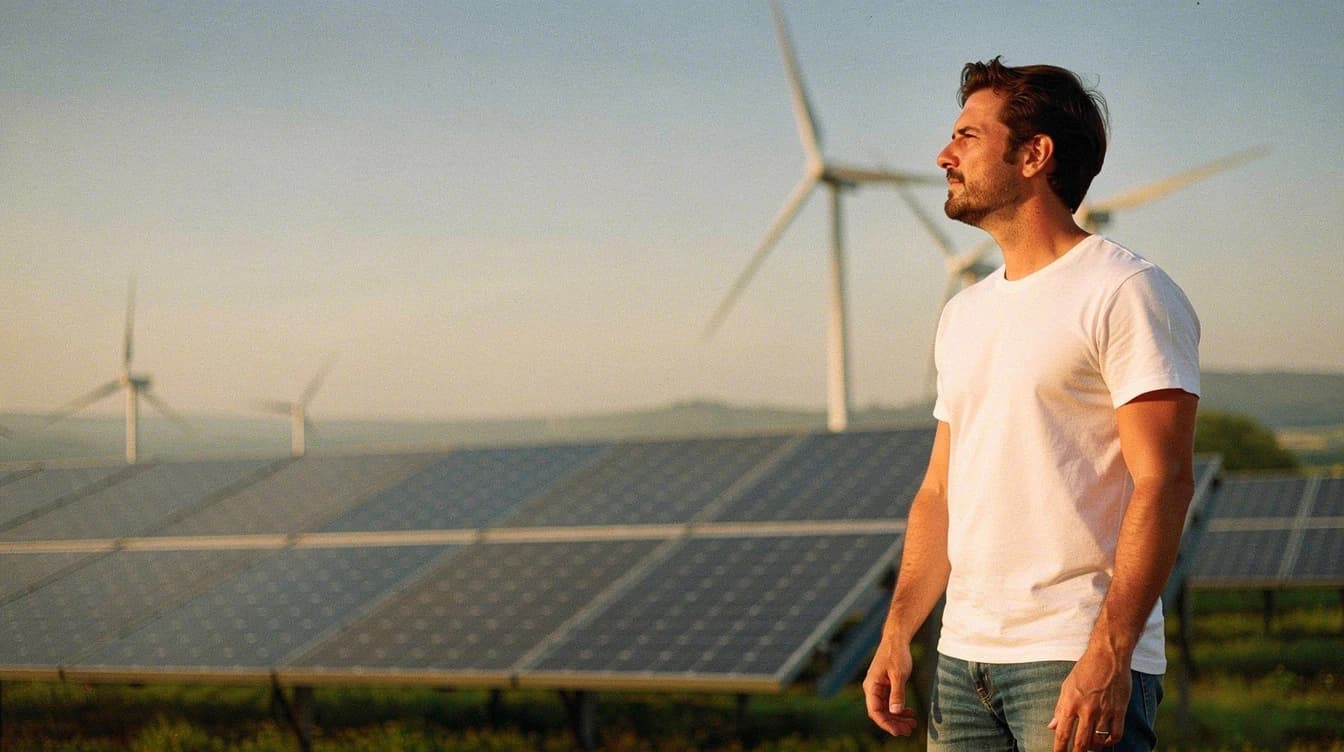
Vietnam is planning for a steep rise in electricity demand through 2030, and the revised Power Development Plan 8 raised the national solar and wind targets to match. Meanwhile, the exporters, manufacturers, and data centre operators already based in the country are under growing pressure to buy clean power.
If you are a foreign investors looking to build for that demand, you can setup a fully foreign owned company in Vietnam.
Foreign ownership rules in Vietnam's power sector
Vietnam's power sector separates generating electricity from carrying it. Generation, which means running a solar farm, a wind farm, or a rooftop system, is open to private and foreign investors. Transmission and distribution, meaning the national grid, belong to Vietnam Electricity (EVN), the state utility, and are closed to foreign ownership.
For a developer, that means you can own your project company outright, with no local partner and no ownership cap.
However, you can't own the infrastructure that carries your electricity to your buyers.
A project therefore earns its return from the power it generates and from the contract that sells it, which is why the offtake arrangement matters as much as the site.
In practice, the split runs through the business classification codes you register.
Electric power generation is VSIC 3511 and carries no foreign ownership restriction. Electricity transmission and distribution is VSIC 3512, and it stays with EVN.
If you register the wrong code, or write an overly broad activity description, it can stall your business setup.
| Activity | VSIC code | Foreign ownership | Who you sell to |
|---|---|---|---|
| Solar or wind power generation | 3511 | 100% | EVN, or a large buyer under a DPPA |
| Rooftop solar for self-consumption | 3511 | 100% | Your own site, with surplus sold under the rules below |
| Electricity transmission and distribution | 3512 | Not open to foreign control | Not applicable |
| Electrical installation and EPC work | 4321 | 100% | Project owners |
One change to note if you are structuring now. The Law on Investment 143/2025/QH15 took effect on 1 March 2026, along with Decree 96/2026, which revised the list of conditional business lines. Certificates issued before that date remain valid on their existing terms, but any material amendment, such as adding a business line or restructuring ownership, is assessed under the new regime. If your project company was registered earlier and you are about to expand it, review the registration before you file anything.
Selling your electricity: the DPPA mechanism
The Electricity Law 2024 took effect on 1 February 2025 and introduced direct power purchase agreements. Under a DPPA, a renewable generator sells its electricity to a large corporate buyer instead of selling everything to EVN. This is what allows a factory or a data centre to contract clean power from a specific project.
The detailed rules sit in Decree 57/2025/ND-CP, issued in March 2025, which replaced Decree 80/2024 after only eight months. Decree 243/2026/ND-CP then amended it on 26 June 2026, with immediate effect.
There are two ways to structure the arrangement:
- Physical DPPA (Model 1): The generator sells to the buyer over a private connection line, without using the national grid.
- Virtual DPPA (Model 2): The power flows through the national grid, while the generator and buyer settle a financial contract between themselves, with EVN handling the difference.
Decree 243 kept both models and loosened the terms around them. Under these new rules:
- Prices are negotiated freely. The tariff caps that tied physical DPPA pricing to the generation price bracket are gone, so the seller and buyer agree the price themselves.
- The buyer eligibility thresholds are gone too. Large consumers no longer need to use at least 200,000 kWh a month, and the minimum voltage connection requirement has been removed.
- Data centres and EV charging operators can now participate, which the earlier framework did not clearly allow.
- Electricity retailers in industrial parks and clusters can take part as buyers or sellers, so a park operator can contract renewable power for its tenants.
- Virtual DPPA registration went from seven procedural steps to three.
These changes open the DPPA to smaller and distributed projects, to industrial parks, and to corporate buyers with clean energy targets, rather than to utility-scale generation alone.
Rooftop solar and surplus electricity
Rooftop solar for self-production and self-consumption runs under Decree 58/2025/ND-CP, which was amended by Decree 243 in June 2026.
The important aspect here is the surplus cap. If your system generates more than your site consumes, you can sell the excess to EVN, and that cap rose from 20% to 50% of actual output. Until the end of 2030, the parties can agree to exceed even that, provided the local grid can absorb the power and the connection meets safety and operating requirements.
In mountainous, border, and island areas that are not connected to the national grid, no limit applies at all.
Decree 243 also confirmed that a line connecting a rooftop system to the buyer's receipt point counts as a private connection grid.
This settles a question that mattered for captive solar inside industrial parks and for behind-the-meter arrangements, and it puts those projects clearly within the physical DPPA model.
How to develop a renewable energy project in Vietnam
A generation project is an investment project rather than a simple company registration, so it carries an extra layer of approval. The process is same for both solar and wind projects.
- Secure a place in the provincial plan under the Power Development Plan 8. A project outside the plan cannot connect to the grid.
- Obtain investment policy approval, which goes to the provincial authority or higher depending on the project's size.
- Register the project company and obtain its investment registration certificate and enterprise registration certificate.
- Arrange land or seabed rights, grid connection, and environmental approvals.
- Sign the offtake, either a power purchase agreement with EVN or a DPPA with a corporate buyer.
The plan during initial stage sets how much capacity each province can take. Therefore, it's important to give this proper attention.
The revised PDP8, approved as Decision 768/QD-TTg in April 2025, raised the 2030 solar target to between 46,459 MW and 73,416 MW, and onshore and nearshore wind to between 26,066 MW and 38,029 MW. Battery storage rose from 300 MW in the original plan to between 10,000 MW and 16,300 MW, which is why storage now features in the economics of most new solar proposals.
Capital requirements are significant and projects are usually financed on their contracts, so lenders examine the offtake agreement and the permits closely.
For more details on company setup as a foreigner, see our guides to FDI company formation in Vietnam and tax incentives for foreign investors.
Set up your renewable energy project with Emerhub
If you are developing a renewable project in Vietnam, Emerhub can handle the corporate side on your behalf.
Our consultants advise on the right structure for your project, register the foreign-owned project company, and map the activity to the VSIC codes that match a generation business rather than a restricted grid activity. We then handle the investment registration, the tax setup, and the ongoing corporate compliance, while your technical advisors run the engineering and grid studies.
If you are on the buying side and want to contract renewable power rather than build it, we can structure that arrangement too. Contact our Vietnam team to talk through your project.
Frequently asked questions
Can a foreign investor own 100 percent of a solar or wind company in Vietnam?
Electric power generation is open to full foreign ownership, so a foreign investor can hold the project company outright. Electricity transmission and distribution remain with the state utility and are not open to foreign ownership.
What is a DPPA in Vietnam?
A direct power purchase agreement lets a renewable generator sell electricity to a large corporate buyer instead of only to EVN. There are two models: a physical DPPA over a private connection line, and a virtual DPPA through the national grid with EVN settling the difference.
Who can buy power under a DPPA now?
Decree 243/2026 removed the previous consumption and voltage thresholds for buyers, and added data centres, EV charging operators, and electricity retailers in industrial parks and clusters as eligible participants.
How much rooftop solar surplus can I sell to the grid?
Up to 50% of actual output, raised from 20% in June 2026. Until the end of 2030, the parties can agree a higher share if the local grid can take the power safely, and areas not connected to the national grid have no limit.
Can a foreign company buy renewable power rather than generate it?
Yes, and it became easier in June 2026. Decree 243/2026 removed the consumption and voltage thresholds for buyers and named data centers and EV charging stations as eligible participants. Energy-intensive foreign investors can now contract clean power directly through the DPPA mechanism, though the arrangement still needs to be structured correctly to qualify.