

If you are planning to invest in Bali, choosing the right location is a key factor that often determines the viability of your investment. Each region on the island operates under different market dynamics. For instance, regions such as Canggu are built around short-term rentals, while areas like Ubud attract wellness operators.
Therefore, in this article, we will provide a breakdown of Bali's key investment locations. We’ll lay out where foreign capital is moving on the island today, which regions are opening up new potential, and important regulations that you will have to navigate when investing in Bali.
Best Areas to Invest in Bali
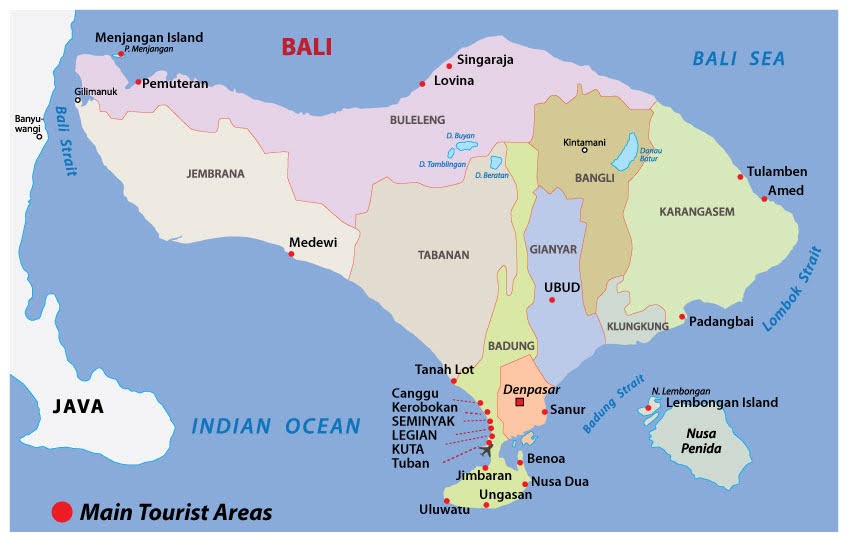
In Bali, the gap between a successful investment and a stalled project often comes down to one thing: location. Not just in terms of scenic views and tourist traffic, but also how well your model aligns with local zoning regulations and the regency’s growth direction.
South Bali, with areas such as Canggu, remains the island’s commercial core. It draws the most foreign capital and tourist demand. However, it also shows signs of oversaturation. The land in South Bali has become very expensive, and licensing requirements are tighter.
In comparison, North, West, and Central Bali offer more affordable land and long-term appreciation as long as your timeline and local execution plans are realistic.
South Bali: The Popular Rental Market
South Bali, especially Badung, is the island’s most active region for short-term rentals and villa investments. Its best-known areas (Canggu, Seminyak, and Jimbaran) are close to Ngurah Rai International Airport and lined with polished cafés, coworking spaces, beach clubs, and architect-designed villas
This demand, however, comes with steeper land prices (see further below), land zoning constraints, and strict compliance checks.
- Canggu & Seminyak: These are Bali’s most mature rental markets, especially in popular areas like Berawa, Batu Bolong, and Petitenget. Villas here can earn between USD 219 to well over USD 1000 nightly, especially for professionally-managed and fully licensed properties. With the area already saturated, tourism zoning checks and KBLI (business activity code) are tightly enforced to limit unlicensed builds and overcrowding.
- Pererenan & Seseh: Just north of Canggu, these quieter zones are emerging as lifestyle-driven zones popular with long-stay tourists, digital nomads, and young families. Land here is more often zoned for mixed-use, allowing you to combine residential, wellness, and boutique hospitality concepts on a single plot. Top-performing villas here can fetch between USD 150 to over 440 per night.
- Jimbaran & Ungasan: South of the airport, these areas cater to a more premium segment (think wedding groups and luxury holidaymakers) drawn to flagship resorts like AYANA, Four Seasons Jimbaran Bay, and The Ungasan. Rates often exceed USD 400/night for sea-view villas. Most of the land here falls under tourism zoning, which generally allows for hospitality-only builds. But if your concept combines lodging with public-facing restaurants, spas, or wedding/event spaces, you’ll need additional licenses and building-use approvals (PBG/SLF permits).
Sanur vs. Kura Kura Special Economic Zones
If you’re planning to invest in healthcare, wellness, education, or sustainability sectors, Bali’s Special Economic Zones offer a streamlined path to set up operations. You can fully own your business, access pre-approved land for designated sectors, and fast-track licensing through a centralized SEZ authority.
As of 2025, Bali has two operational SEZs open to foreign investment:
- Sanur SEZ is a coastal medical and wellness cluster anchored by the Bali International Hospital. It’s pre-zoned for healthcare ventures, ideal for building specialized clinics, long-stay medical housing, and integrated resorts. Benefits for investors include: 20-year tax holiday, import duty exemptions on capital goods, SIP licenses for doctors (foreign and diaspora professionals).
- Kura Kura SEZ: Located on Serangan Island, this SEZ is Bali’s designated innovation hub. It’s zoned for projects in climate tech, regenerative agriculture, sustainable education, and community-driven living models like co-living campuses or edtech incubators.
Key SEZ Advantage: While Indonesia’s latest Positive Investment List already allows full foreign ownership in most sectors, SEZs add significant benefits such as import duty and VAT exemptions on eligible equipment. This applies even if you only meet the standard IDR 2.5 billion PT PMA paid up capital threshold, which is 25% of your IDR 10 billion investment plan.
Not sure whether your project qualifies for SEZ incentives? Emerhub’s consultants can assess your SEZ eligibility, match your KBLI codes, and manage your entire setup within or beyond SEZ borders.
Gianyar and Ubud (Bali’s Cultural and Wellness Capital)
Gianyar is home to Ubud, Bali’s cultural and spiritual heart, where rice terraces, temples, and art studios sit alongside yoga retreats and boutique wellness stays. Investors are drawn to the area’s slower rhythm, but development is tightly regulated to preserve its heritage. Among its many districts, two areas stand out especially for foreign entrepreneurs:
- Ubud Town is a mature, tightly zoned market. Land values now rival parts of South Bali, but tourism-zoned plots are limited. Permit reviews can take longer due to heritage overlays, strict building limits, and traditional design rules. With that in mind, well-positioned long-stay retreats and boutique villas still perform steadily across peak seasons.
- Tegallalang and Payangan, further north, offer more accessible entry points for foreign investors. Plots are larger, zoning classifications tend to be more flexible (with mixed-use designations), making them more suitable for low-density, nature-integrated builds like eco-lodges and regenerative retreats.
Permit timelines in this regency can be slower but more consistent than Bali’s rural north, especially when aligned with cultural, educational, or wellness themes.
Bali’s More Affordable Regions for Long-Term Investment
If you’re more flexible with your investment timelines, Tabanan (West Bali) and Buleleng (North Bali) offer some of the island’s most affordable and spacious land options. These areas don’t rely on walk-in tourist traffic. Instead, they favor destination-driven ventures (wellness retreats, eco-lodges, and regenerative stays) that target niche audiences through digital channels and curated experiences.
- Tabanan, just west of Canggu, offers spacious, lower-cost plots (see comparison table below) within reach of tourist corridors but far enough to retain its rural charm. Areas like Kedungu are poised as Bali’s next growth corridor, with large-scale projects backed by major developers such as Ciputra Group. Land is commonly zoned for mixed-use concepts, making it more suitable for wellness, agri-tourism, or boutique hospitality.
- Buleleng, on the north coast, is even more remote and less commercially developed. However, interest is growing in areas like Lovina and Kubutambahan, where the proposed North Bali International Airport project is slated to open in 2027. Until then, it remains a space for early movers: those focused on land banking, or building slow-burn ventures with sustainability and scale in mind.
Before You Buy: Keep in mind that Bali’s northern regions are more rural, which means land access, zoning maps, SLF designations, and permit processes are less predictable than in the south.
This is why we strongly recommend reviewing each plot’s zoning and ownership history early. Many approvals here still require direct coordination with local authorities and village heads, which our team can help you with.
Land Price Comparisons Across Key Bali Regions (2025 Estimates)
As a foreign investor, you’ll typically secure land through:
- Leasehold Agreement: A long-term rental arrangement (usually 25–30 years) that doesn’t require setting up a local company.
- A Right to Build (HGB) title: A more secure property ownership structure, issued through a foreign-owned company (PT PMA), valid for 30 years and renewable for up to 80 years with extensions.
The table below compares average land price ranges for each structure across Bali’s key investment zones that we’ve covered in this guide.
| Area | Avg. HGB Land Price (Avg.) | Leasehold Price (Est. /year) |
|---|---|---|
| Canggu & Seminyak (South Bali) | IDR 1.5B – 4.5B per are | IDR 18M – 45M per are |
| Pererenan & Seseh (South Bali) | IDR 1.0B – 2.5B per are | IDR 12M – 30M per are |
| Jimbaran & Ungasan (South Bali) | IDR 1.0B – 2.8B per are | IDR 10M – 28M per are |
| Ubud (Central Bali) | IDR 800M – 2.5B per are | IDR 8M – 25M per are |
| Tegallalang (Central Bali) | IDR 300M – 900M per are | IDR 6M – 20M per are |
| Payangan (Central Bali) | IDR 150M – 500M per are | IDR 4M – 15M per are |
| Tabanan (West Bali) | IDR 200M – 700M per are | IDR 5M – 18M per are |
| Lovina (North Bali) | IDR 150M – 400M per are | IDR 3M – 10M per are |
| Kubutambahan (North Bali) | IDR 100M – 350M per are | IDR 2M – 8M per are |
Note: Per 1 are = 100 sqm. These are estimated price ranges reflecting mid-2025 listing estimates from Bali’s open market. Actual costs also depend on exact location, land zone categories, infrastructure access, and your permit readiness. For verified due diligence, consult Emerhub's on-ground team.
Essentially, land prices in Bali reflect more than your potential ROI. They also indicate how quickly or slowly you can get your business fully operational. To summarize:
- South Bali: Most expensive and saturated, but best suited for high-yield rentals. Expect tight zoning enforcement and limited plot availability.
- Central & West Bali: More affordable, often zoned for mixed-use builds (wellness, eco-retreats). However, you’ll need to factor in slower permit review timelines and higher due diligence.
- North Bali: Significantly lower entry costs, but infrastructure access remains limited. More suitable for early movers, long-stay concepts, or land-banking strategies ahead of the 2027 proposed airport.
Bali’s Foreign Capital Flow from North to South
While you’re likely more familiar with South Bali's lead on rental booms and tourism spikes, foreign investment is also flowing into areas outside its borders. According to official data from Indonesia’s Central Bureau of Statistics (BPS), regions outside the core rental belt are showing consistent year-on-year growth.
This shift is subtle, but it signals a growing appetite for larger plots, lower entry costs, and new concepts that don’t rely on Canggu’s tourist footfall to succeed.
| Realization of foreign capital investment in Bali province by the Regency in Million Rupiahs (IDR) | |||
|---|---|---|---|
| Regency / Municipality | 2022 | 2023 | 2024 |
| Kab. Badung | 8,950,000 | 9,380,000 | 10,117,946 |
| Kota Denpasar | 2,540,000 | 2,760,000 | 3,027,126 |
| Kab. Gianyar | 2,160,000 | 2,450,000 | 2,810,510 |
| Kab. Buleleng | 1,420,000 | 1,620,000 | 1,828,766 |
| Kab. Tabanan | 570,000 | 620,000 | 660,635 |
| Kab. Karangasem | 200,000 | 210,000 | 227,732 |
| Kab. Klungkung | 120,000 | 130,000 | 147,526 |
| Kab. Jembrana | 62,000 | 67,000 | 72,932 |
| Kab. Bangli | 46,000 | 48,000 | 51,468 |
| Total – Bali Province | 16,068,000 | 17,285,000 | 18,944,640 |
This data confirms that while South Bali (Badung) still dominates, regions like Gianyar, Buleleng, and Tabanan are showing consistent growth, pointing to emerging opportunities for investors willing to look beyond the main tourist hubs.
Ready to Invest in Bali?
Emerhub helps you buy, build, and operate in Bali with confidence. As the island moves toward a more commercialized landscape, new regulatory standards are being introduced. This ranges from updated land-use policies to stricter licensing for foreign-owned businesses.
We act as your dedicated buyer’s agent and offer end-to-end corporate services to ensure your project remains secure and compliant:
- Land Due Diligence: Verifying titles, zoning, and legal history for your chosen property.
- Corporate Structuring: Arranging PT PMA setups for secure foreign ownership.
- Tax & Licensing: Securing mandatory licenses, permits, and tax compliance.
- Local Advisory: Assessing cultural and community considerations alongside the latest zoning and environmental restrictions.
Speak to our property experts today. Fill out the form below, and we'll put you in touch.
Frequently asked questions
1. Can I buy land in Bali under my name as a foreigner?
Indonesian law does not allow foreigners to directly own freehold land (Hak Milik). You can, however, legally secure long-term control of a property through structures like a long-term lease (Hak Sewa) or by setting up a PT PMA company to hold stronger titles like the Right to Build (Hak Guna Bangunan).
2. What’s the most secure ownership structure if I’m building a villa in Bali?
The most secure and legally recognized structure is a PT PMA (foreign-owned company). This allows you to legally control the property, apply for the necessary building and rental permits, enter into contracts, and manage your business compliantly.
3. How long does it take to register a PT PMA company for property investment in Bali?
Typically, it takes a week to register a PT PMA in Bali for property-related ventures. However, timelines may extend if your KBLI falls under regulated sectors or if additional approvals like ITR (zoning) or PBG/SLF (building permits) are needed. Emerhub can streamline this by validating your setup path in advance and managing the registration on your behalf.
4. Do I need different licenses and zoning approvals for a café, hotel, or wellness retreat?
In Indonesia, each business type must be registered under its own KBLI (business activity code), which determines what licenses you’re allowed to apply for.
A café, for instance, falls under F&B service classifications and requires hygiene, health, and sometimes halal permits. A hotel or guesthouse, on the other hand, requires tourism-related licenses and building approvals. Wellness retreats can get even more complex, especially if they involve spa services, spiritual healing, or health-related treatments.
You’ll also need to ensure your location is zoned for the intended activity (through ITR checks) and that your building complies with SLF (building use certificate) regulations.
Emerhub helps validate the right KBLI code for your concept, check zoning feasibility early, and navigate the licensing processes for you.