
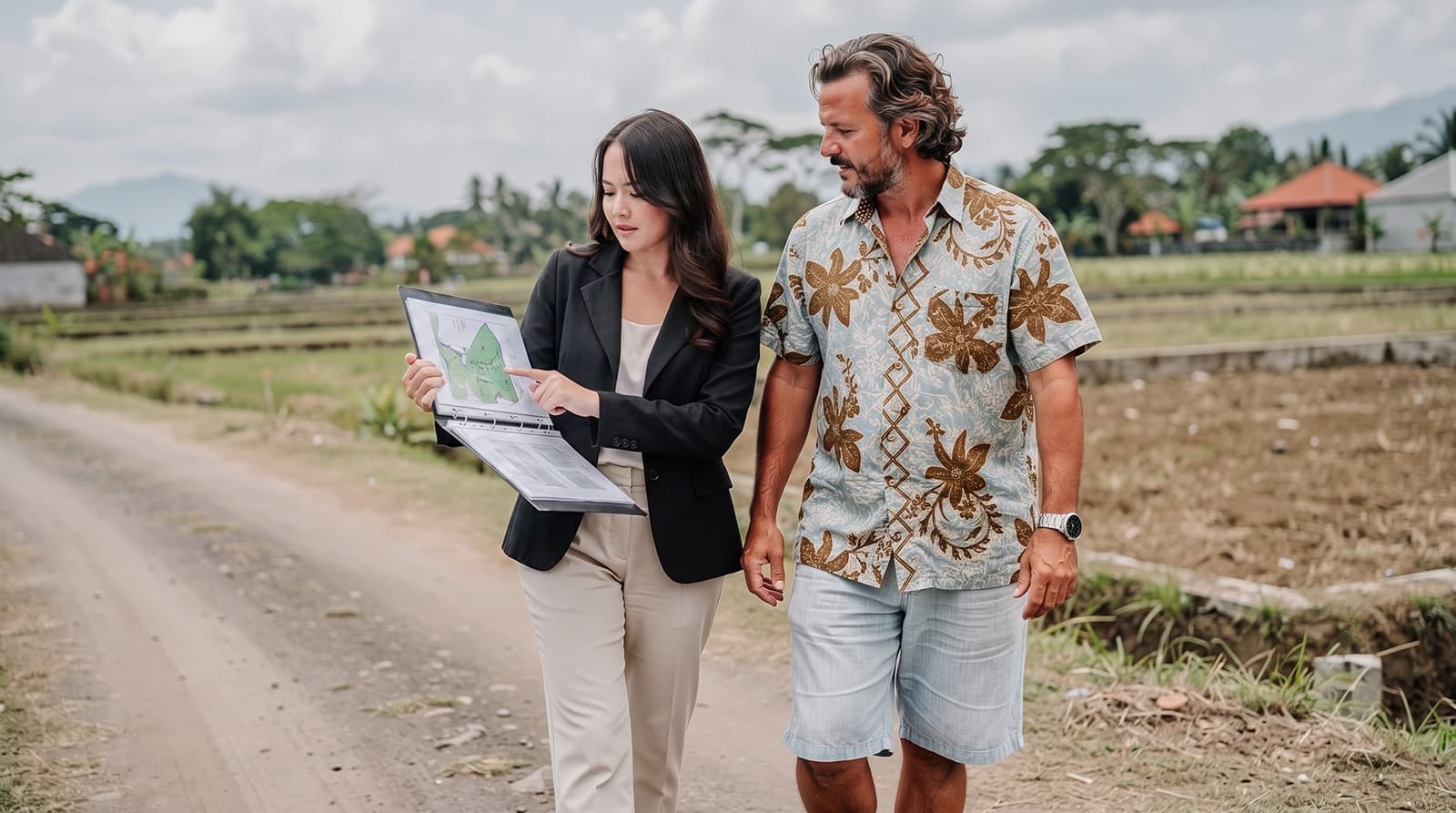
Did you know that Bali’s real estate market saw an 81% surge in foreign investment just last year? Despite this, Indonesia’s strict property laws and complex regulations make it crucial for foreign buyers to conduct thorough due diligence.
Even minor oversights such as failing to verify leasehold payments or misunderstanding zoning restrictions, can lead to legal disputes, financial losses, or even an unusable property. This guide highlights commonly overlooked risks in property due diligence in Bali, helping you better safeguard your investment.
Legal Pitfalls that Can Jeopardize Your Bali Property Investment
Do You Have a Right of Access?
One of the most commonly overlooked aspects of buying property in Bali is confirming whether there is a legally guaranteed right of access to the property. Typically properties are accessible via government roads, however, some newly developed plots may depend on access via private roads or roads shared between owners, while others lack a formal access agreement altogether.
Buyers who fail to verify access may find themselves legally owning property that they cannot physically reach, disputing with neighboring landowners or local authorities. Thus, you must check the land certificate (Sertifikat Hak Sewa for leasehold properties) and confirm whether the access road is public or legally registered as shared access with neighboring landowners.
Remember that in cases where a private road must be built, it must be legally recorded to avoid future conflicts. Without a clear legal access agreement, your property could become unusable, severely impacting its value and your ability to develop or resell it. As long as access is within your land agreement, private access will be reserved for your use.
Addressing Building Restrictions
Bali enforces strict zoning laws that dictate what can and cannot be built on a specific property. Some plots are designated for agricultural use, protected green areas, or non-commercial residential use– meaning you won’t be able to build a villa or business on the land, even if the seller says otherwise.
Therefore, before proceeding with any development it’s crucial to verify with the Indonesian Land Agency (BPN) and the Ministry of Public Works and Housing (PUPR) on the zoning classification (Rencana Tata Ruang Wilayah - RTRW) to ensure zoning classification for your intended use of the land is permitted.
You’ll also have to conduct thorough due diligence on the following restrictions:
- Building Height Restrictions: In most areas, structures are capped at 15 meters. In certain tourism zones (W1 and W2), the height limit is reduced to 12 meters.
- Land-to-Building Ratio: You must maintain a specific ratio between the building size and the surrounding green space.
- Basement and Foundation Limitations: These can be regulated depending on the area’s terrain.
Obtaining Spousal or Partner Approval
Under Indonesian law (Article 36, Law No. 1 of 1974), a married person cannot sell or lease property without their spouse’s consent, as all assets are shared unless a prenuptial agreement specifies separate ownership. This requirement applies to both freehold and leasehold properties.
Keep in mind that in certain regions, such as Lombok, it is not uncommon for one man to have multiple wives. In this case, each wife would individually have to provide a consent letter to be presented at the time of the transaction.
If you overlook securing spousal consent from the seller, your transaction may be legally disputed and you could face financial and legal challenges. This is why it’s highly advisable to always request a notarized spousal approval letter from married sellers before proceeding with any property purchase in Bali.
Inherited Land without Proper Documentation
In Bali and Lombok, it is also common for land to remain registered under deceased family members’ names. Overlooking this can lead to unexpected claims from family members who were deliberately excluded from the transaction. This can result in legal disputes, rendering the property unusable and causing significant financial stress.
To prevent this, you must ensure the seller possesses a Surat Keterangan Hak Ahli Waris (Certificate of Inheritance Rights) as proof of uncontested ownership. If multiple family members claim ownership, it is highly recommended to consult with a legal expert before moving forward to prevent costly complications.
Common Financial Risks that Can Lead to Costly Disputes
Verifying Leasehold Payments for Bali Properties to Avoid Third-Party Claims
Leasehold agreements in Bali often involve staged payments over time by the lessee. However, if the lessor has unpaid dues to the original landowner, third-party claims can arise, leaving you unable to use the property until legal disputes are settled.
There have been cases where investors fully paid for a leasehold, only to discover later that the lessor still owed money to the landowner. As a result, the property became tied up in months-long court battles, with the investor forced to seek compensation for their losses.
Therefore, it’s essential for you to:
- Verify past least payments directly with the original landowner.
- Request official proof of completion from both the lessor and landowner.
- Consult a notary or legal expert to confirm no outstanding claims exist.
Specifying End-of-Lease Terms for Bali Leasehold Properties
Leasehold agreements in Bali typically outline what happens to the property once the lease expires. In many cases, the landowner may require all structures on the land to revert to them, resulting in unexpected financial losses, for example, if your movable property assets have not been removed.
While reverting ownership is normal practice, to avoid misunderstandings, your lease agreement should specify:
- What happens to the building upon lease expiration– can furniture and fixtures be removed, or does ownership transfer to the landowner?
- Renewal terms and extension options to provide clarity on whether and how the lease can be extended.
Regional and Environmental Factors that Affect Property Value in Bali
Why Soil Stability Testing is Essential Before You Build
Many properties in Bali are near beaches, rivers, and hillsides, where unstable soil can lead to structural failure. Failing to assess soil conditions before building can result in expensive foundation reinforcements or even unusable land. Before starting construction, you need to exercise property due diligence:
- Conduct a Sondir test (soil stability test) to assess ground conditions.
- Avoid and/or evaluate land prone to sinking or landslides.
How do Local Banjar Fees in Bali Work?
Bali’s traditional village councils, known as Banjar, impose monthly fees on property owners to fund community projects and ceremonies. These fees vary by location, and it’s common for foreign buyers to overlook them until after purchasing. So keep in mind that:
- The costs will vary between regions in Bali– it’s best to confirm Banjar fees in your region before purchasing to avoid unexpected expenses.
- Some leases require a written agreement to clarify financial obligations to the Banjar.
- It is best practice to consult with the seller/lessor to properly understand your responsibilities and fees.
Ensuring Access to Reliable Water Supply in Bali
Rural properties in Bali often lack access to government water supply (PDAM) and instead, rely on private wells. It’s a common assumption that water access is guaranteed, but overlooking this detail can lead to unexpected costs or limited water availability during dry seasons. Before purchasing, you must:
- Confirm if the property is connected to PDAM (government water supply) or relies on a private well.
- If a well is needed, check the depth and feasibility of year-round water access.
- Ensure the contract includes a clause regulating water supply costs and responsibilities.
Conduct Thorough Property Due Diligence in Bali with Emerhub
Emerhub Property Management Services provides complete legal, financial, and environmental assessments to safeguard your investment. Our experts assist with lease verification, ownership validation, zoning checks, and risk assessments, ensuring that all aspects of your property purchase comply with Indonesian regulations.
Our local experts can connect you with trusted notaries and local professionals, giving you peace of mind throughout the transaction process. Whether you are setting up an accommodation business or a retail storefront, our team can also help you secure the necessary building permits to ensure that you operate your property legally.
Start your property due diligence in Bali today– fill out the form below and we’ll put you in touch with one of our experts!
Frequently asked questions
Can foreigners buy freehold properties in Bali?
No, Indonesian law prohibits foreign freehold ownership. However, foreigners can legally acquire property through: PT PMA (Foreign-Owned Company): A foreign-owned business entity that can hold commercial property under Hak Guna Bangunan (Right to Build).
What legal documents should I check for before purchasing a property in Bali?
You’ll have to procure the following documents from the seller, lessor, or relevant local authorities which Emerhub experts can also help you with:
How do leasehold agreements work in Bali?
Leasehold contracts (Hak Sewa) allow foreigners to lease and legally own land for a fixed period- typically between 25-30 years, with options for renewal. Before signing:
Are there restrictions on property modifications in Bali?
Yes, zoning laws regulate building height, land-to-building ratios, and required green spaces. Some areas prohibit commercial use.