
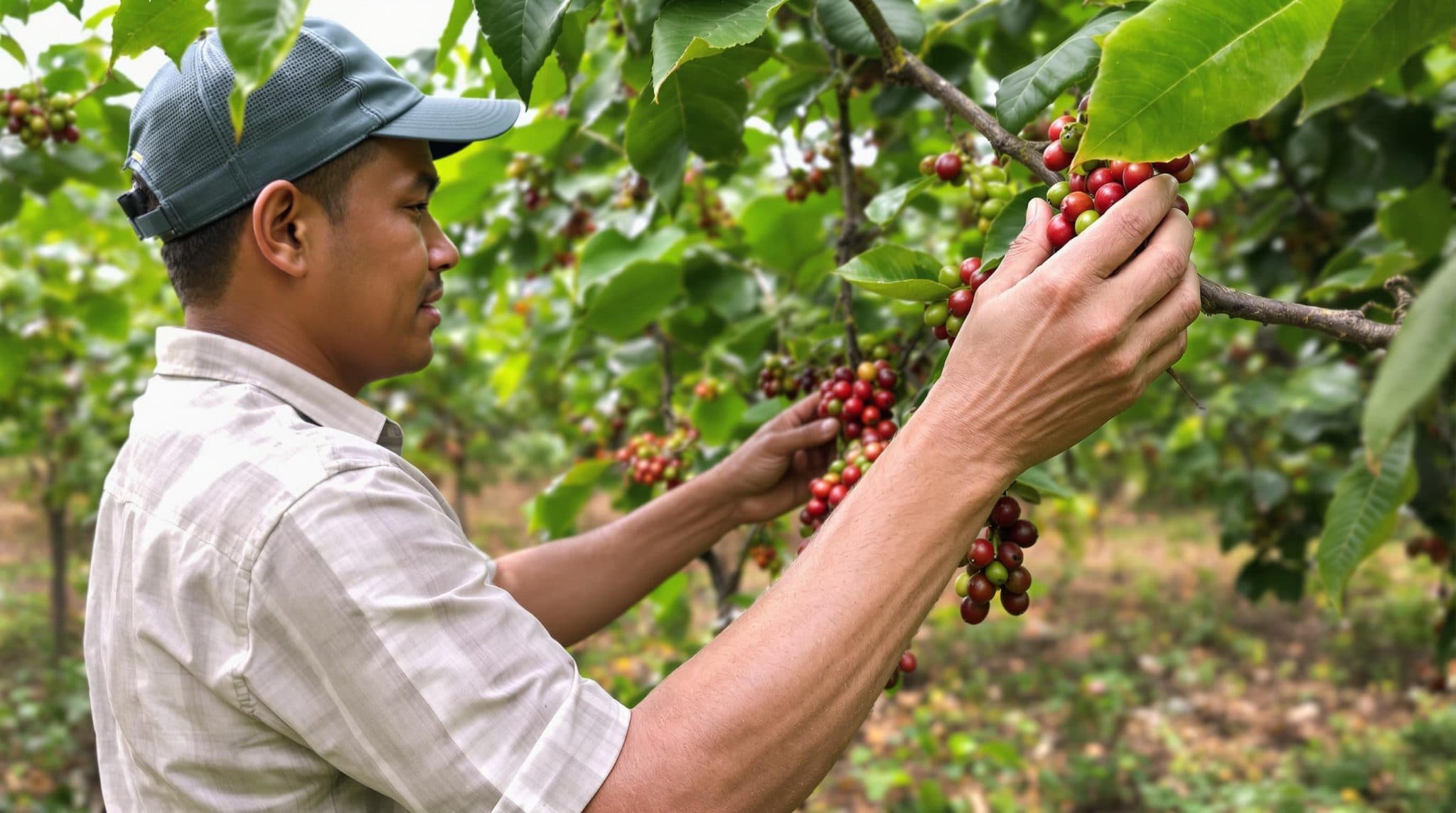
Bali has a rich history with coffee. Traders from Lombok introduced Robusta coffee to the island which thrived in the region’s rich volcanic soil. During the pandemic, Bali’s coffee industry was hailed as a savior of the island’s economy.
Industry leaders from the ‘Acceleration of Increasing Coffee Exports’ in Denpasar showed that Bali exported 87.7 tons of coffee valued at IDR 8.05 billion in 2020 and 154.9 tons worth IDR 10.7 billion in 2021. Since the pandemic, Bali’s coffee industry has seen significant growth.
For foreigners planning to invest in Bali’s growing coffee industry, understanding the legal and operational requirements is crucial for success. In this article, we will give you a comprehensive overview of how to set up your own coffee plantation in Bali.
Legal Framework for Starting a Bali Coffee Plantation
Legal Considerations for Starting a Bali Coffee Plantation Business
As a foreigner, you must comply with Indonesian laws that regulate foreign-owned businesses in agriculture. To secure 100% ownership, you must establish a Limited Liability Company (Perseroan Terbatas Penanaman Modal Asing - PT PMA). Otherwise, coffee-related ventures with foreign investors are capped at 30% foreign ownership. This form of restriction aims to promote local participation in the coffee plantation industry in Bali.
Furthermore, foreigners cannot directly own land in Bali under the Basic Agrarian Law. Instead, you may lease under the Cultivation Rights Act, which allows you to use a plot of land for farming for up to 30 years. This lease can be extended but you will not be able to own land through freehold ownership.
To help you get started, Emerhub can help you navigate through Bali’s legal framework for starting your own coffee business. Our local experts will provide you the necessary guidance and handle legal compliance on your behalf to ensure smooth operations.
Mandatory Licenses for a Coffee Plantation in Bali
As a foreign investor, there are several licenses you need to operate a coffee plantation in Bali. Non-compliance with the needed mandatory licenses may lead to legal penalties and fines. To legally operate a coffee plantation in Bali, here’s what you need:
- Business Identification Number (NIB) – serves as legal proof of your company’s registration with the government. It enables your coffee business to legally operate and is a primary document for tax registration, opening local corporate bank accounts, and import licenses for raw materials.
- KKPR (Environmental Impact Analysis) – a critical legal requirement for setting up a coffee plantation business in Bali. It ensures your business activities align with the island’s spatial and land use regulations. This permit is issued by the local government to verify that your chosen location complies with zoning laws, environmental sustainability guidelines, and agricultural land use policies. The KKPR process involved Site Evaluation, Environmental Impact Check, Regulatory Approval.
- Plantation Seeds Certificate (PB UMKU) – ensures that seeds meet quality standards suitable for the local environment. This certification not only guarantees compliance with agricultural regulations but also enhances marketability by promoting the production of high-quality, disease-resistant coffee. Additionally, Bali's coffee farmers often follow sustainable practices rooted in the local philosophy of Tri Hita Karana, which emphasizes harmony with nature and community.
- Environmental Permit – The specific Environmental Permit needs to be obtained depending on the total area of the plantation.
- <25 Ha – a Statement of Environmental Management Capability (SPPL) is required
- 25Ha - 3,000 Ha – an Environmental Management Program (UKL-UPL›) is required;
- >3,000 Ha – Environmental Impact Analysis (AMDAL) is needed to assess the potential environmental impacts of your coffee farm.
- <25 Ha – a Statement of Environmental Management Capability (SPPL) is required
- 25Ha - 3,000 Ha – an Environmental Management Program (UKL-UPL›) is required;
- >3,000 Ha – Environmental Impact Analysis (AMDAL) is needed to assess the potential environmental impacts of your coffee farm.
To help you secure all the permits for a coffee plantation in Bali, we can help ensure that your business meets all the licenses needed to operate. Not only do we provide guidance on what type of Plantation Business License is needed, but we can also assist in gathering all the requirements and liaising with Bali’s local government to expedite the application process for these licenses.
How to Export Locally-produced Coffee Beans
To export local coffee beans from Bali, you must uphold best practices to ensure your coffee beans meet international quality standards. Not only do you need to make regular cupping and grading checks and vacuum-sealed packaging, you also need to prepare all the necessary documents for exportation.
Here are the necessary documents to export locally-produced coffee beans from Bali:
- Exporter Identification Number (EIN) – a unique identifier assigned to businesses that wish to engage in export activities. It is issued by the Indonesian Ministry of Trade to facilitate customs processes.
- Export License – a formal authorization that allows a company to export specific goods. In Indonesia, this license is usually part of the broader licensing framework including a trade license (SIUP) and health and safety certifications.
- Phytosanitary certificate – Coffee beans must comply with phytosanitary regulations, which require inspection and certification to ensure they are free from pests and diseases.
- Goods Export Notification (PEB) – informs customs officials about the coffee being exported and is required for all exports.
To streamline your export operations, you can also use Emerhub’s Importer of Record (IOR) service. As your consignee, we can assist you in navigating complex import/export regulations, ensuring compliance with both Indonesian laws and those of the destination country. We will help coordinate logistics and prepare all the necessary documentation to ensure timely delivery of your coffee products.
Start Your Coffee Farm in Bali with Emerhub
Emerhub can simplify the process of starting a coffee plantation in Bali for foreign investors. We will handle all application processes, including registering your business as a PT PMA so you can have 100% foreign ownership of your company and securing necessary licenses and permits.
For those looking to export their coffee beans, Emerhub can facilitate logistics, customs clearance, and compliance with international trade regulations with our IOR service.
Ready to start your Bali coffee farm business? Fill out the form below with your information and talk to our local experts in Bali!