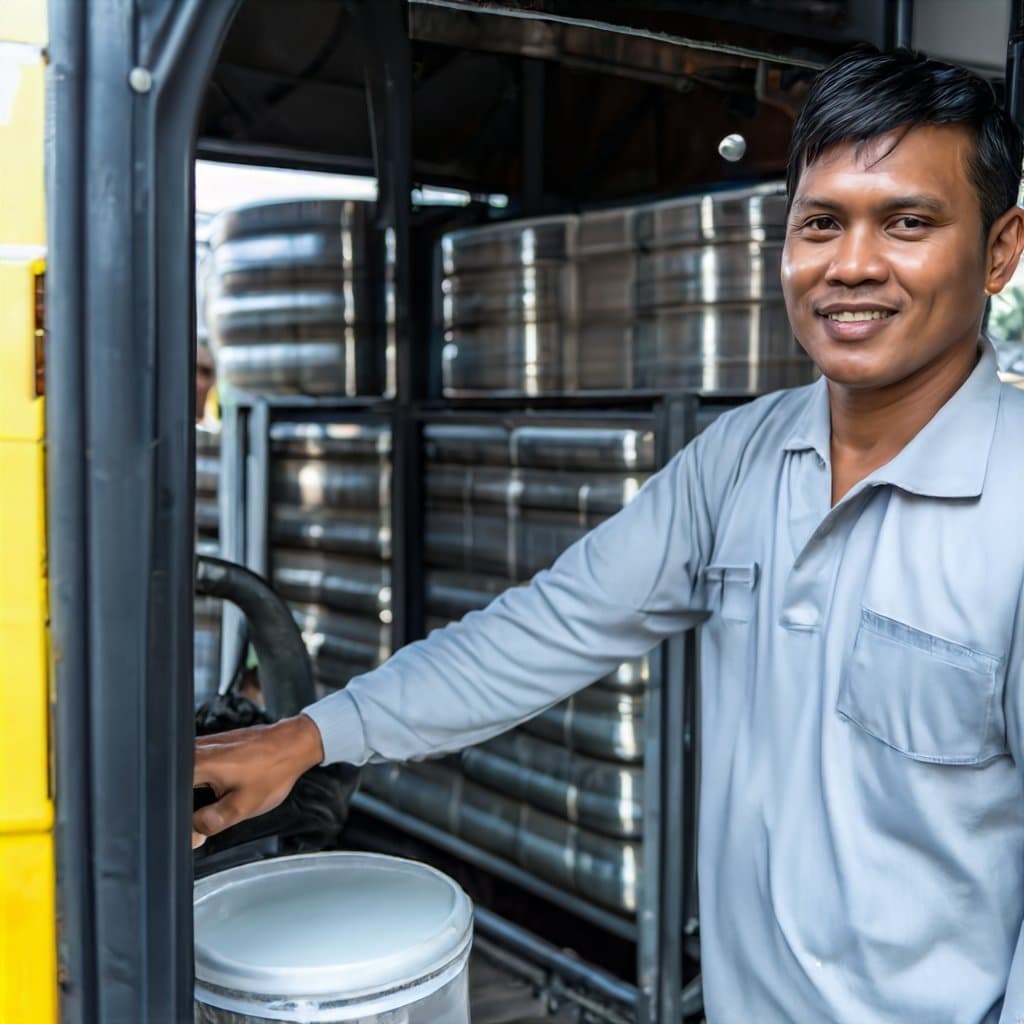
Indonesia is heavily dependent on importing milk and dairy products due to the low local production, which only covers 20% of the country's demand. Dairy cows in Indonesia only produce an average of 10 liters of milk per day. This is far lower than production in other countries which can reach up to 60 liters per day.
This has resulted in a unique market opportunity for foreign companies that are importing and selling milk and associated products in Indonesia. This article will dive deeper into this market and will walk you through the process of importing and selling your milk and dairy products in Indonesia.
Overview of the Milk Import Market in Indonesia
Indonesia Milk Consumption
Currently, Indonesia’s milk consumption market is seeing a rebound following a disease outbreak in 2022 in local milk products. Currently, estimations are that dairy consumption in 2024 will continue to increase as the post-election economy stabilizes. This will lead to a steady rise in demand for dairy:
| Estimated milk consumption (2024) | 4 million metric tons |
|---|---|
| How much is a gallon of milk in Indonesia? | Rp. 75,549.63 / USD 4.82 |
| How much demand is being met through imported milk and dairy products? | 80% |
| Primary milk and dairy importers | New Zealand, United States, Australia |

What is considered a milk product in Indonesia?
Before beginning to plan the importation and distribution of milk and milk-based products in Indonesia, it is important to understand which products are specifically considered milk-based by Indonesian regulators. Generally, a product is considered milk-based when it is derived from animal dairy:
- Milk (in any form: powder, liquid)
- Butter
- Yogurt
- Kefir
- Whey
- All kinds of dairy spreads
- Any cheese produced from dairy
- Other fermented milk products
Keep in mind that certain lactose-free products can still be derived from real dairy milk, meaning that they can still be classified as milk products. Dairy-free products, however, are usually made from plant-based sources and therefore are not classified as milk-based.
A look at the dairy import process in Indonesia
Before a company can legally import and distribute milk and dairy products in Indonesia, several steps must be followed. Each of these has been put in place by the Indonesian authorities to ensure that imported products are safe for consumption and meet certain control standards:
- Foreign Supplier Establishment Number
- Appointment of Distributor or company incorporation
- Facility Audit for getting Veterinarian Control Number (NKV)
- Import recommendation (Rekomendasi Pemasukkan)
- Importation and distribution
Understanding the preliminary steps for starting a milk import business in Indonesia
Applying for the Foreign Supplier Establishment Number
The first and foremost step to take into consideration before you can start planning to import your milk-based products is ensuring that your establishment has been fully approved to export to Indonesia. Approved companies are publicly listed through the Indonesian Directorate General of Livestock and Animal Health.
To be eligible for approval, your establishment or business unit must be properly surveilled and registered with the Veterinary Authority of the country of origin of the products. You must also have the necessary Food Safety Certification that International Authorities recognize. Once you meet the eligibility criteria, you will be required to follow the application process:
- Fill out the health and safety compliance questionnaires
- Obtain a reference letter from the country’s representative (embassy) in Indonesia
- Request review by the Ministry of Agriculture, which includes:
- Documentation review
- On-Site Audit of Establishment
- Documentation review
- On-Site Audit of Establishment
Key considerations for ensuring establishment compliance
To ensure that you meet the requirements listed above, you must answer all the questions thoroughly. You should also include the following details to prevent rejection during the document review process:
- List all products to be exported, as anything not listed will require another application down the line
- Be clear on the source of raw materials
- Check the availability of the updated shipment/export veterinary health certificate
- Include details on the movement of products, production process, recall process, workers, etc.
- Health and hygiene of facilities: include details on water source, available facilities, sanitary and pest control programs
Emerhub can review your submission as part of its Product Holder Service. Our team of advisors is well-versed in Indonesian import regulations and will ensure that your application meets all the necessary standards.
Incorporating a company or appointing an Indonesian distributor
Before you can legally import milk or dairy products into Indonesia and subsequently distribute them, you must ensure that you have a legal entity in the country. You will therefore need to determine which approach you would like to take between incorporating your own company or appointing a third party as an Indonesian distributor acting on your behalf.
Incorporation is a complex process that requires that you meet certain requirements. You will also need to determine which legal entity is best suited for your operations and how much foreign ownership you require. Emerhub’s team of advisors is well-versed in Indonesian regulations and can assist you through our comprehensive Company Registration service.
However, if you do not wish to register a foreign-owned company, you can also appoint an Indonesian distributor or use Emerhub’s Product Holder Service. As your nominee, Emerhub will hold the product registration number on your behalf and will ensure that your supplier meets the necessary Indonesian requirements. You are also free to collaborate with several distributors.
Requirements to ensure compliant import activities
Importer and distributor facility audit
The facility audit aims to confirm whether the importer and distributor have a safety and readiness implementation plan based on the import/distribution objectives and is up to regulation standards.
The facility audit can be applied for specific functions, areas, and individual products of each examined facility, for example, auditing of cold storage for milk or of milk distribution center. Audit results are publicly available through the National Information System for Veterinary Control Number Certification (NKV):

Obtaining an Import recommendation
The last step that every importer needs to complete to proceed with their operations is to obtain the Import Recommendation (Rekomendasi Pemasukkan). This confirms that your goods have the necessary clearance to enter the country.
The application involves the submission of administrative documents that confirm that all the import and distribution standards have been met and that you hold the necessary certificates. Keep in mind that additional Halal certification and BPOM registration may be required depending on which products you are importing.
Through our Product Holder Service, Emerhub can handle this process for you and ensure that you can start importing milk and dairy products into Indonesia without needing to worry about administration complexities or regulation changes. Contact one of our advisors via the form below to find out how we can assist you with your importing needs!