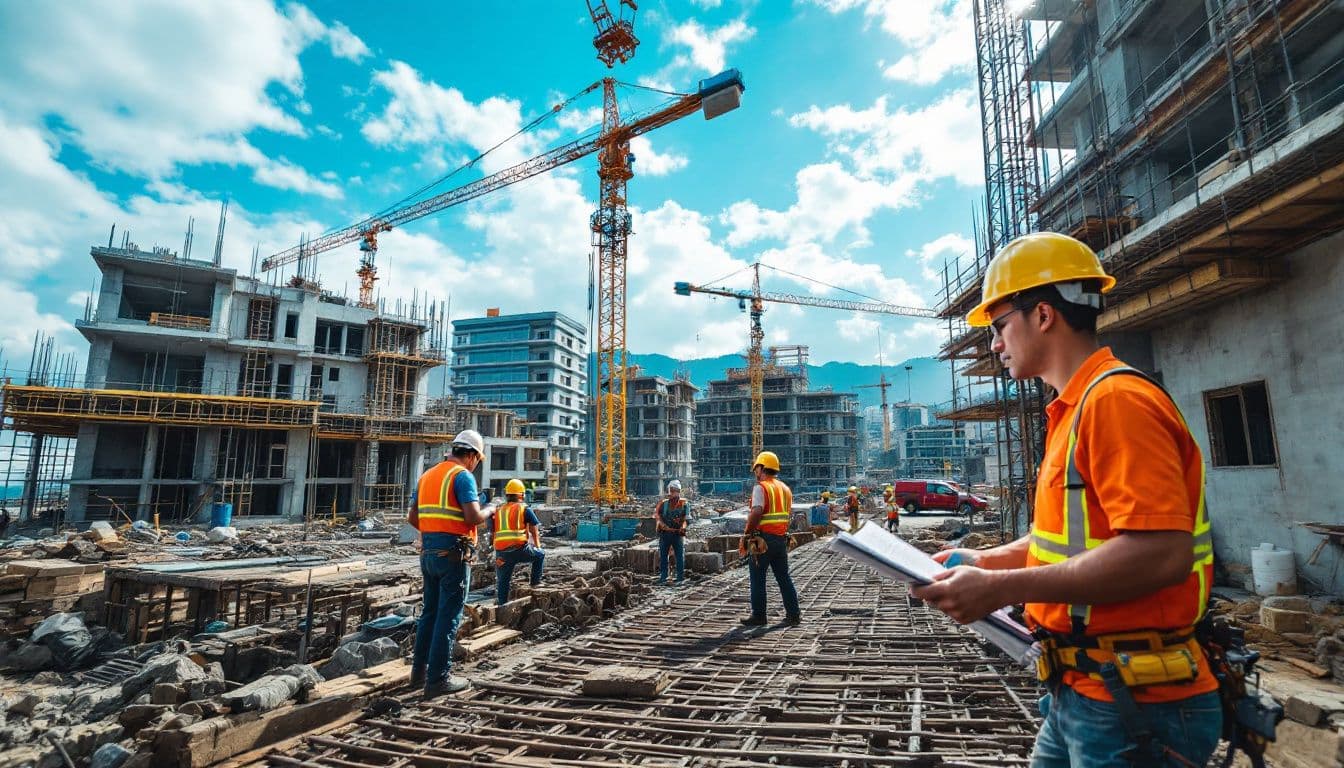
Did you know that the Philippines is actively promoting foreign investments in its construction industry? The industry’s growth is driven by rapid urbanization and government-led initiatives like the Build Better More Program and income tax holidays. In this guide, we’ll look at the key requirements and licenses for starting a construction company in the Philippines.
Overview of the Construction Industry in the Philippines
As of 2024, the construction industry in the Philippines is valued at an estimate of USD 61.7 billion with a projected annual growth rate of over 3% from 2025 to 2028.. It is a vital industry in the Philippines, contributing to its economic growth, infrastructure development, and job opportunities.
Construction companies in the Philippines can offer a wide range of services:
- General Contracting Services: Oversee the entire construction process, ensuring the project stays on schedule and within budget. Also, ensure all work meets safety standards and regulations.
- Design and Build Services: Architectural design work to meet client needs or provides integrated services of both design and construction work under one contract.
- Construction of New Structures: Includes commercial construction, residential construction, and industrial construction.
- Renovation and Remodeling Services: Altering existing structures for improvement or aesthetics, interior renovations, restoring and preserving historical structures.
- Specialty Contracting: Includes electrical contracting, plumbing service, and HVAC (Heating, Ventilating, and Air Conditioning) services.
- Excavation and Site Preparation: Land clearing for preparing construction sites and excavation which includes digging foundations, trenches for utilities, and grading land for drainage systems.
- Infrastructure Development: Includes roads, highways, tunnels, and bridges for transportation infrastructure and connectivity.
- Maintenance and Repair Services: Ongoing upkeep of buildings and addressing issues like structural damage.
- Consultation Services: Assessing project viability while taking into account cost, design, and regulatory compliance. Also providing budget estimates in detail for projects.
Key Considerations For Ensuring Regulatory Compliance For Your Construction Company in the Philippines
Types of Legal Entities for Setting up A Construction Company in the Philippines
Foreign-owned construction companies in the Philippines can operate under several types of legal entities with different requirements and ownership structures. Emerhub can advise you on the most suitable legal entity based on your future business plans and activities. The most common legal entities for setting up a construction company are:
- Domestic Corporation: Allows for 100% foreign equity specifically for companies in certain industries - the construction industry is one of them. However, there are specific requirements you will have to adhere to, including a minimum capital of USD 20 million in cash and registering with the Securities and Exchange Commission (SEC).
- Branch Office: An extension of a foreign corporation, but not considered a separate legal entity. Subjected to Philippine laws and allows for foreign ownership but must register with the SEC to perform business activities within the country. The branch must appoint a resident agent for legal processes.
- Joint Venture: Foreign companies can enter joint ventures with local firms, allowing them to pool their resources and expertise together for specific projects. Must acquire a Special PCAB License.
- Consortiums: An agreement between two or more entities to collaborate on a project. At least one member has to have a PCAB License. Must acquire a Special PCAB License.
Securing Your PCAB License For Operating Within the Construction Industry
A PCAB License is one of the key licenses that contractors can obtain to operate legally within the construction industry in the Philippines. It ensures compliance with industry standards on competency, financial security, safety, and technical expertise.
To be eligible for a PCAB license, applicants must have:
- At least 2 years of construction experience
- At least 2 years of business management experience
- Be at least 25 years old for a Regular PCAB License and 18 years old for a Pakyaw License
- Proven financial stability with a net worth that meets the minimum requirements for the contractor categories you’re applying for
- Valid working visas, permits, and identification cards for foreigners
- Completion certificates for AMO and COSH seminars
If you are not a sole proprietor, you will have to appoint an Authorized Managing Officer (AMO) who meets the same requirements and experience as listed. The AMO must be a resident of the Philippines as well. Remember that most projects will also require an Environmental Compliance Certificate issued by the Department of Environment and Natural Resources (DENR) as well.
How to Legally Hire Employees in the Philippines
For hiring construction workers, there are certain certifications and licenses to keep in mind that ensure your workers have undergone proper training. As such, they are aware of the standards and safety requirements of the country and are professionals in their field. These certifications include:
- Construction Occupational Safety and Health (COSH) Certification: Mandatory certification with a 40-hour program that equips participants with skills to identify hazards, assess risks, and implement effective measures.
- Construction Safety and Health Program (CSHP) Certification: Ensures construction teams are trained to prioritize worker safety and comply with legal requirements.
- Professional Regulation Commission (PRC) Licenses: Necessary for certain professionals in the construction industry like engineers and architects. It verifies that these professionals have undergone the necessary educational and examination requirements.
- Project Management Professional (PMP) Certification: Validates a project manager’s expertise in managing projects effectively from start to finish across various domains (budgeting, planning, risk management, etc.).
- National Certificates (NC II, III, IV): Awarded by the Technical Education and Skills Development Authority (TESDA) for proficiency in certain trades like carpentry, plumbing, electrical work, etc. Showcases that workers have undergone rigorous training.
If you are looking to hire foreign workers, you will have to abide by certain requirements like employment permits and work visas. You also are required to register your employees for mandatory social security and health benefits. To learn more, take a look at our related post on hiring foreign workers in the Philippines.
How to Start A Construction Company in the Philippines
Emerhub offers a comprehensive company registration service to help you set up your construction company. Our local consultants will take care of all the necessary paperwork, liaise with the local governing authorities, and even take care of your employee payroll for you.
- Register Business: Register your company with all the necessary local governing units like the Bureau of Internal Revenue and the Department of Trade and Industry.
- Secure Permits and Licenses: Obtain the mandatory business and construction licenses and certifications for the legal operations of your business.
- Find Suppliers, Hire Staff, and Get Equipment: Once your business is established, locate and do background checks on reliable suppliers, hire employees based on labor laws, and get the proper construction equipment which may require additional licenses or permits to handle.
- Consider Bidding for Government Projects: If you are interested in government projects, you will have to demonstrate your company’s capabilities and obtain the necessary PCAB License.
Interested in setting up a construction company in the Philippines? Let our local experts at Emerhub assist you with the process. Fill out the form below and we’ll get in touch.