
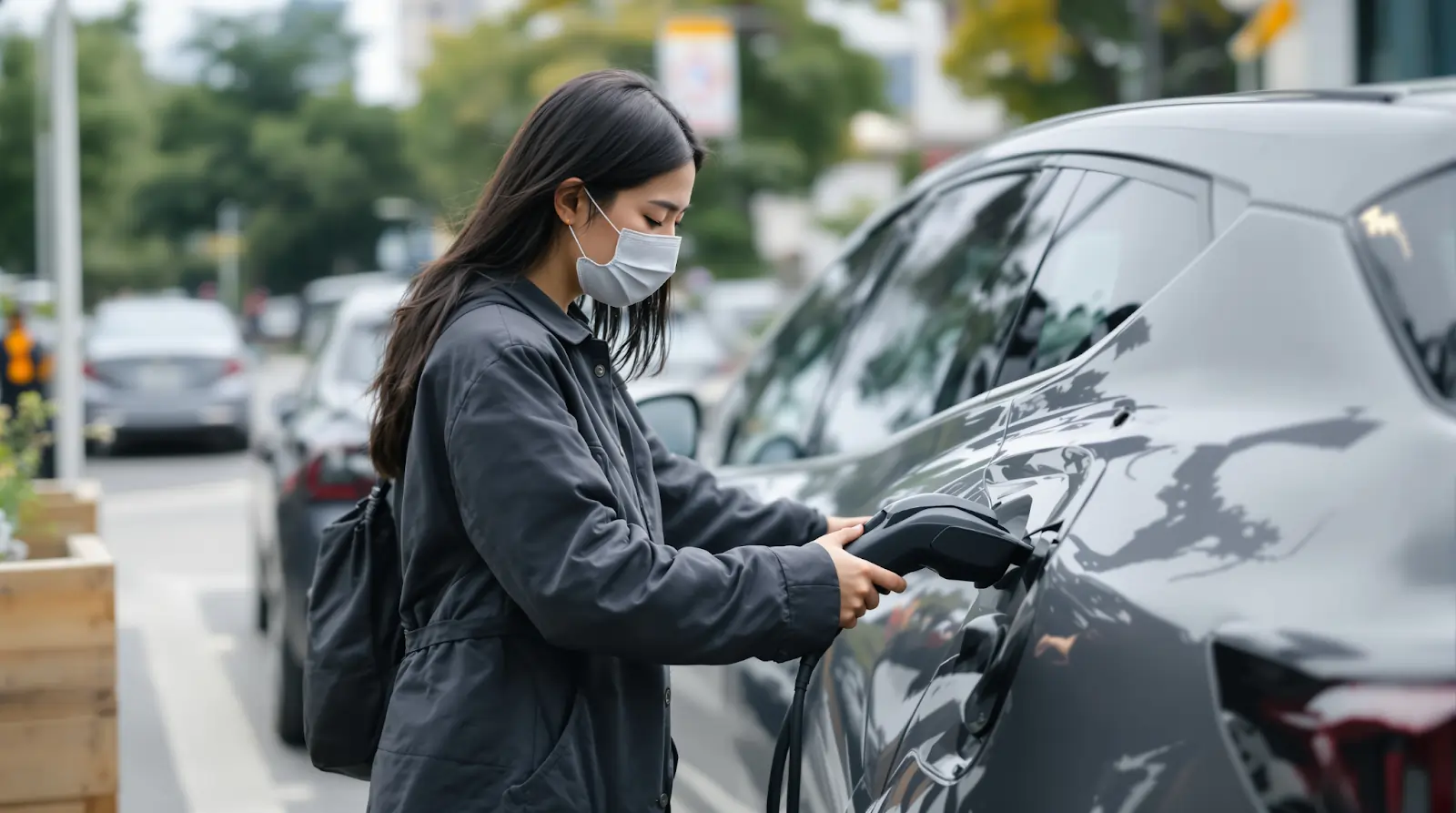
In 2022, the Philippine government set a target of 7,300 EV charging stations by 2028 with the Electric Vehicle Industry Development Act (EVIDA). The Act provides zero-tariff imports, tax breaks, and a requirement for malls and gas stations to provide charging slots.
Fast forward to April 2026, and the country is still well short of that target. While EV registrations have surged to over 60,000 units, there are currently only 1,569 charging points nationwide.
Now with the government pivoting away from internal combustion engine (ICE) subsidies to launch a PHP 60-billion ($1 billion) EV Incentive Strategy (EVIS), the window to enter early is closing.
If you are looking to start an EV charging station business in the Philippines, this guide will walk you through the essentials from accreditation to mandatory requirements.
Understanding the Electric Vehicle Industry Development Act (EVIDA)
EV charging infrastructure in the Philippines is governed by the Electric Vehicle Industry Development Act (EVIDA), or Republic Act No. 11697, signed in April 2022.
EVIDA designates the Department of Energy (DOE) as the primary agency overseeing the development of charging infrastructure. Under EVIDA, every commercial charging station in the Philippines must be operated by a DOE-accredited provider, and every station location must be individually registered. Without accreditation, you cannot legally collect fees from EV users.
This act also created the demand side of this market. The law requires government buildings, malls, public parking areas, and gasoline stations to install EV charging infrastructure. Property owners and fuel station operators who do not want to run chargers themselves need to partner with accredited providers.
For entrepreneurs who want to enter the EV charging market, getting DOE accreditation early positions you to serve that mandated demand as it rolls out across the country.
Incentives for Starting a Charging Station in the Philippines
Although most focus on EVIDA’s cheap import of electric cars, the Act together with 2024–2028 Strategic Investment Priority Plan (SIPP) offer much more aggressive fiscal perks specifically for those building the charging network.
1. Duty-free Imports on Charging Equipment
The most immediate benefit for a station operator is the 8-year exemption from import duties on completely built-up (CBU) charging stations and equipment until 2030.
This covers everything from Level 2 AC chargers to high-speed DC Fast Chargers. Since most high-end hardware is currently imported, this effectively slashes your initial setup costs by 15% to 30% compared to traditional retail hardware imports.
2. Operational Tax Breaks from BOI Registration
As an EV Charging Station (EVCS) provider, your business qualifies under Tier II of the SIPP, allowing you to apply for Board of Investments (BOI) registration. Here are some benefits to registering your EVCS with BOI:
- Income Tax Holiday (ITH): 4 to 7 years of 100% exemption from corporate income tax.
- Enhanced Deductions: After your ITH ends, you can claim additional deductions on power costs and labor for another 5 to 10 years—a critical perk given the Philippines' high electricity rates.
- VAT Incentives: Zero-rating on local purchases of telecommunications, power, and water directly used for the station's operation.
3. The "Green Lane" Express (EO 18)
Under the Green Lane Initiative (Executive Order No. 18), EV infrastructure projects are classified as "Strategic Investments”.This mandates that government agencies (both national and local) must process your permits within a strictly fast-tracked timeline. In early 2026, some developers reported getting occupancy and electrical permits in under 4 months compared to the usual 9 months.
4. EO 12 and the EVIS Fund
The zero-tariff policy on vehicles (extended through 2028) and the new PHP 60-billion ($1B) EV Incentive Strategy (EVIS) are your "market insurance." By making EVs cheaper to buy and even subsidizing local production, the government is ensuring your customer base grows by an estimated 60% year-on-year.
This policy was introduced through Executive Order No. 12, originally signed by President Ferdinand Marcos Jr. in January 2023. The order temporarily reduced import duties on EVs and their components from a range of 5% to 30% down to zero.
In May 2024, the NEDA Board (chaired by the President) expanded the scope of the policy to include a broader range of vehicles and parts.
Under the expanded EO 12, the following are now covered by zero-tariff import rates until 2028:
- Battery electric vehicles (BEVs) such as cars, vans, buses, and trucks
- Hybrid electric vehicles (HEVs) and plug-in hybrid EVs (PHEVs)
- Electric motorcycles and electric bicycles
- Electric tricycles (e-tricycles) and quadricycles
- Nickel metal hydride (NMH) accumulator batteries
- Completely knocked down (CKD) EVs for all vehicle types
- EV parts and components
Key Permits and Approvals Required for an EV Charging Business
1. DOE EVCS Provider Accreditation
Under Department Circular No. DC2023-05-0011 (the EVCS Providers Accreditation and EVCS Registration Guidelines), any person or company that sells, constructs, installs, maintains, owns, or operates an EV charging station for a fee must be accredited by the DOE.
DOE-accredited EVCS providers are classified into three categories based on their scope of operations:
- EVCS Provider (Operator): Collects fees from EV users in exchange for use of the charging facilities. This is the commercial-facing role.
- EVCS Provider (Service): Focuses on the maintenance, repair, and technical servicing of charging equipment.
- EVCS Provider (Supplier): Handles the sale and distribution of EV charging equipment and components.
If you plan to own a charging station but buy equipment from a separate supplier and hire a separate company to maintain it, you would simply need an Operator classification. However, if you own the stations, sell the equipment, and provide maintenance, you need all three classifications.
Once accredited, your charging stations per location must also be individually registered with the DOE through the same portal.
April 2025 Update: The DOE published the Implementing Guidelines on the Obligations of EVCS Providers and EVCS Requirements, Specifications, and Interconnectivity (IG-ORSI). This new set of rules introduced clear installation requirements for charging stations (particularly for Mode 4 (DC fast chargers) and outlined the interconnectivity standards all providers must comply with. If you are setting up fast-charging infrastructure, you must be familiar with IG-ORSI.
2. Business Registration and Mayor's Permit
Like any business in the Philippines, your EV charging station must be properly registered and licensed to operate. This involves:
- SEC Registration (for corporations or partnerships) or DTI Registration (for sole proprietorships) to legally establish your business entity.
- BIR Certificate of Registration (Form 2303) to register as a taxpayer and legally issue receipts.
- Mayor's Business Permit (Local Business Permit) issued by your Local Government Unit (LGU). This is required before you can commence operations and must be renewed annually every January.
Annual Business Permit Renewal: Your Mayor's Permit must be renewed with your LGU every January. Failure to renew means your business is technically operating without authorization, which exposes you to fines and potential closure orders.
The Mayor's Permit in particular can require supporting documents like barangay clearances, sanitary permits, and proof of building compliance. Emerhub can help you coordinate with your local LGU where your charging station is located to process these requirements.
3. Building Permit and Electrical Permit
Because an EV charging station is a physical installation, you will need to comply with the National Building Code of the Philippines (PD 1096). This means securing a Building Permit from the Office of the Building Official (OBO) of your LGU before any construction or installation begins.
Along with the building permit, you will also need an Electrical Permit to authorize the electrical work. This is especially important because EV chargers (especially DC fast chargers) require significant electrical infrastructure modifications, including upgraded service panels, dedicated circuits, and proper grounding systems.
A licensed Electrical Engineer must certify the installation, and the completed work may be subject to inspection by the building official before you receive a Certificate of Inspection. This is required to connect the facility to power lines under the National Building Code.
4. Distribution Utility (Electric Company) Endorsement
To connect your charging station to the power grid, you need to coordinate with your local Distribution Utility (DU) (e.g. Meralco). The DU will assess your load requirements and connection application.
This step is particularly important if you plan to install high-power DC fast chargers, which can draw significant electrical loads. The DOE's Charging Infrastructure Development Plan (CIDP) is also being integrated with the Distribution Development Plan (DDP) to optimize grid capacity.
5. Environmental Compliance (Where Applicable)
Depending on the size and nature of your installation, you may need to assess whether an Environmental Compliance Certificate (ECC) or a Certificate of Non-Coverage (CNC) is required from the Department of Environment and Natural Resources – Environmental Management Bureau (DENR-EMB).
For most standard EV charging station installations, the environmental impact is minimal, and a CNC is typically issued. However, if your facility is part of a larger construction project, you will need to conduct an Environmental Impact Assessment (EIA) and secure an ECC before proceeding.
Technical Requirements for EV Charging Stations
Your charging infrastructure also needs to meet specific technical standards set by the DOE and other government agencies. Here is what you need to know.
Charging Modes and Types
EV chargers in the Philippines are categorized according to their charging mode:
- Mode 2 (AC Level 2): Used for semi-fast home or overnight charging. Typically outputs between 3.3 kW and 22 kW.
- Mode 3 (AC Charging): Commercial-grade alternating current chargers commonly found in public stations and commercial establishments.
- Mode 4 (DC Fast Charging): The fastest option, delivering direct current (DC) directly to the vehicle's battery. These are the high-power chargers typically found along highways and commercial hubs.
For public commercial operations, Mode 3 and Mode 4 chargers are the standard. The DOE's IG-ORSI specifically addresses installation requirements for Mode 4 chargers. These are subject to stricter technical and safety specifications given the high power levels involved.
Connector Standards and Interoperability
One of the key provisions of DC2023-05-0011 is the mandate for the adoption of a harmonized charging connector standard. This means your charging equipment must support connectors that are compatible with the vehicles available in the Philippine market.
The DOE has been pushing for interoperability so that EV users can charge at any accredited station regardless of their vehicle brand. Before purchasing equipment, verify that your chargers support the connector types recognized under the current Philippine standards.
Minimum Safety and IP Ratings
The EVCS must meet minimum Ingress Protection (IP) ratings, particularly for outdoor installations where exposure to rain and moisture is a real concern. The IG-ORSI sets out these safety specifications, and compliance is mandatory for DOE registration. Your equipment supplier should be able to provide documentation certifying that the units meet the required IP standards.
Electrical System Compatibility
Your electrical system must be designed to support the power requirements of your chosen charging equipment. According to the DPWH Department Order No. 136 (s. 2025), if the existing infrastructure cannot support the charger's required voltage or load, an upgraded electrical service panel or new infrastructure must be installed.
This is a critical planning consideration since underestimating your power requirements can lead to costly retrofits after installation.
Charging Fee Transparency (Unbundling Requirements)
Under Department Circular DC2023-05-0010, commercial EVCS operators are required to unbundle their charging fees. This means you cannot simply charge a single flat rate. You must break down the fee into its components, which may include electricity consumption, time-based usage, or fixed service fees.
Any adjustments to your charging fees must also be submitted to the DOE's Energy Utilization Management Bureau (EUMB) for acceptance before implementation. This rule exists to promote pricing transparency and protect EV users from hidden charges.
How to Start an EV Charging Business in the Philippines
Entering the Philippine EV market requires navigating a multi-layered regulatory environment involving the SEC, DOE, ERC, and local government units. Emerhub provides end-to-end corporate services to streamline this process for you.
We assist in the formation of your legal entity (whether through a domestic corporation or a foreign-owned branch) ensuring your business structure is optimized for compliance and local incentives. We can act as your local partner to liaise with government agencies, managing the complexities of DOE accreditation, EUMB reporting, and local permit acquisition.
Our team ensures that your technical documentation meets Philippine National Standards. With Emerhub, you can focus on scaling your operations while we handle the regulatory groundwork.
Contact our local experts for a free consultation about starting an EV charging station in the Philippines.
Frequently asked questions
Do I need to be a large corporation to apply for DOE EVCS Provider accreditation?
The DOE's accreditation process is open to both natural persons and juridical entities (corporations, partnerships, cooperatives, etc.). Small and medium enterprises can and do apply. What matters is that you meet the documentary and technical requirements specified by the DOE under DC2023-05-0011 and comply with the applicable implementing guidelines.
Does the zero-tariff policy apply to second-hand or used EV equipment?
The zero-tariff policy under Executive Order No. 12 primarily applies to new imported EVs and components. If you are considering importing second-hand charging equipment or vehicles, different rules and tariffs may apply. Consult with our specialists to determine the applicable rates and conditions before importing.
Can I set up an EV charging station in a residential building or condominium?
EVIDA mandates the installation of EV charging infrastructure in parking areas of residential buildings and condominiums. If you are a property developer or building administrator, you are legally required to provide charging-ready slots. Private individuals can also install home charging units, though commercial-use stations that collect fees from other users would require DOE accreditation.
Are gasoline stations legally required to install EV charging stations?
Under Section 19 of EVIDA, gasoline station owners are mandated to install, operate, or maintain commercial-use charging stations on their premises. The DOE has been drafting the specific implementing rules and public consultations were scheduled for the second quarter of 2025. Gasoline station owners should monitor updates from the DOE to ensure timely compliance.
What are the penalties for operating an EV charging station without accreditation?
Operating a commercial-use EVCS without DOE accreditation is a violation of EVIDA and its implementing rules. The law specifies penalties for violations under Section 28 of EVIDA, which can include fines and other administrative sanctions. Beyond legal penalties, operating without accreditation also exposes your business to reputational and liability risks if incidents occur.