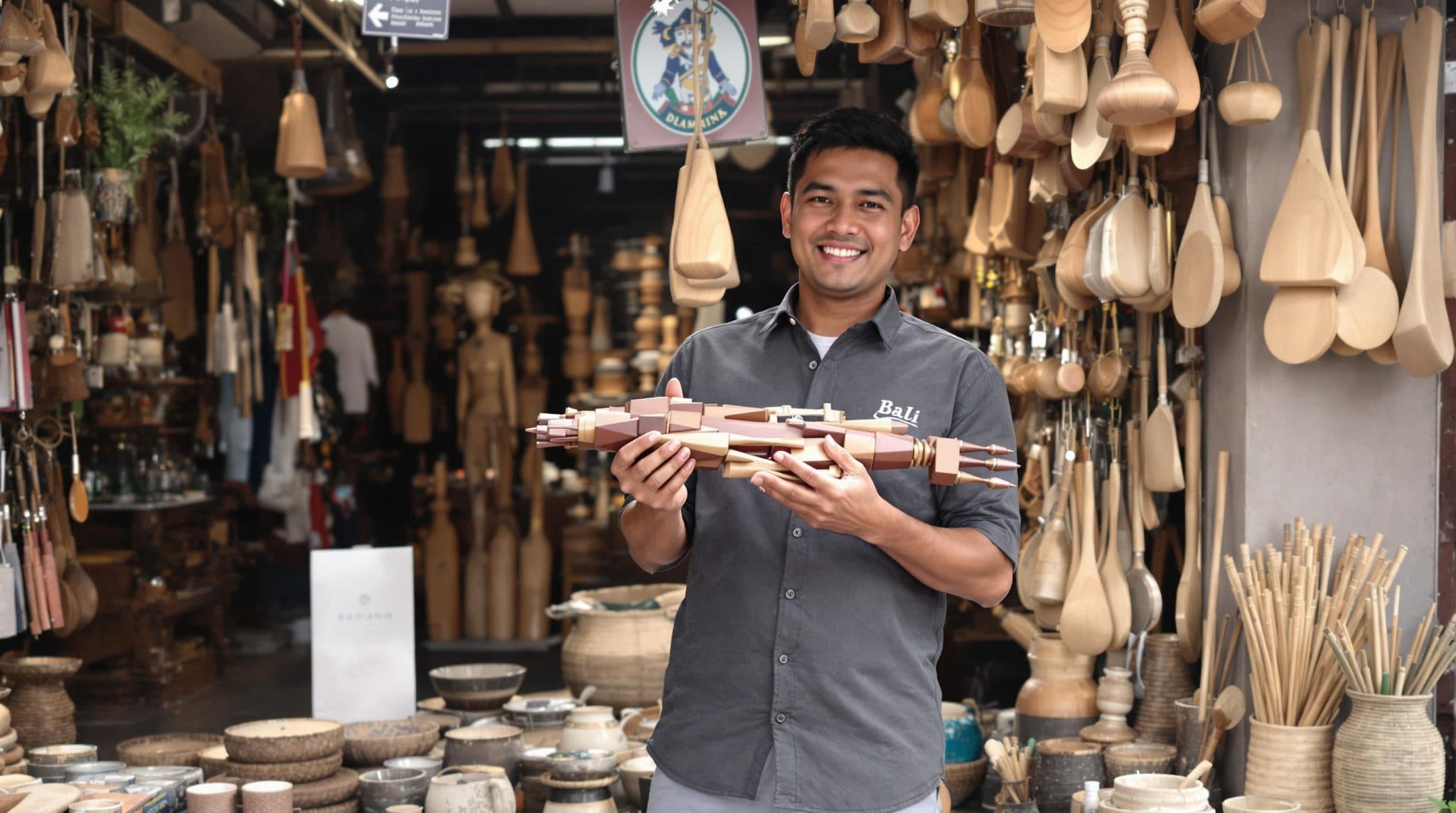
Starting a Bali handicrafts business offers you a unique opportunity to tap into the region’s rich artisanal heritage and growing global demand for cultural handmade products. This guide walks you through the key steps to establish your business legally and effectively, from sourcing authentic products to navigating local regulations.
Overview of Bali’s Handicrafts Industry
Tax Incentives for Operating A Bali Handicrafts Business
Operating a Bali handicrafts business comes with various tax incentives aimed at supporting local cultural industries and attracting international entrepreneurs. Emerhub can help you harness these benefits, which can in turn reduce costs, improve profitability, and simplify compliance with local tax regulations:
- Corporate Income Tax (CIT) Reduction: Small enterprises with annual turnover up to IDR 50 billion are entitled to a 50% discount on the standard 22% CIT rate, applied proportionally to taxable income on gross turnover up to IDR 4.8 billion.
- Import Duty and Tax Benefits: Reduced import duties on raw materials and equipment used for production.
- Value Added Tax (VAT) Incentives: VAT exemption on imports or domestic purchases of certain goods and services related to production.
Government Initiatives Promoting Handicrafts Enterprises in Bali
In addition to tax incentives, the Indonesian government has introduced various initiatives to support and promote the growth of handicraft enterprises in Bali. These programs are designed to enhance market access, boost competitiveness, and foster sustainable development for local artisans and business owners. Key initiatives include:
- Infrastructure Development: Creative hubs and incubators, such as the Bali Creative Industry Center, are pivotal in empowering local artisans. These hubs provide essential resources like training facilities, seminars, and networking opportunities. It fosters skill development and collaboration within the handicraft industry.
- Financial Support: Tailored financial programs ensure artisans and small businesses in the handicraft sector can thrive. Initiatives such as Small Investment Credit and Kredit Modal Kerja Permanent (Permanent Working Capital Credit) offer loans, grants, and credit facilities with favorable terms, enabling businesses to expand and innovate.
- Policy and Regulatory Support: Local Regulation No. 6/2012 in Denpasar plays a crucial role in preserving and promoting Balinese culture. By mandating the use of traditional Balinese fabrics like Endek in government offices and public spaces, the policy directly supports the growth and demand for the Endek fabric industry.
- Collaborative Ecosystem: A robust ecosystem has been established to promote local handicrafts. Partnerships with e-commerce platforms like BaliMall.id allow artisans to reach broader markets. Moreover, collaboration among ministries—such as the Ministry of Trade, Ministry of Industry, and Ministry of Tourism and Creative Economy—drives export-focused initiatives like the "I'm Ready to Export" (ASE) program, boosting global visibility for Bali’s handicraft products.
Key Requirements for Setting Up A Handicrafts Business
Requirements for Registering Your Bali Handicrafts Business
To establish a handicrafts business, you must first register a PT PMA (Limited Liability Company) to have a legal entity for operations. A PT PMA establishment generally has the following requirements:
- Minimum paid-up capital of IDR 2.5 billion
- At least 2 shareholders
- At least one Director
- At least one Commissioner
In addition to the PT PMA, the following documentation is required to set up your Bali handicrafts business:
- Business Identification Number (NIB)
- Trading Business License (SIUP)
- Company Registration Certificate (TDP)
- Tax Identification Number (NPWP)
- Building Permit (PBG)
- Location Permit / Surat Izin Tempat Usaha (SITU)
Other Legal Considerations for Your Bali Handicraft Business
In addition to the essential documents and establishing your PT PMA, there are several key legal considerations to ensure your Bali handicrafts business remains fully compliant with Indonesian regulations. Addressing these legal aspects is crucial for smooth operations and to avoid potential legal complications down the line:
- Register for VAT if your company’s annual turnover reaches IDR 4.8 billion.
- Obtain product-specific licenses where applicable—for example, obtaining an SNI certification for regulated products.
- Adhere to Minimum Order Quantities (MOQ) which are relatively low to moderate amounts, starting around 100-300 pieces per order.
Emerhub makes the process of registering your Bali handicrafts business straightforward and hassle-free. From PT PMA registration, VAT registration, obtaining product-specific licenses, and securing necessary permits and documentation, we ensure a seamless experience to establish your business in Bali.
Important Considerations for Starting A Bali Handicrafts Business
Cultural and Environmental Impacts for Operating A Bali Handicrafts Business
When starting a Bali handicrafts business, you must consider the cultural and environmental impact your business may have. Being mindful of these factors is not only important for maintaining good relationships with the local community but also helps ensure the sustainability of your business:
- Preserving Traditional Techniques: Respect and preserve traditional crafting techniques passed down through generations. Work closely with local artisans to ensure authenticity in both designs and production methods.
- Respecting Religious and Spiritual Practices: Avoid commodifying sacred objects or symbols without a proper understanding and respect for their cultural significance. Be mindful of the spiritual value of certain crafts, particularly those used in religious ceremonies.
- Sustainable Materials Sourcing: Prioritize the use of locally sourced, renewable materials such as bamboo, rattan, and natural fibers. Adopt responsible harvesting practices to help preserve natural resources.
- Eco-Friendly Production Processes: Minimize the use of harmful chemicals in production processes. Implement water conservation measures in workshops and production facilities.
- Waste Reduction and Management: Implement recycling and composting programs for production waste. Develop strategies to minimize waste throughout the production process.
How to Hire Local Artisans For Your Bali Handicraft Business
Hiring local artisans is essential for a successful Bali handicrafts business. By collaborating with skilled artisans from Bali’s villages, you create authentic products while supporting local livelihoods and contributing to the island’s economy. This partnership also helps preserve traditional Balinese craftsmanship, providing opportunities for older generations to pass on their skills to younger artisans, ensuring the continuity of these cultural practices.
Aside from the cultural and economic advantages, you must comply with local labor laws. This includes adhering to minimum wage requirements and registering artisans for vital social security programs like BPJS Kesehatan and BPJS Ketenagakerjaan, ensuring fair treatment and protection for your workforce.
At Emerhub, we provide end-to-end services to help you set up your Bali handicraft business. Our local expert business advisors are well-equipped to handle your employee payroll, and social security registrations such as BPJS Kesehatan and BPJS Ketenagakerjaan, ensuring full compliance with local labor laws.
Ready to launch your handicraft business in Bali? Simply fill out the form below, and our local business experts will contact you to guide you through the process.
Frequently asked questions
Can I export Balinese handicrafts?
Yes, you can export Balinese handicrafts. You may need to register with customs and obtain additional certifications depending on the products.
Are there any tax incentives for handicraft businesses in Bali?
Yes, there are various tax incentives including potential reductions in import duties and VAT exemptions on certain goods and services.
How do I ensure quality control in handicraft production?
Implement strict quality control measures, work closely with artisans, and inspect products for flaws or defects regularly.
Do I need a local partner to start a handicraft business in Bali?
No, you don't necessarily need a local partner. A PT PMA allows up to 100% foreign ownership.