
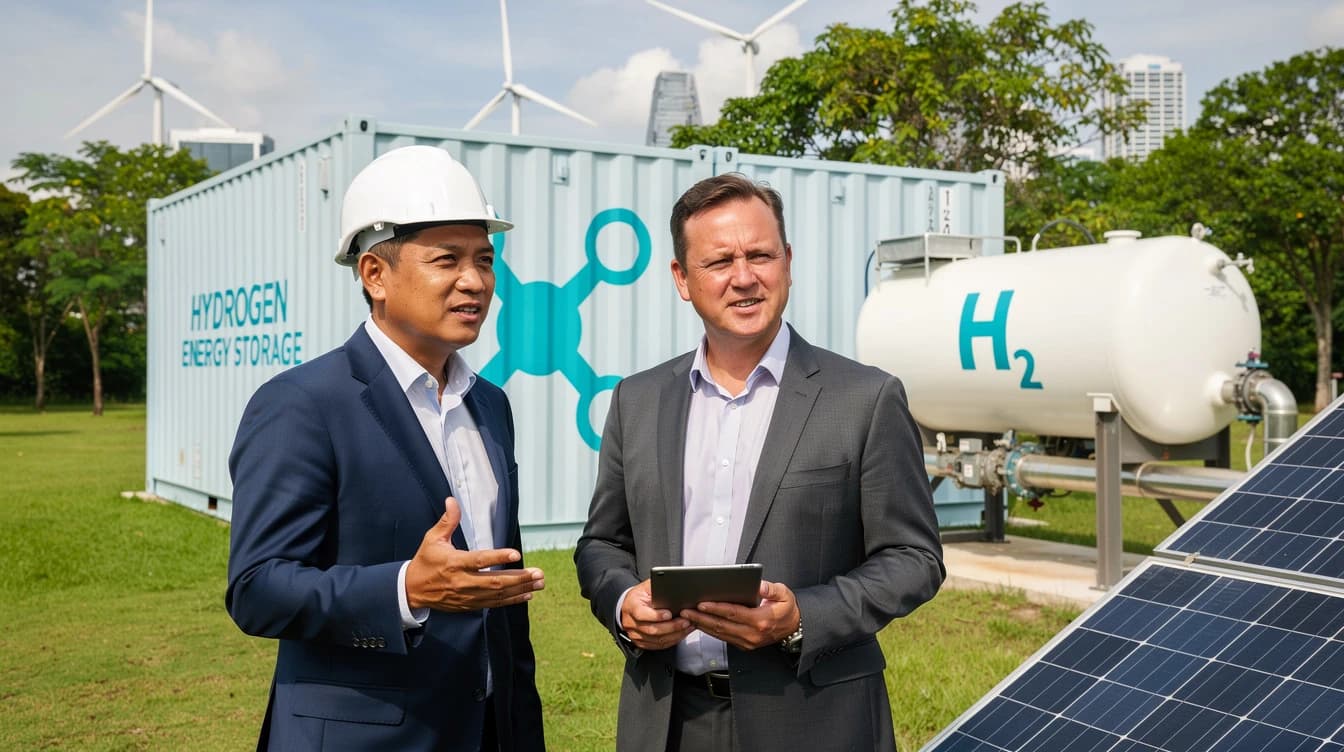
Are you planning a renewable energy, EV charging, or other green technology investment in Malaysia? The Green Investment Tax Allowance (GITA) can give your company a tax allowance of up to 100% of qualifying capital expenditure, depending on the project or asset.
The current framework runs through 31 December 2026, while Budget 2027 proposes revised incentives for 2027 to 2030. In this article, we will walk you through how GITA works, the current and 2027 rates, who can qualify, and how to apply.
How the Green Investment Tax Allowance Works
GITA allows your company to claim a percentage of qualifying capital expenditure as a tax allowance. You then use that allowance against a specified percentage of statutory income, reducing the amount subject to corporate income tax. Any allowance that cannot be fully used can generally be carried forward until it is absorbed.
Malaysia currently divides its green technology tax incentives into three main categories:
| Incentive | What it covers | Where you apply |
|---|---|---|
| GITA Project | Companies carrying out a qualifying green activity as their business | Malaysian Investment Development Authority (MIDA) |
| GITA Asset | Companies buying qualifying green technology for their own operations | Malaysian Green Technology and Climate Change Corporation (MGTC) |
| Green Income Tax Exemption (GITE) Solar Leasing | Companies earning qualifying income from solar PV leasing | Sustainable Energy Development Authority (SEDA) verification, followed by MIDA |
The distinction between GITA Project and GITA Asset is important. If the green activity itself generates your company's income, you are generally looking at GITA Project. If your company is buying green equipment to use in its own operations, GITA Asset is the relevant incentive.
GITA Project: Current Rates and 2027 Changes
GITA Project applies where the green activity itself is the company's business, such as operating EV charging stations or generating renewable energy.
Under the current framework, qualifying GITA Project activities receive a 100% allowance, although the percentage of statutory income that can be offset varies by activity. Applications under these terms are open until 31 December 2026.
Budget 2027 proposes a revised structure from 1 January 2027:
| Activity | Current terms through 31 Dec 2026 | Budget 2027 |
|---|---|---|
| Green hydrogen | 100% GITA, set off against 100% or 70% of statutory income, up to 10 years (5 + 5) | Same treatment |
| Ocean thermal energy conversion | Not covered | 100% GITA, set off against 100% or 70% of statutory income, up to 10 years (5 + 5) |
| EV charging stations | 100% GITA, 100% set-off, 5 years | 60% GITA, 70% set-off, 5 years |
| Biomass, biogas, mini hydro, geothermal and wind | 100% GITA, 70% set-off, 5 years | 60% GITA, 70% set-off, 5 years |
| Solar | 100% GITA, 70% set-off, 5 years | Not listed |
| Integrated waste management | 100% GITA, 100% set-off, 5 years | Not listed |
The Budget 2027 tax measures propose that these GITA Project terms apply to applications received by MIDA from 1 January 2027 to 31 December 2030.
The changes are significant for projects already being planned. EV charging and most renewable energy projects move from a 100% allowance to 60%, while solar and integrated waste management are not included in the proposed 2027 GITA Project list.
Note: The 2027 measures were announced in Budget 2027 on 9 October 2026 and are still proposals. The implementing legislation and updated MIDA and MGTC guidelines should be checked before relying on the new framework.
Example: EV Charging Before and After 2027
Assume an EV charging operator invests RM10 million in qualifying equipment and has enough statutory income over the incentive period to use the full allowance.
| Current terms | Budget 2027 | |
|---|---|---|
| Qualifying expenditure | RM10 million | RM10 million |
| GITA rate | 100% | 60% |
| Total allowance | RM10 million | RM6 million |
| Maximum set-off | 100% of statutory income | 70% of statutory income |
| Potential tax value at the standard 24% corporate tax rate | RM2.4 million | RM1.44 million |
This simplified example assumes the company can ultimately use the full allowance.
Under the current rules, an EV charging operator can use GITA against up to 100% of statutory income. Under the Budget 2027 proposal, the allowance itself falls to 60% and the annual set-off is limited to 70%, so both parts of the incentive become less generous.
GITA Asset: Current Rates and 2027 Changes
GITA Asset covers the other common situation: your company is buying green technology to use in its own operations rather than earning income from the green activity itself.
Under the current framework, the asset must be new, owned by the company, and used in its Malaysian operations for its own consumption. Qualifying assets must also meet MGTC requirements and, where applicable, be listed in the MyHIJAU Directory.
The current rates are:
| Current tier | GITA | Set-off | Examples |
|---|---|---|---|
| Tier 1 | 100% | 70% of statutory income | Qualifying commercial EVs and EV infrastructure, battery energy storage systems and green buildings |
| Tier 2 | 60% | 70% of statutory income | Renewable energy systems, energy-efficiency equipment, waste systems and water systems |
The current incentive covers qualifying capital expenditure incurred from 1 January 2024 to 31 December 2026. The existing MGTC application window also runs through the end of 2026.
GITA Asset from 2027
Budget 2027 retains the two-tier structure and the 70% statutory-income set-off, but changes which assets qualify for each rate.
Tier 1: 100% GITA
This includes qualifying commercial vehicles on the Finance Minister's approved list, such as buses, vans, forklifts, lorries and heavy vehicles including prime movers. It also covers locally produced EV infrastructure, locally produced waste composting and recycling systems, and locally produced wastewater recycling and rainwater harvesting systems.
Renewable energy systems can also qualify for the 100% tier when they are integrated with a battery energy storage system (BESS) or another energy storage system. This category covers biomass, biogas, mini hydro, solar, geothermal and wind.
Tier 2: 60% GITA
Tier 2 covers EV infrastructure, waste composting and recycling systems, and wastewater recycling and rainwater harvesting systems that do not meet the locally produced condition for Tier 1.
It also covers standalone biomass, biogas, mini hydro, geothermal and wind renewable energy systems.
Both tiers would continue to be set off against 70% of statutory income. From 2027, companies would also need to apply to MGTC within 24 months from the date of purchase of the qualifying asset.
The proposed framework would apply to qualifying green technology assets purchased and verified by MGTC from 1 January 2027 to 31 December 2030.
GITA for Solar Projects
Solar is one of the clearest examples of how the 2027 changes affect the structure of an investment.
Under the current framework, a standalone solar system bought for your company's own use can qualify for 60% GITA Asset as a renewable energy system.
From 2027, standalone solar is not listed in the proposed Tier 2 category. Instead, solar appears in Tier 1 when it forms part of a renewable energy system integrated with a battery or another energy storage system, which would qualify for 100% GITA.
For a company planning a large rooftop solar project, the design of the system can therefore affect whether the investment qualifies and at what rate.
Green Income Tax Exemption for Solar Leasing
Solar leasing is treated differently because the incentive is based on the income the company earns rather than its capital expenditure.
The Green Income Tax Exemption (GITE) exempts 70% of qualifying statutory income from solar leasing. The exemption period depends on the installed capacity:
| Installed capacity | Income exempt | Incentive period |
|---|---|---|
| More than 3 MW and up to 10 MW | 70% | 5 years |
| More than 10 MW and up to 30 MW | 70% | 10 years |
The current GITE Solar Leasing application period runs through 31 December 2026.
To qualify, the company must be incorporated and tax resident in Malaysia, have at least 60% Malaysian equity, and have more than 3 MW of qualifying installed capacity. The company must also obtain verification from the Sustainable Energy Development Authority and be registered as a Registered PV Investor.
In addition, the company needs at least five full-time employees in Malaysia, including two competent personnel for the solar systems. The MIDA application must be made after SEDA verification and before the first qualifying sales invoice is issued.
Budget 2027 does not announce an extension of GITE Solar Leasing beyond 2026. The revised 2027 to 2030 periods apply to GITA Project and GITA Asset, so companies planning a solar-leasing project should continue to work on the basis that 31 December 2026 is the current GITE application deadline unless a separate extension is announced.
Can a Foreign-Owned Company Apply for GITA?
For foreign investors, GITA itself does not impose a Malaysian-shareholding requirement. A foreign-owned Sdn Bhd can qualify for GITA Project or GITA Asset if it is incorporated under Malaysia's Companies Act 2016, is tax resident in Malaysia, and meets the relevant incentive conditions.
GITE Solar Leasing is different because the current rules require at least 60% Malaysian equity. If you have not yet established the Malaysian entity, see our Malaysia company registration guide.
Project Requirements for GITA
Company eligibility is only the first step. The underlying project also has to meet the requirements for its specific activity.
For example:
- EV charging stations: the operator needs the relevant licence from the Energy Commission and approval from the local council for each site.
- Renewable energy: the company needs the relevant award letter or licence from SEDA or the Energy Commission, while the equipment must meet MGTC requirements.
- Integrated waste management: under the current framework, the qualifying project cannot process imported waste.
MIDA also imposes additional requirements where related companies carry out the same qualifying activity. Depending on the structure, the new project may need its own premises, equipment and employees, and the existing company cannot simply reduce its own investment and shift it into the new entity.
If the investment involves related companies, it is better to confirm the structure before committing to the project rather than trying to separate the activities afterwards.
Can GITA Be Combined with Other Tax Incentives?
Qualifying for GITA does not automatically mean it is the best incentive available for your project. Malaysia offers several investment incentives, and the interaction between them depends partly on whether you are applying for GITA Project or GITA Asset.
GITA Project cannot be claimed in the same basis period as several other incentives, including reinvestment allowance, incentives such as Pioneer Status and Investment Tax Allowance under the Promotion of Investments Act 1986, and specified income-tax exemptions.
GITA Asset is more flexible. For example, a company with Pioneer Status can also qualify for GITA Asset, but the GITA allowance is only absorbed after the Pioneer Status exemption period ends. Investment Tax Allowance and reinvestment allowance can also coexist with GITA Asset where they apply to different assets.
GITA Project and GITA Asset, however, are mutually exclusive where the company or a related company would otherwise enjoy both during the same incentive period.
Before applying, compare the available incentives against the economics of the project. A capital-intensive investment may benefit significantly from GITA, while another incentive may produce a better result depending on the company's profits, assets and existing approvals.
Our guide to corporate income tax in Malaysia explains the wider corporate tax framework.
How to Apply for GITA
Once you know which incentive applies, the application process depends on whether you are claiming GITA Project or GITA Asset.
Applying for GITA Project
- Apply to MIDA before incurring qualifying capital expenditure. For green hydrogen, earlier expenditure does not prevent the company from applying, but expenditure incurred before MIDA receives the application does not qualify for GITA.
- MIDA processes the application for consideration by the National Committee on Investment. MIDA then issues the decision letter.
- Confirm the effective date. An approved company has 24 months from the approval letter to apply to MIDA for determination of the incentive's effective date.
- Use qualifying new assets. The assets must meet the applicable conditions and be verified by MGTC.
- Complete the compliance requirements before making the tax claim. The company claims the allowance through the Inland Revenue Board of Malaysia (IRBM) once the relevant approvals and confirmations are in place.
Applications are submitted through MIDA's InvestMalaysia portal.
Applying for GITA Asset
GITA Asset applications go through MGTC rather than MIDA. Under the current framework, the application normally needs to be submitted within 24 months of the qualifying capital expenditure, while green buildings have a longer application period.
The asset or project must also have reached the required commissioning or certification stage before the application is made. From 2027, Budget 2027 proposes a 24-month application period from the date of purchase of the qualifying GITA asset.
Applying Before the 2027 Changes
For projects already being planned, the timing of the application can materially change the available incentive.
The current MIDA framework applies to complete GITA Project applications received through 31 December 2026. Qualifying capital expenditure generally cannot be incurred before MIDA receives the application, so the application date and the investment schedule need to be planned together.
The year-end deadline is especially relevant for:
- EV charging projects, where GITA is proposed to fall from 100% to 60%
- biomass, biogas, mini hydro, geothermal and wind projects, where GITA is also proposed to fall from 100% to 60%
- solar generation projects, which are not included in the proposed 2027 GITA Project categories
- integrated waste management projects, which are also absent from the proposed 2027 list
- solar leasing, because Budget 2027 has not announced an extension of GITE beyond 2026
The 2027 framework does continue green technology incentives through 2030, but the treatment differs considerably between activities. If your project is already sufficiently developed, compare the current and proposed terms before deciding when to apply or commit the qualifying expenditure.
Green Technology Incentives with Emerhub
We help foreign investors assess and apply for green technology incentives in Malaysia.
Our team can support you with:
- setting up your Malaysian company
- comparing GITA with other available investment incentives
- preparing and coordinating the application with MIDA or MGTC
- corporate tax filing
Talk to our Malaysia team about your project by filling out the form below.
Official Sources
Frequently asked questions
Can a foreign-owned company apply for GITA in Malaysia?
A foreign-owned Malaysian company can apply for GITA if it is incorporated under the Companies Act 2016, is tax resident in Malaysia, and meets the relevant project requirements. However, GITE Solar Leasing is different because the current rules require at least 60% Malaysian equity.
What is the difference between GITA Project and GITA Asset?
GITA Project applies where the qualifying green activity is the company's business, such as operating EV charging stations or generating renewable energy. GITA Asset applies when the company buys qualifying green technology for use in its own operations, such as electric commercial vehicles, energy storage or renewable energy equipment.
What is the difference between GITA and GITE?
GITA gives the company a tax allowance based on qualifying capital expenditure, while GITE exempts qualifying income instead. Under the current GITE Solar Leasing scheme, 70% of statutory income can be exempt for five or ten years depending on installed capacity.
Does GITA cover solar panels?
Under the current framework, solar generation can qualify under GITA Project, while solar systems bought for the company's own use can qualify for 60% GITA Asset. The Budget 2027 treatment is different. Solar is not listed as a standalone GITA Project activity, while under GITA Asset it appears in the 100% tier when the renewable energy system is integrated with a battery energy storage system or another energy storage system.
What happens if the GITA allowance is larger than my company's income?
Unused GITA allowances can generally be carried forward until they are fully absorbed. Where the incentive only allows a 70% set-off, the company may still have taxable statutory income in a year while carrying the remaining allowance forward.