
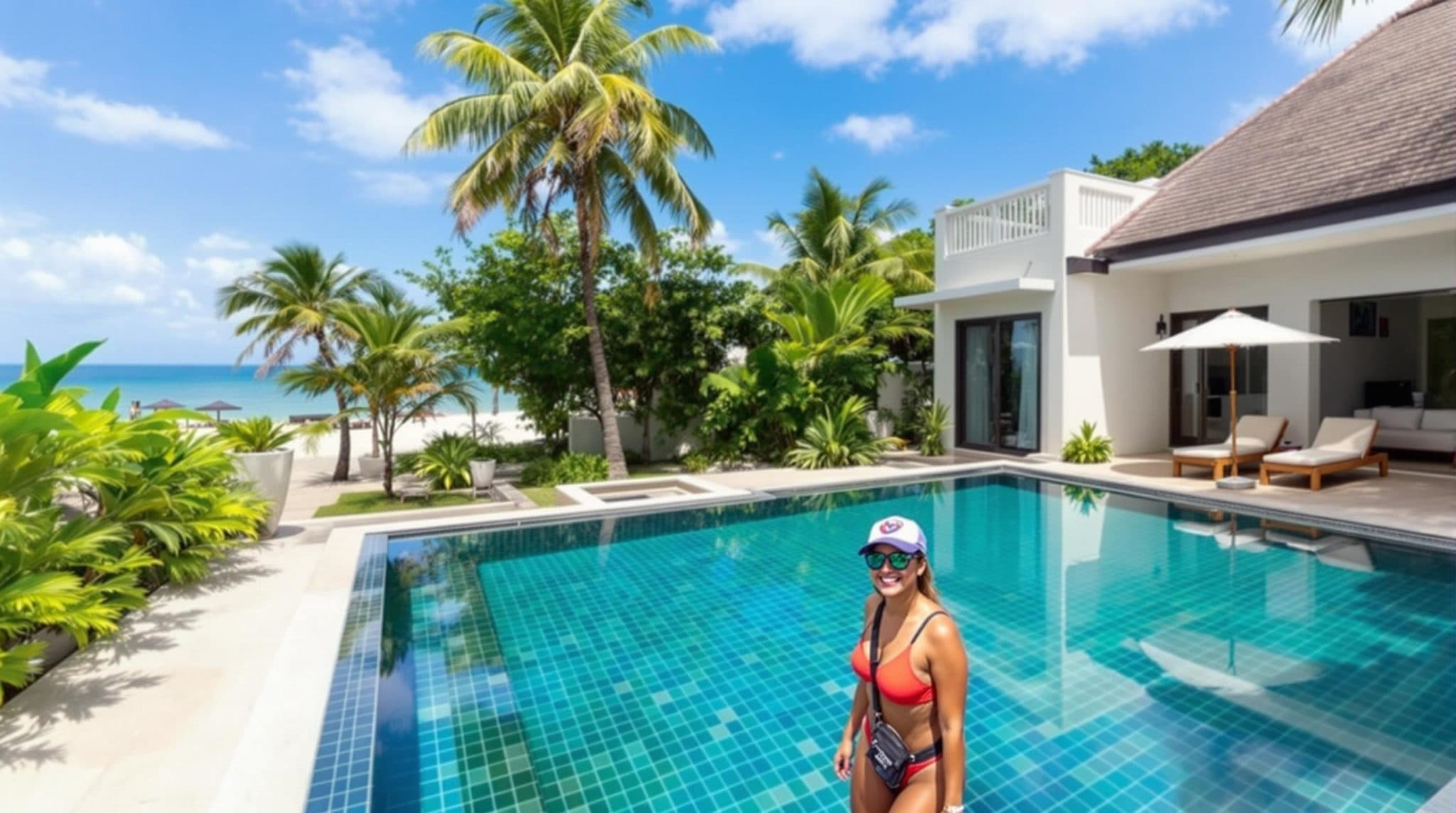
Are you planning on setting up your own villa rental business in Thailand? Whether you want to buy property for a beach villa in Phuket or Koh Samui or a garden property in Chiang Mai, the surge in tourism makes Thailand a popular destination for real estate investments.
However, navigating Thailand's complex property laws and obtaining the necessary permits remain critical steps to operate legally. This article outlines popular destinations in Thailand for a villa rental business, key regulations for setting up an accommodation company, and the registration process.
Overview of the Villa Rental Industry in Thailand
Types of Villa Businesses
In Thailand, the villa rental market offers a variety of options for both long-term and short-term rentals that cater to different preferences, budgets, and group sizes. When setting up a villa rental business in the country, it is recommended that you determine the specific business model:
- Short-term rental
- Popular among tourists and vacationers, with stays typically ranging from a few days to several weeks.
- These rentals often come fully furnished and include amenities that enhance the holiday experience.
- Short-term rentals can yield higher nightly rates but require more intensive management and adherence to specific regulations, such as licensing under the Hotel Act.
- Popular among tourists and vacationers, with stays typically ranging from a few days to several weeks.
- These rentals often come fully furnished and include amenities that enhance the holiday experience.
- Short-term rentals can yield higher nightly rates but require more intensive management and adherence to specific regulations, such as licensing under the Hotel Act.
- Long-term rental
- Villa rentals are typically leased for six months or more, appealing to expatriates, families relocating to Thailand, or those seeking extended stays in the country.
- Long-term rentals can potentially provide a steady income stream from expatriates and permanent residents.
- Villa rentals are typically leased for six months or more, appealing to expatriates, families relocating to Thailand, or those seeking extended stays in the country.
- Long-term rentals can potentially provide a steady income stream from expatriates and permanent residents.
Popular Locations for Setting Up a Villa in Thailand
Thailand offers a diverse array of locations in which to set up a villa. Each location offers unique advantages, whether its proximity to beaches, access to urban amenities, or immersion in local culture.. Here are prominent destinations for setting up a villa in Thailand:
- Phuket
- Thailand's largest island, known for its vibrant nightlife, beautiful beaches, and a variety of amenities that appeal to all types of budgets.
- Most villas in Phuket cater to tourists and partygoers, particularly luxury beachfront properties in nearby areas with quick access to both Pa Tong Beach and Bangla Road.
- Thailand's largest island, known for its vibrant nightlife, beautiful beaches, and a variety of amenities that appeal to all types of budgets.
- Most villas in Phuket cater to tourists and partygoers, particularly luxury beachfront properties in nearby areas with quick access to both Pa Tong Beach and Bangla Road.
- Koh Samui
- An island destination famous for its palm-fringed beaches and upscale resorts.
- Villas in Koh Samui cater mostly to honeymooning couples and friend groups who are looking for upscale rentals in Bophut or Chaweng with luxurious features such as infinity pools, spa, and proximity to fine dining and shopping.
- An island destination famous for its palm-fringed beaches and upscale resorts.
- Villas in Koh Samui cater mostly to honeymooning couples and friend groups who are looking for upscale rentals in Bophut or Chaweng with luxurious features such as infinity pools, spa, and proximity to fine dining and shopping.
- Pattaya
- Known for its bustling nightlife and beach activities, Pattaya attracts both tourists and expatriates from all over the globe.
- Villas in the area mostly cater to families or groups looking for fun-filled vacations, including those with game rooms, pools, and proximity to water sports. Luxury villas with ocean views can also attract high-end clientele.
- Known for its bustling nightlife and beach activities, Pattaya attracts both tourists and expatriates from all over the globe.
- Villas in the area mostly cater to families or groups looking for fun-filled vacations, including those with game rooms, pools, and proximity to water sports. Luxury villas with ocean views can also attract high-end clientele.
- Hua Hin
- A quieter beach destination with a relaxed atmosphere.
- Villas in Hua Hin cater to families and retirees with spacious layouts, gardens, and kitchens for long-term accommodation.
- A quieter beach destination with a relaxed atmosphere.
- Villas in Hua Hin cater to families and retirees with spacious layouts, gardens, and kitchens for long-term accommodation.
- Chiang Mai
- Located in northern Thailand, Chiang Mai is known for its cultural heritage, mountains, and cooler climate. Properties with gardens or near natural attractions appeal to guests looking for a peaceful retreat.
- Villas in Chiang Mai cater to nature and adventure-seeking tourists and digital nomads who prefer eco-friendly villas or traditional Thai-style homes.
- Located in northern Thailand, Chiang Mai is known for its cultural heritage, mountains, and cooler climate. Properties with gardens or near natural attractions appeal to guests looking for a peaceful retreat.
- Villas in Chiang Mai cater to nature and adventure-seeking tourists and digital nomads who prefer eco-friendly villas or traditional Thai-style homes.
- Krabi
- Renowned for its stunning natural scenery, including limestone cliffs and beautiful beaches. It serves as a gateway to nearby islands.
- Luxury beach villas with a view and access to Krabi town are sought after for many nature lovers, families, and expats.
- Renowned for its stunning natural scenery, including limestone cliffs and beautiful beaches. It serves as a gateway to nearby islands.
- Luxury beach villas with a view and access to Krabi town are sought after for many nature lovers, families, and expats.
- Koh Phangan
- Famous for its Full Moon Party but also offers tranquil beaches and wellness retreats.
- Villas in Koh Phangan cater mostly to young tourists, health and wellness enthusiasts, and party goers with plenty of access to social spaces. Secluded villas aimed for wellness retreats or relaxation are also popular.
- Famous for its Full Moon Party but also offers tranquil beaches and wellness retreats.
- Villas in Koh Phangan cater mostly to young tourists, health and wellness enthusiasts, and party goers with plenty of access to social spaces. Secluded villas aimed for wellness retreats or relaxation are also popular.
Key Considerations for Operating a Thailand Villa
Legal Structure and Foreign Business License (FBL)
Before you operate a villa rental business in Thailand, you need to set up a Private Limited Company. This entity requires at least three shareholders, with Thai nationals holding a minimum of 51% ownership, while foreigners can own up to 49%. Your company must be registered with the Department of Business Development (DBD).
As a foreign-owned business, you must also secure a Foreign Business License (FBL) under the Foreign Business Act of 1999. The FBL application process involves submitting detailed documentation, including:
- Company registration papers
- A business plan outlining economic benefits to Thailand
- Proof of a minimum capital investment of THB 3 million
- Financial statements (if applicable)
- Shareholder information
- A registered office address
The FBL approval process evaluates factors such as local employment contributions and alignment with Thai economic interests. Without this license, foreign-owned businesses cannot legally operate in restricted categories like rental services.
Keep in mind that foreigners cannot own land outright under the Land Code of Act of 1954. However, you can lease land for up to 30 years with the option to renew, which is a common workaround. Any lease agreements or property-related transactions must be properly documented and registered at the local land office to ensure compliance with Thai laws.
Hotel License or "Non-Hotel" Notification
To legally operate a villa rental or any accommodation business in Thailand, you need to have a hotel license. Under the Hotel Act, a Hotel License is necessary for short-term rentals (less than 1 month) for villas with more than 8 rooms and can accommodate more than 30 guests.
If your villa rental business is less than the set threshold, you still need to comply with a non-hotel notification to be reported to the local district office as non-hotel activity. This notification includes submitting specific documentation such as:
- Land Title Deed
- House registration book of the villa
- Building Permit of the villa
- Floor plan of the villa
- Map to the villa
- Company's affidavit (if the company owns the villa)
- Memorandum of Association for the company
Regardless of the licensing requirements, you must register your villa in Thailand with local authorities and comply with safety regulations, including proper lighting, secure door locks, and adequate bathroom facilities.
Key Requirements for Starting your Own Villa Rental
Starting a villa rental business in Thailand requires navigating a well-defined legal framework to ensure compliance with local laws. Non-compliance can result in severe penalties, including fines or imprisonment, making adherence to these regulations critical for operating legally and sustainably. Here are other key requirements you need to operate a villa rental business in Thailand:
- Building and Construction License – Before starting construction or renovation of a villa, obtaining a building permit from the local district office is necessary. This involves submitting plans and specifications to the district office for approval.
- Environmental Impact Assessment (EIA) – Depending on the size and scope of your project, an EIA is required especially for large developments that can affect local biodiversity.
- Initial Environment Examination (IEE) – For smaller projects that do not require a full EIA, an Initial Environment Examination is required to assess potential environmental impacts before proceeding with construction.
- Fire Safety Certification – Villas must comply with fire safety standards, including proper exits, fire alarms, extinguishers, and emergency plans.
- Tax ID and obligations – Your rental business must have a Tax ID from the local Revenue Board. Villa operations are subject to income tax, at rates ranging from 5% to 35% depending on the amount of income.
Emerhub can assist you in gathering all the key requirements for starting your villa rental business in Thailand. We provide comprehensive end-to-end support tailored to navigate Thailand’s local regulatory landscape. We can help you obtain all the necessary licenses such as a Foreign Business License for foreign-owned entities and a hotel license or non-hotel notification.
Start your Thailand villa business with Emerhub! Fill in the form below and get in touch with our local experts.
FAQs for Starting a Villa Rental Business in Thailand
Frequently asked questions
What are the benefits of renting a villa over a hotel in Thailand?
Renting a villa in Thailand presents several distinct advantages over staying in a hotel, particularly in terms of privacy and space. Villas offer an exclusive retreat, allowing you to enjoy their own private pool, garden, and living areas without the disturbances commonly found in hotels. Another key benefit of renting a villa is the flexibility it affords. Unlike hotels that often enforce strict schedules for meals and housekeeping, villas allow you to tailor their experiences according to their preferences. You can choose when to eat, whether to cook their own meals or hire a private chef, and how to spend their days without the constraints of hotel activities.
How long does it take to start a villa rental business in Thailand?
Starting a villa rental business in Thailand can vary in duration depending on several factors, including property ownership, legal requirements, and preparation. Generally, the setup process can take anywhere from a few weeks to several months.
Can I work or operate a villa rental business in Thailand with a tourist visa?
You cannot legally operate a villa rental business in Thailand on a tourist visa. Tourist visas are specifically intended for leisure travel. Engaging in any form of work, including running a business, is prohibited under this visa category. To work legally in Thailand, you must obtain a Non-Immigrant Work Visa (Category B) and a corresponding work permit. This process involves applying for the visa from your home country and subsequently applying for a Work Permit once you are in Thailand.