
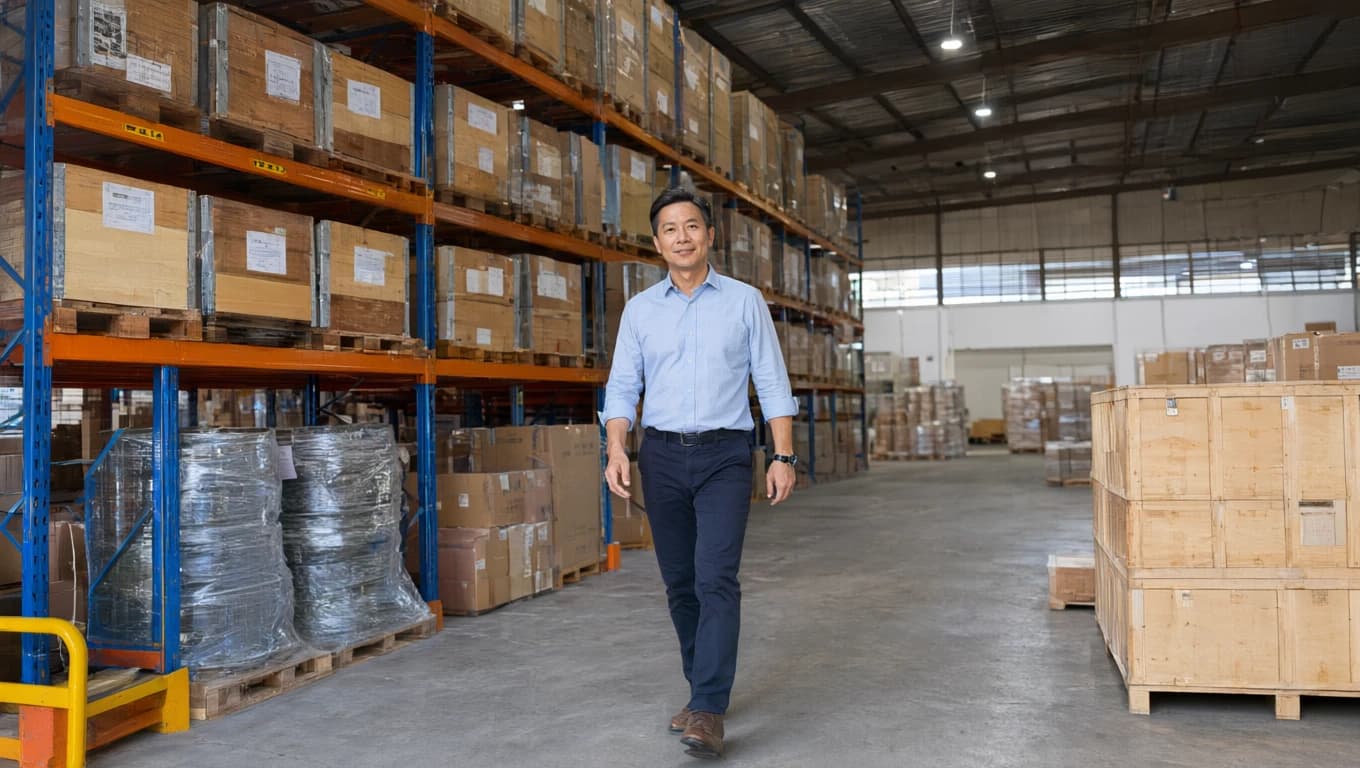
Batam is an established manufacturing and trading base about 20 kilometers from Singapore. If your business needs access to Singapore alongside production or warehousing in Indonesia, its industrial estates and free trade zone facilities offer a practical combination.
Within the designated free trade zone, you can bring in equipment, components and stock with relief from import duty and import taxes. Selling those goods elsewhere in Indonesia involves separate customs and tax requirements, so the benefit depends on where your customers are.
In this article, we will walk you through doing business in Batam, including company setup, licensing, industrial estates, land and hiring.
Why Foreign Businesses Set Up in Batam
Access to Singapore and regional markets
Ferry journeys between Singapore and Batam take around an hour, depending on the route. This makes same-day visits possible if your management team or customers are based in Singapore.
You could keep regional sales or management functions in Singapore while locating production, repairs or warehousing in Batam. When planning visits, allow for immigration, terminal transfers and travel to the factory or warehouse.
Singapore is also Batam’s largest source of foreign investment. BP Batam reported total investment realization of IDR 44.01 trillion through investment activity reports in 2025.
Import facilities that support production and re-export
Importing machinery, components or stock often ties up cash in border taxes. Batam’s free trade zone facilities reduce that initial outlay when your company meets the entry and documentation requirements.
For example, a manufacturer can bring components into the zone, process them and export the finished goods without first paying the border taxes associated with an ordinary import into Indonesia. This makes the facilities particularly useful for businesses serving overseas customers.
An established industrial network
Batam’s industrial estates serve manufacturers, logistics companies and engineering businesses. Its established sectors include electronics, shipbuilding, offshore fabrication and aircraft maintenance, alongside growing digital and data-center operations.
If you are entering Indonesia for the first time, an existing estate can reduce the work involved in securing premises and utilities. The right location depends on your operation: a warehouse near a port has different requirements from an electronics factory or a shipyard.
Batam Free Trade Zone Rules
Batam’s free trade zone and free port designation comes from Government Regulation 46/2007, most recently amended by Government Regulation 47/2025, which expanded the designated area. The wider operating framework is Government Regulation 41/2021, amended by Government Regulations 25/2025 and 23/2026.
Batam’s free trade zone, special economic zones and municipal boundaries do not cover exactly the same areas. Your location therefore affects both the licensing process and the available tax facilities. It is advisable to confirm the site’s designation before committing to premises.
The free trade zone authority is Badan Pengusahaan Kawasan Perdagangan Bebas dan Pelabuhan Bebas Batam, commonly called BP Batam. Its responsibilities include managing and developing the zone, allocating land and handling business licensing within its authority.
Taxes on goods entering and leaving the zone
The tax treatment depends on where your goods come from, where they go and how the movement is documented. The following table covers commercial goods; services and intangible supplies have separate VAT rules.
| Transaction | Main treatment |
|---|---|
| Goods entering the FTZ from abroad | Relief from import duty, import VAT, luxury goods sales tax and excise under the zone’s rules. Excisable goods remain subject to quantity limits and other controls. |
| Goods sold between businesses within the FTZ | VAT is not charged on goods sold between businesses inside the designated free trade zone. |
| Goods supplied from elsewhere in Indonesia to the FTZ | VAT is not collected when the required notice, entry and endorsement conditions are met. |
| Foreign-origin goods released from the FTZ to the rest of Indonesia | Import duty and import taxes become payable unless a specific exemption or facility applies. Import restrictions and product requirements must also be checked. |
| Goods manufactured in the FTZ and sold elsewhere in Indonesia | Import duty and import taxes generally apply on release. The calculation depends on the imported materials, production records and release procedure. |
| Goods exported abroad | Export declarations and product rules apply. Certain commodities also carry export duty. |
| Company profits | FTZ status does not itself exempt profits from corporate income tax. Indonesia’s standard corporate income tax rate is 22%. |
Returning goods to their original owner is different from selling them to a new customer. If you bring goods into Batam for repair, storage or another temporary purpose, the return may follow different provisions. The original entry records help establish the correct treatment.
The zone’s facilities also leave your normal bookkeeping, withholding and annual filing obligations in place. These costs need to be included when comparing Batam with other business locations.
Customs declarations and outbound reporting
Commercial goods entering or leaving the zone follow FTZ customs procedures. Minister of Finance Regulation 113/2024 governs the declarations and took effect on 31 March 2025.
The declaration forms part of the shipment’s documentation, alongside invoices, packing lists, transport documents and product approvals. Your records need to connect the goods received, held, processed and dispatched.
Since 12 May 2026, PER-4/BC/2026 also requires real-time, geotagged reporting through SSR Mobile for outbound movements. The procedures include reporting the loading or stuffing of goods into packaging or containers, so this reporting needs to be built into dispatch arrangements.
Batam Free Trade Zone vs Special Economic Zones
Batam also has four designated special economic zones, known as Kawasan Ekonomi Khusus (KEK). These operate under a separate framework, with facilities tied to their approved activities.
The zones are within Batam municipality, although they are not all on Batam island itself. Tanjung Sauh, for example, is a separate island.
| Special economic zone | Establishing regulation | Main focus |
|---|---|---|
| Nongsa, including Nongsa Digital Park | Government Regulation 68/2021 | Digital businesses, technology, creative industries, education and tourism |
| Batam Aero Technic | Government Regulation 67/2021 | Aircraft maintenance, repair and overhaul |
| Batam International Tourism and Health | Government Regulation 39/2024 | Healthcare and tourism |
| Tanjung Sauh | Government Regulation 24/2024 | Industry, energy and logistics |
If your activity fits one of these zones, compare its facilities and operating costs with an FTZ location before deciding where to establish the company.
| Issue | Batam free trade zone | Special economic zone |
|---|---|---|
| Location | A site within the designated FTZ boundaries | A site within the specific SEZ boundaries |
| Business licensing | BP Batam through OSS within its authority | The relevant SEZ administrator through OSS |
| Customs facilities | FTZ facilities for approved movements of goods | SEZ facilities based on the goods, business and transaction |
| Corporate income tax | No automatic income tax holiday from FTZ status | Tax holidays or tax allowances available under the SEZ rules |
| Business suitability | Depends on permitted activities, premises and the supply chain | Depends on the zone’s designated activities and admission requirements |
Corporate income tax holidays in SEZs
Businesses investing in an SEZ’s approved main activities can apply for a 100% corporate income tax reduction. The investment bands determine the reduction period.
| Investment value | Reduction period |
|---|---|
| IDR 100 billion to below IDR 500 billion | 10 years |
| IDR 500 billion to below IDR 1 trillion | 15 years |
| IDR 1 trillion or more | 20 years |
A further 50% reduction applies for two years after the initial period. Approval and compliance with the incentive conditions are required; locating in an SEZ alone does not secure the holiday.
Tax allowances provide another potential route. When comparing locations, consider the incentives alongside the premises, infrastructure and operating costs your business will face.
How to Set Up a Company in Batam
Foreign investors normally establish a foreign-owned Indonesian limited liability company, called a Perseroan Terbatas Penanaman Modal Asing (PT PMA). Incorporation follows national company rules, while the project location determines the licensing route.
The PT PMA setup guide explains the company structure and incorporation requirements. For a Batam project, it helps to settle the proposed activities and location together, so the company documents and licensing applications reflect the same operation.
1. Confirm the activities and foreign ownership
Each business activity has an Indonesian Standard Industrial Classification code, known as KBLI. The code affects foreign ownership, investment requirements and the licenses needed to operate.
When selecting codes, include supporting activities such as wholesale trading, storage or repairs. A manufacturing registration does not automatically cover a separate trading business, so identifying these activities early can prevent additional licensing work later.
2. Prepare the capital and incorporate
Under Ministry of Investment Regulation 5/2025, a PT PMA needs at least IDR 2.5 billion in issued and paid-up capital per company, unless a sector rule requires more.
Planned investment normally must exceed IDR 10 billion, excluding land and buildings, per five-digit KBLI activity and project location. Certain activities follow different calculations. Wholesale trading, for example, uses the first four KBLI digits.
Paid-up capital must remain in the company’s account for 12 months, but you can use it during that period to purchase assets, construct buildings and fund operations. The guide to minimum capital requirements for a PT PMA explains how paid-up capital differs from planned investment.
Once the structure is agreed, a notary prepares the establishment deed and the Ministry of Law approves the company. The documents record the shareholders, management, activities and capital.
3. Obtain the NIB and operating approvals
Your company registers through the Online Single Submission system (OSS) to obtain its business identification number, or NIB. Additional approvals depend on the activity’s risk classification and sector.
Within the FTZ, BP Batam handles business licensing and environmental approvals under its authority. Within an SEZ, the relevant administrator handles business licensing through OSS under Articles 146 and 147 of Government Regulation 40/2021.
Receiving an NIB does not mean every business can immediately start operating. Higher-risk activities require additional certificates or licenses, while regulated products may need separate approvals before sale.
4. Secure suitable premises
Before committing to premises, check that the property permits your intended activity so you do not lease a site the company cannot use.
An industrial estate may provide ready-built premises and utilities. If you plan to develop your own site, allow for the land-allocation, land-right and construction processes as part of the project schedule.
5. Arrange tax registration and customs access
Allow time for tax registration and customs arrangements when planning your first shipment. The importer’s registered activities and product approvals need to match the goods being brought in.
If you will sell goods elsewhere in Indonesia, establish who will handle mainland import clearance and taxes. The guide to import licenses in Indonesia explains the broader licensing framework.
6. Prepare employment and foreign-worker arrangements
Employment contracts, payroll and social insurance registrations form part of preparing the company to hire. For foreign employees, the position and employer sponsorship determine the required work and immigration approvals.
An approved foreign manpower utilization plan, or RPTKA, is required for many foreign-worker appointments, although exemptions exist. Review the proposed position and permit route before agreeing on the employee’s start date.
Land and Industrial Estates in Batam
BP Batam manages much of Batam’s land through management rights and allocates sites for approved uses. Securing an allocation and obtaining a registered land title are separate parts of establishing your right to use the site.
An Indonesian company, including a PT PMA, can hold Hak Guna Bangunan, or the right to build. The framework allows an initial term of up to 30 years, a possible 20-year extension and a subsequent renewal of up to 30 years, with the required approvals.
Land-allocation charges
Land allocations carry a charge known as Uang Wajib Tahunan (UWT). Despite its name, this is not necessarily a yearly bill: payment can cover the approved allocation period.
When assessing a plot, review the charge alongside the remaining term and any outstanding obligations. These details affect both your initial budget and how long the company can use the site.
Initial allocation and extension procedures have different payment requirements. The relevant invoice and approval documents establish the deadline for the transaction.
Choosing an industrial estate
Established locations include Batamindo Industrial Park, Panbil Industrial Estate, Kabil Integrated Industrial Estate, Bintang Industrial Park and West Point Batam Industrial Park. Tanjung Uncang is also an established shipbuilding area.
For your shortlist, compare:
- Whether the site permits your business activity
- Available power, water and waste-treatment capacity
- Access to Batu Ampar port, Hang Nadim airport and suppliers
- Building condition and fit-out costs
- The underlying land term and proposed lease length
- Estate charges and responsibility for permits and maintenance
A review of the land and building documents before paying a deposit can identify restrictions or outstanding obligations early. Emerhub can coordinate the setup and licensing assessment so the premises match the business you intend to operate.
Hiring and Payroll in Batam
Batam’s 2026 city minimum wage is IDR 5,357,982 per month under Riau Islands Governor Decree 1331/2025. It applies to employees with less than one year of service, while longer-serving employees are paid according to the company’s wage structure and scale.
Your employment budget also needs to cover social insurance contributions, payroll taxes and religious holiday allowance, known as Tunjangan Hari Raya (THR). Employees with at least 12 months of service receive one month’s wages as THR. Those with at least one month but less than 12 months receive a proportional amount.
Termination costs depend on the employment arrangement and reason for termination. Fixed-term contract compensation and permanent-employee termination entitlements follow different provisions, so they should be assessed separately.
For foreign workers subject to the compensation-fund requirement, employers also budget USD 100 per person per month. Work and immigration applications involve additional costs.
The Indonesia payroll guide covers salary processing, social insurance, payroll tax and THR administration.
Trading Through Batam: Import and Export Compliance
The benefit of trading through Batam depends on where your goods ultimately go. Re-exporting stock and selling it into Indonesia involve different costs and procedures.
Importing for production and re-export
Consider a company importing components, assembling equipment in Batam and exporting the finished units to Singapore. FTZ facilities can remove the initial border-tax cost on the imported components.
The company still needs the required approvals and accurate inventory and production records. Those records connect the imported materials to the finished goods and export declarations.
Selling goods elsewhere in Indonesia
Now consider a distributor importing finished products into Batam and later selling them to customers in Jakarta. Releasing those goods into the rest of Indonesia triggers mainland customs procedures, including import duty, import taxes and product requirements.
Batam’s facilities do not remove these obligations. If most of your customers are elsewhere in Indonesia, compare the total freight, handling, clearance and inventory costs with importing directly near the customer.
For goods returning to their original owner after storage, repairs or another temporary arrangement, review the return procedure separately. Their treatment can differ from a commercial sale, and the original entry documents help establish the correct route.
Challenges to Plan For in Batam
| Issue | What to assess |
|---|---|
| Customer location | Whether most goods will be exported or released into the rest of Indonesia |
| Licensing authority | Whether the site is in the FTZ, an SEZ or another area |
| Land and premises | Remaining land term, allocation charges, permitted use and extension conditions |
| Utilities | Power capacity, backup arrangements, water and waste treatment |
| Customs administration | Inventory records, declarations, product approvals and outbound reporting |
| Workforce costs | Minimum wages, skilled-worker availability, THR and foreign-worker requirements |
When comparing locations, build these items into the operating budget alongside the tax facilities. A lower initial import cost may be offset by additional freight, handling or infrastructure costs if the site does not fit your supply chain.
Doing Business in Batam With Emerhub
Emerhub helps foreign investors assess whether Batam fits their supply chain and establish the company, licenses and operating arrangements. Our team can support you with:
- PT PMA incorporation and business-classification selection
- Capital and project-location assessments
- OSS registration and licensing coordination
- Customs and import-compliance preparation
- Foreign-worker and immigration applications
- Payroll, accounting and tax reporting
Once your company is operating, accounting and tax support in Indonesia helps keep the books, filings and payment records aligned.
Request a Batam setup and licensing assessment to discuss your activities, target customers and proposed location.
Frequently asked questions
Is Batam a free trade zone?
Batam has a designated free trade zone and free port under Government Regulation 46/2007, as amended, including the expansion under Government Regulation 47/2025. Its operating framework includes Government Regulation 41/2021 and subsequent amendments.
Batam also has separate special economic zones. Checking the designation of your proposed site establishes which licensing route and facilities apply.
Why is Batam considered tax free?
The description refers mainly to facilities for goods entering and moving within the free trade zone. These include relief from import duty and certain import taxes, with documentation requirements and restrictions for particular goods.
Batam is not free of all taxes. Corporate income tax, employment-related taxes and other business obligations continue, while goods released into the rest of Indonesia follow separate customs and tax rules.
Can foreigners own a company in Batam?
Foreign investors can establish a PT PMA, with the permitted ownership percentage determined by the business activity.
The company must also meet capital, licensing and location requirements. A Batam address does not remove national foreign-investment restrictions.
How much capital is needed to set up in Batam?
The minimum issued and paid-up capital for a PT PMA is IDR 2.5 billion per company unless a sector requires more. Planned investment normally must exceed IDR 10 billion under the calculation for the activity and location.
Some activities and SEZ projects follow different investment provisions. Paid-up capital can fund assets, construction and operations during the 12-month retention period.
What is BP Batam?
BP Batam is Badan Pengusahaan Kawasan Perdagangan Bebas dan Pelabuhan Bebas Batam. It manages and develops the Batam free trade zone and handles responsibilities including land allocation and business licensing within its authority.
Companies in designated special economic zones use the relevant SEZ administrator for business licensing through OSS.
Do goods from Batam pay tax when sold elsewhere in Indonesia?
Foreign-origin goods released from the FTZ into the rest of Indonesia normally attract import duty and import taxes. Import licensing, labeling and product-approval requirements must also be checked.
Returns to an original owner and other temporary movements follow different provisions. The original entry documents help establish the correct procedure and tax treatment before dispatch.
What is the difference between Batam’s FTZ and its SEZs?
FTZ status provides facilities for movements of goods but does not automatically provide a corporate income tax holiday. SEZs have designated activities, separate administrators and their own incentive framework.
Businesses meeting the SEZ conditions can apply for tax holidays or tax allowances. The better option for your business depends on its activities, investment, premises and supply chain.