Product registration in Indonesia
Register and start selling your products in Indonesia. Emerhub's local team handles registration with BPOM, the Ministry of Health, BPJPH for halal, and SNI, and can hold the license for you, so you can reach the market without setting up a company first.
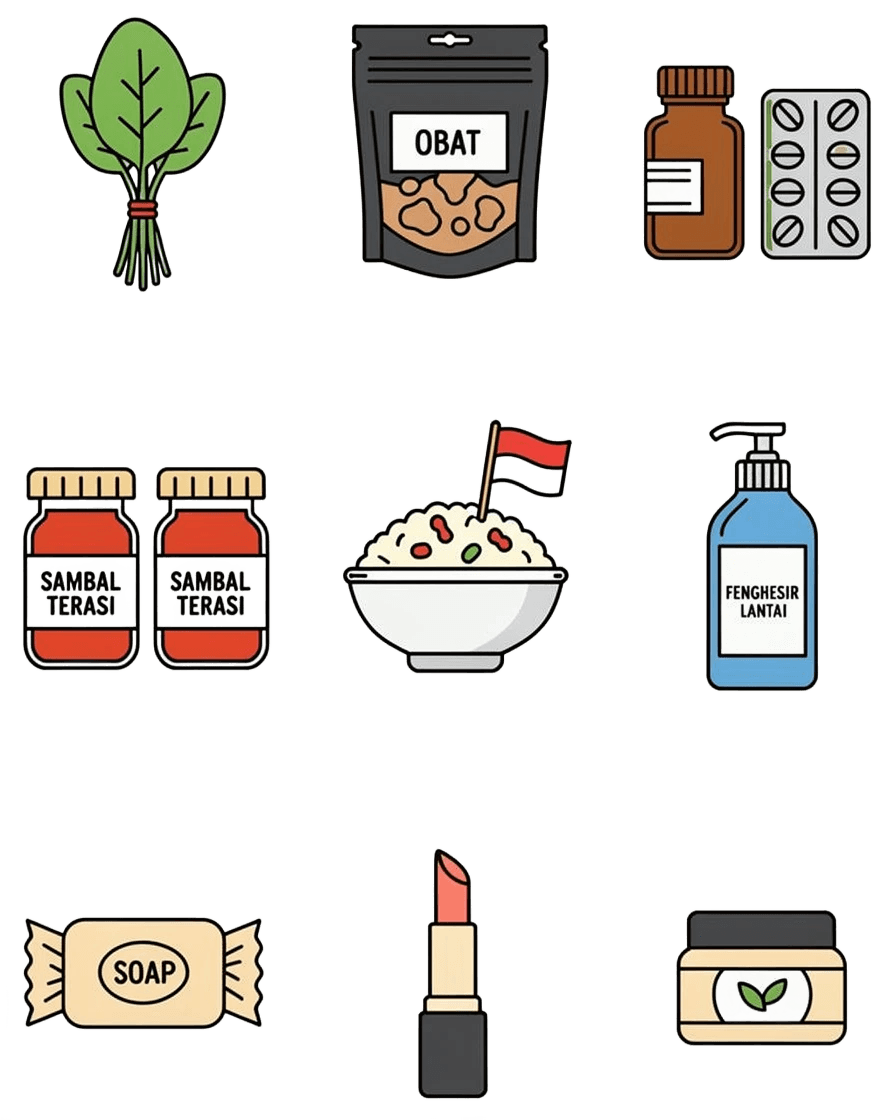







































Products requiring registration and approval in Indonesia
Each category goes through its own agency and classification. Emerhub's regulatory team handles the registration on your behalf.
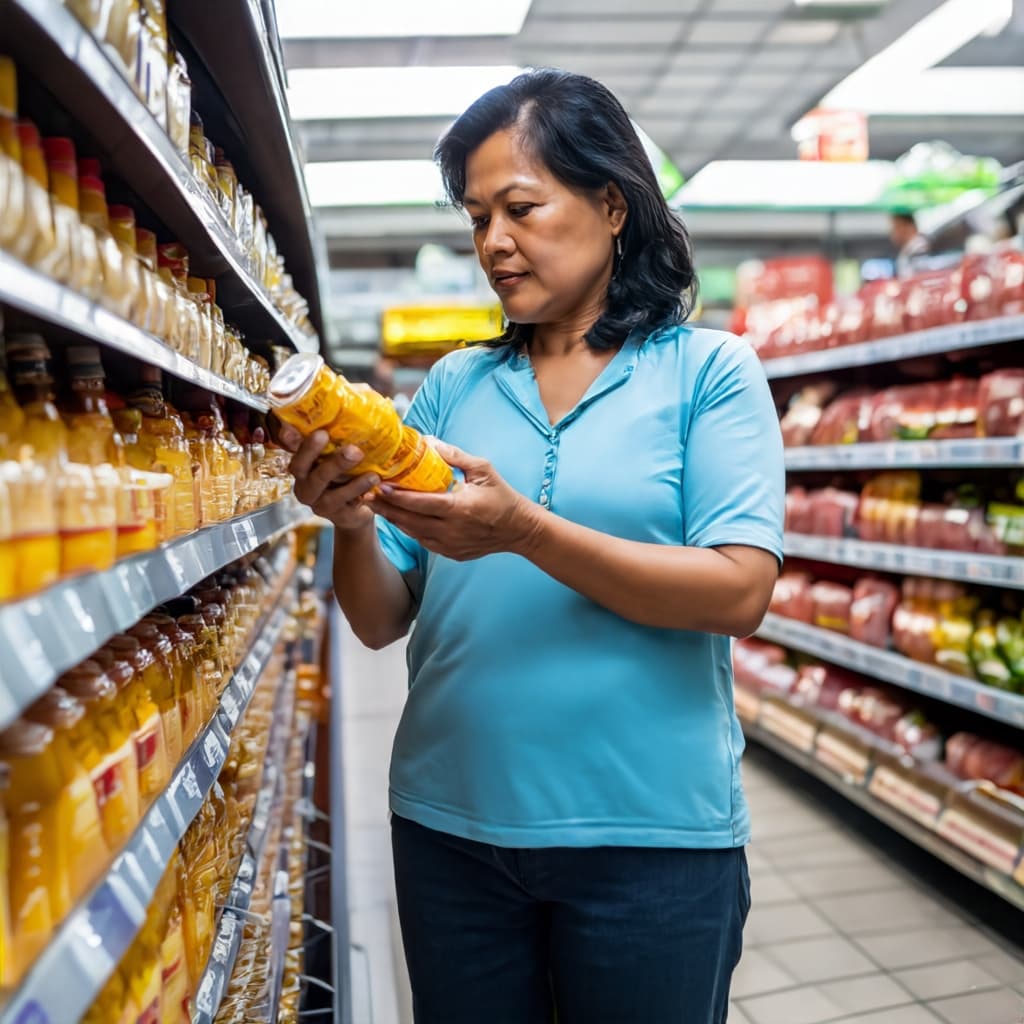
Processed food & beverages
Imported processed foods, beverages, and innovative foods, registered with BPOM for a distribution license.

Cosmetics & supplements
Imported cosmetics and dietary supplements, through BPOM's notification and registration process.

Medical devices
Classification (A to D), the ASEAN Common Submission Dossier, and the product registration number (NIE).

Household health supplies (PKRT)
Tissues, detergents, cleaners, and the like, classified by risk level and registered for sale.

Halal certification
Certification through BPJPH, with the halal inspection and the MUI fatwa, now mandatory for most products.

Fresh plant foods (PSAT)
Fresh fruits, vegetables, and seeds, with quarantine clearance and phytosanitary certificates.
Who regulates what
The four agencies behind the categories above, and what each one covers.
Food & Drug Authority
Indonesia's food and drug authority. It reviews the dossier, inspects where needed, and issues the distribution license.
Ministry of Health
The health ministry. It oversees medical products, including device classification (A to D) and the registration number (NIE).
Ministry of Agriculture
The agriculture ministry. It handles fresh plant-based imports, focused on quarantine standards and phytosanitary clearance.
Halal Assurance Body
The halal assurance body. It runs certification with a halal inspection agency and the MUI fatwa, now mandatory for most products.
Types of product registration in Indonesia
Each category gets its own kind of registration or license, with its own number. These are the main types, and the code that identifies each on an approved product.
| Registration type | Issued by | Number begins with |
|---|---|---|
| Processed food distribution license | BPOM | BPOM RI MD for local, ML for imported |
| Cosmetic notification | BPOM | NA |
| Drug marketing authorization | BPOM | NIE, the Nomor Izin Edar |
| Health supplements and traditional medicine | BPOM | Registration number, such as SD, SI, or TR |
| Medical device distribution permit | Ministry of Health | AKL for imported, AKD for local |
| In-vitro diagnostics | Ministry of Health | AKL for imported, AKD for local |
| Household health supplies (PKRT) | Ministry of Health | PKL for imported, PKD for local |
Certifications that apply on top
Beyond the distribution license above, a product may also need one or both of these. They run alongside the registration, not instead of it, and which apply depends on what the product is.
Halal certification
Most food, beverage, and cosmetic products need halal certification from BPJPH, and medical devices follow by class, with Class A due by October 2026. It is religious-compliance certification, layered on the license to sell.
Halal certificationSNI certification
Manufactured goods such as electronics, vehicle parts, building materials, and toys need a mandatory SNI mark from the Ministry of Industry, certifying they meet the national standard. It is a separate track from BPOM.
SNI certificationEvery product needs a license holder in Indonesia
The holder is the company a registration legally sits under. There are three options for who that is, and we handle all of them.
Register under your own entity
You set up, or already run, an Indonesian company with the right business classification (KBLI), and hold the distribution license (Izin Edar) yourself. Full control and direct ownership of every registration.
Emerhub as your product holder
Emerhub holds the distribution license for you, so you can register and sell without setting up a company in Indonesia. Faster to reach the market, and lighter to maintain.
Appoint an exclusive distributor
If you go to market through a single distributor in Indonesia, they can hold the license. The simplest route, though it ties your registrations to that one partner.
Not sure which fits? Tell us your product and your plans for Indonesia, and we'll recommend the route that makes sense.
Why companies register through Emerhub
We hold licenses ourselves, and we stay on after the registration is issued.
On-the-ground experience
A Jakarta team that prepares dossiers in Bahasa Indonesia and deals with the agencies every week, keeping your application moving.
We can be your product holder
Register and sell without a local company. Emerhub holds the distribution license, giving you a legal route to market fast.
Your local authorized representative
For medical devices, we serve as the Local Authorized Representative (LAR) the Ministry of Health requires.
Ongoing compliance
Mandatory warehouse audits, packaging and labeling compliance, and timely license renewals, all kept on track.
Securing your distribution license
Every registration follows the same path, whichever agency it goes through.
Classify & choose your route
- We confirm the product category and risk class, and which agency applies.
- We agree whether you register under your own entity or with Emerhub as holder.
Prepare the dossier
- We compile the technical and administrative documents and handle translation.
- We build the submission dossier each agency requires, such as the ASEAN Common Submission Dossier for devices.
Submit & follow up
- We submit to BPOM, the Ministry of Health, or BPJPH, and manage any inspection or audit.
- We follow up with the agency until the file is approved.
License issued & maintained
- You receive the distribution license (Izin Edar or NIE) and can start selling.
- We handle renewals, labeling, and ongoing compliance from there.
Product registration FAQs
What companies ask most often before registering their products in Indonesia.
Can a foreign company register products in Indonesia directly?
Not directly. Every product registration needs a license holder that is a company established in Indonesia. You can register under your own Indonesian entity, or Emerhub can act as your product holder, so you can sell without setting one up.
Should I register under my own entity or use Emerhub as product holder?
It depends on your plans. If you're committing to Indonesia long term and want to own your registrations, registering under your own company makes sense. If you're testing the market, launching a single product, or want to sell before setting up an entity, having Emerhub hold the license is faster and lighter. We'll help you decide which fits.
Is halal certification mandatory?
For most products, yes. Indonesian law requires halal certification for products that circulate, are imported, or are traded, other than those made from clearly non-halal materials, which must be labeled accordingly. We handle the BPJPH process, the halal inspection, and the MUI fatwa.
Do I need an office or warehouse in Indonesia?
Some product categories involve a warehouse audit as part of compliance. You don't need to set up your own premises for that: as your product holder, Emerhub provides the legal pathway and handles the audit requirements on your behalf.
How long does registration take?
It varies by product category, risk class, and agency, and on how complete your source documentation is. Once we've classified your product, we give you a realistic timeline before you commit, rather than a generic estimate.
What happens if BPOM or the Ministry of Health rejects the application?
We handle the response. We address the agency's queries, correct or supplement the dossier, and resubmit, so a rejection becomes something to fix rather than a dead end.
Talk to our Jakarta team
Tell us what you're selling, where you are in the process, and your plans for Indonesia. We'll confirm the route, the timeline, and a fee.
RT.7/RW.2, Kuningan
Jakarta 12950, Indonesia