
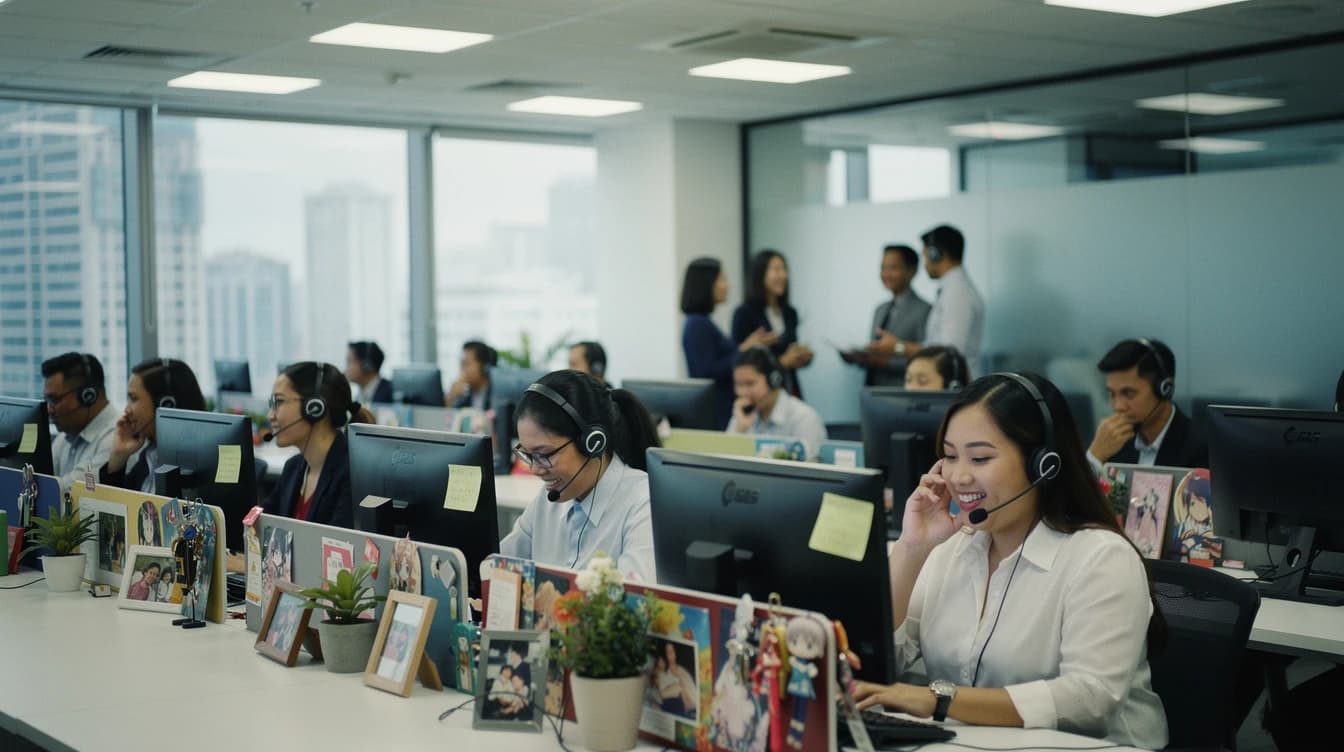
The Philippines remains one of the top destinations for back office operations and Business Process Outsourcing (BPO). The country’s IT-BPM industry generated over $40 billion accounting for more than 8% of the country's GDP which is a statement to its market potential in the sector.
One thing worth clarifying is that back office and BPO are not the same thing. This distinction affects how you structure and register your company with the SEC. Understanding which model fits your operations will also determine your capital requirements, your PSIC classification, and in some cases, whether you qualify for tax incentives.
Understanding the Back Office and BPO Industry in the Philippines
Difference Between Back Office and BPO
Back Office and BPO are often interchanged a lot but they describe two different setups. The difference between the two is crucial, especially when you register your business with the Securities and Exchange Commission (SEC).
A back office refers to an entity that supports the internal operations of your own company or within your own affiliates. These functions often include finance, human resources, IT support, customer service, and other administrative tasks. On the other hand, a BPO (Business Process Outsourcing) is a service provider that performs business functions (including back office) for other companies, usually multiple clients, under contract.
Here's a quick side-by-side between a back office and a BPO:
| Back Office | BPO | |
|---|---|---|
| Who it serves | Its own parent company and affiliates | Multiple external clients |
| Revenue model | Cost center funded by the parent, or billed through intercompany service agreements | Service fees charged per client contract |
| Scope of work | Usually internal support functions only | Can include both back-office and front-office (customer-facing) work |
| Typical setup | Captive entity or shared services center | Independent service provider |
In practice, a company might start its own back office for its own group and later offer similar services to outside clients, becoming a BPO. This scenario can also go both ways where a BPO might run a dedicated back-office team exclusively for one client.
What matters for registration purposes is how your company is actually structured and where its revenue comes from. These factors will affect your entity type, your PSIC classification, and in some cases your capital requirements.
What Services Can a Back Office or BPO Company in the Philippines Provide?
BPO and Back office operations cover a wide range of functions, and most companies start with one or two core services before expanding their scope as the team grows. Common services include:
- Finance and Accounting: Bookkeeping, accounts payable and receivable, financial reporting, reconciliation, and support for month-end and year-end close processes for your head office or affiliates.
- Human Resources and Payroll: Recruitment support, onboarding, payroll processing, compliance with Philippine labor regulations, and administration of employee benefits such as
- IT Support and Systems Management: Helpdesk support, system monitoring, software maintenance, and technical troubleshooting for internal teams across time zones.
- Data Management and Analytics: Data entry, data cleaning, database management, and reporting that supports decision-making at your head office.
- Administrative and Document Support: Scheduling, correspondence handling, document processing, and other administrative tasks that free up your core teams elsewhere.
- Customer Support Functions (Non-Front-Facing). Back-end support for customer service operations, such as ticket processing, order management, and after-sales documentation, that doesn't require direct customer interaction from the Philippine team.
Capital Requirements for Back Office/ BPO Business
To establish a BPO or Back Office as a foreigner, you need to meet the minimum capital requirements as a foreign-owned entity, Under the Foreign Investments Act (RA 7042, as amended), capital requirements depend on how your company is classified:
- Domestic market enterprise (more than 40% foreign equity). If your company primarily serves the local Philippine market, you need a minimum paid-in capital of USD 200,000. This threshold exists to protect small and medium Philippine enterprises from foreign competition in businesses that primarily serve the local market.
- Export enterprise. You are classified as an Export Market Enterprise (EME) if you export at least 60% of your services to international clients. This means, your revenue comes from a foreign parent, affiliate, or overseas clients rather than the domestic market. Export enterprises are not subject to the USD 200,000 minimum. You only need to meet the general minimum paid-up capital under the Revised Corporation Code for domestic stock corporations starting at PHP 5,000.
Most back office and BPO setups supporting a foreign parent or overseas clients fall into the second category. The USD 200,000 figure that often gets quoted as a blanket requirement does not automatically apply to you.
In practice, you'll still want enough capital to cover your actual setup and operating costs. Things like office rent, equipment, and payroll for the first few months need to be taken into account even if the legal minimum is lower.
Whether your planned operations qualify as a service export depends on how your revenue structure is set up and how the company will be classified upon registration. Talk to our local compliance experts so we can review your specific setup and confirm whether your back office can register under the lower capital requirement.
How to Incorporate your BPO/Back Office Company in the Philippines
Choosing the Right Legal Entity
Before registration, you need to decide what kind of entity fits your operations. Each business structure has its own features that should align according to your business plan:
- Domestic Corporation
- Branch Office
- One Person Corporation (OPC)
- Regional Operating Headquarters (ROHQ)
What About a Representative Office?A representative office can only undertake activities such as liaison work, quality control, and information dissemination on behalf of its foreign parent. It cannot derive income from the Philippines, which makes it a poor fit for a BPO or back office that bills its parent company for services rendered. If your operations involve invoicing your head office for support services, a representative office is not the right vehicle.
For most companies establishing a dedicated back office or BPO unit, a domestic corporation or OPC registered with the SEC is the practical and most flexible option. Emerhub will walk you through which structure matches your specific setup and operational goals.
SEC Registration
To register a company, you need to submit your application to the eSPARC Electronic Simplified Processing of Application for Registration of Company (eSPARC) portal.
Within the platform, you are required to submit the following:
- Verified company name, reserved through the eSPARC name verification tool. You can check if your company name is available using our Company Name Search tool.
- Articles of Incorporation, outlining your company's purpose, structure, and capital stock
- By-laws, governing how the company will be managed internally
- Treasurer's Affidavit, declaring the initial paid-up capital
- Proof of inward remittance or bank certificate, showing that capital has been deposited
- SEC Form F-100, required if foreign equity exceeds 40%
You can qualify for the One-Day Submission and E-Registration (OneSEC) provided your application falls within the categories eligible for that track. This includes domestic stock companies (including OPCs) with 2-15 Filipino incorporators. More complex applications, including most foreign-owned corporations, go through Regular Processing instead.
Once approved and the registration fees are paid through the SEC payment portal, you'll receive your digital Certificate of Incorporation. This document officially establishes your company as a legal entity in the Philippines.
What PSIC Code to Use for a Back Office Company
When you fill out your eSPARC application, you'll be asked to select your company's primary business activity based on the Philippine Standard Industrial Classification (PSIC). This code tells the SEC, and later the BIR and your LGU, what kind of business you're registering. In turn, this affects how your company shows up in government records and statistics.
For most back office and BPO companies, the relevant code falls under Division 82 (Office Administrative, Office Support and Other Business Support Activities) of Section N. The PSIC 2019 revision specifically added codes for the BPO industry, recognizing how significant the sector has become to the Philippine economy.
The codes you're most likely to use are:
| PSIC Code | Sector Name | Details |
|---|---|---|
| 82220 | Back-office operations activities (non-voice) | Direct match for companies handling administrative, financial, or data processing work that doesn't involve direct phone-based interaction. This includes accounting, HR processing, data management, etc. |
| 82210 | Call center activities (voice) | Applies to BPO companies whose primary service involves voice-based interaction with overseas clients. If your back office also handles voice-based support alongside non-voice functions, this can be listed as a secondary purpose. |
| 82110 | Combined office administrative service activities | Broader catch-all for companies providing a wide mix of day-to-day administrative services where no single BPO-specific service line dominates. This can be functions like billing, record-keeping, and personnel support. |
If your company will provide a combination of these services, you can usually indicate a primary activity and add secondary purposes during registration. This allows the SEC and other government agencies to get a full scope of your operations.
If you're unsure which code best fits your planned operations, we can review your service scope and help you select the classification that fits.
Should You Register with PEZA or BOI?
If your back office or BPO operation qualifies as an export enterprise, you may also want to look into registering with an investment promotion agency. Initiatives like PEZA and BOI give you access to fiscal and non-fiscal incentives to help your company get started on Philippine soil.
Choose PEZA if...
- You want income tax holidays and VAT zero-rating for services delivered to non-resident clients.
- You are willing to operate from a PEZA-accredited IT park or building. - You can meet PEZA's own export ratio conditions for incentive eligibility, which are separate from the FIA's export enterprise definition.
Choose BOI if...
- You want income tax holidays and other incentives under the CREATE Act without the location restrictions. - You want to lease any commercial office space, or need flexibility for hybrid or work-from-home arrangements
- Your team structure makes full on-site work in a PEZA zone impractical
In summary, PEZA is best for companies setting up in major IT parks in Metro Manila, Cebu, or other PEZA zones who want the full suite of fiscal incentives. On the other hand, BOI is best for companies that prioritize operational flexibility, especially those with distributed or partially remote teams.
Neither PEZA nor BOI registration is mandatory to operate a back office in the Philippines. They're optional programs that provide tax incentives in exchange for meeting certain conditions. Whether it makes sense for your company depends on your projected revenue, headcount, and how your operations are structured.
Emerhub can help you assess whether PEZA or BOI registration is worth pursuing alongside your SEC registration.
Frequently asked questions
What are the main services provided by back office companies?
Back office companies in the Philippines offer a variety of essential services that support business operations, including:
Can I manage my back office operations remotely?
Yes! Many businesses leverage remote staffing solutions to efficiently handle administrative tasks, HR functions, accounting, and data management without the need for physical presence in the office.
Utilizing remote administrators like RecruitGo allows you to focus on core activities while ensuring that essential back office functions are managed effectively. This approach not only enhances productivity but also provides access to a skilled workforce at competitive rates.
Do I really not need USD 200,000 to set up a back office in the Philippines?
If your back office qualifies as an export enterprise under the Foreign Investments Act, you're exempt from the USD 200,000 minimum paid-in capital requirement. You'll instead follow the general minimum paid-up capital under the Revised Corporation Code. Whether your specific setup qualifies depends on how your revenue and billing arrangements are structured, so it's best to have this reviewed before you finalize your capital structure.
Do I need to register with PEZA to set up a BPO company in the Philippines?
PEZA registration is optional and primarily relevant if you want to access tax incentives like income tax holidays. It comes with conditions, such as operating from a PEZA-accredited location. Many BPO and back office companies register simply as a domestic corporation through the SEC and operate without PEZA or BOI incentives, especially in their early stages.
What taxes does a back office company in the Philippines need to pay?
This depends on your registration status and incentives, if any. A standard domestic corporation is generally subject to corporate income tax, VAT on applicable transactions, and withholding taxes on employee compensation and certain payments to suppliers. Export enterprises registered with PEZA or BOI may qualify for income tax holidays or other preferential rates under the CREATE Act, subject to meeting registration conditions.
How long does it take to register a back office company in the Philippines?
From SEC incorporation to having BIR registration, local permits, and a corporate bank account in place, the process generally takes 4 to 8 weeks. Timelines can extend depending on document completeness, the complexity of your structure, and whether you're also pursuing PEZA or BOI registration.
Can I hire employees in the Philippines before my company is fully registered?
An EOR legally employs your staff on your behalf while your SEC and BIR registrations are in progress. This way, you can start building your team without waiting for your entity to be fully set up. Once registration is complete, employees can be transitioned to your own company.