
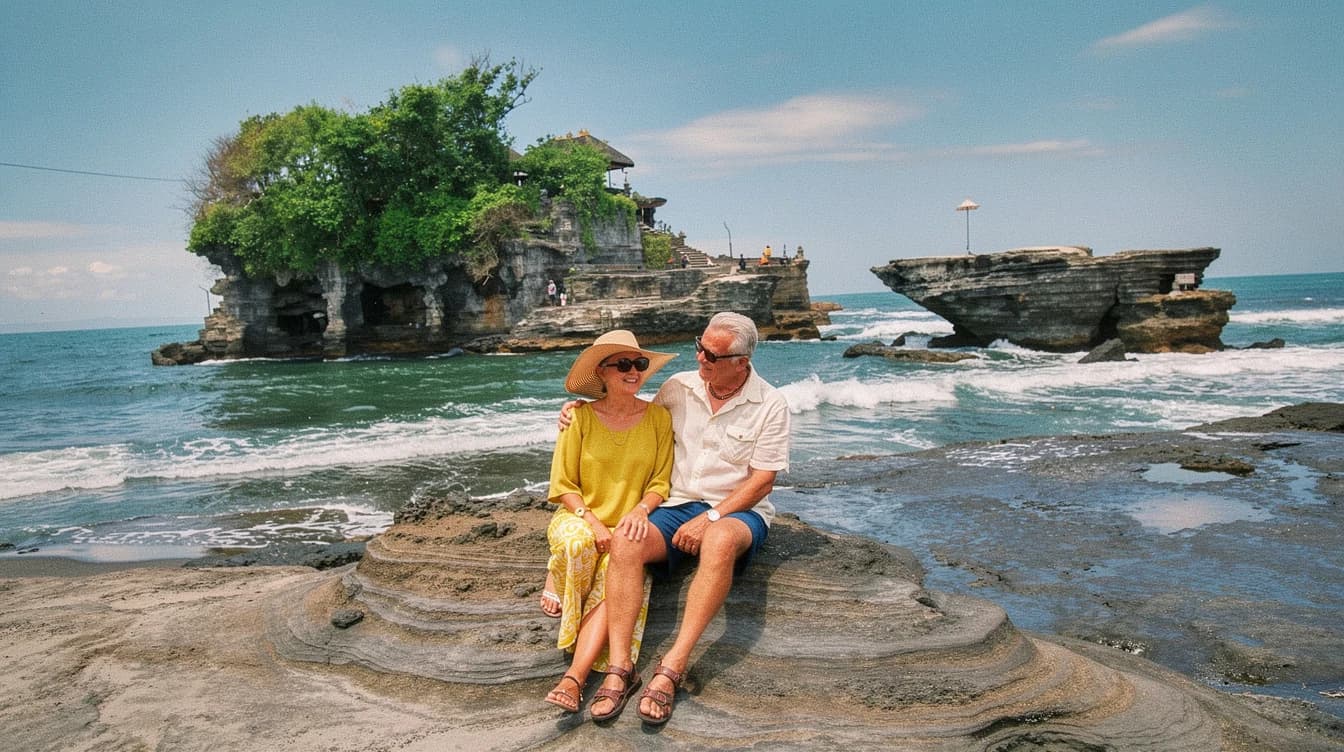
For many foreigners, the dream to retire in Bali is about a massive lifestyle upgrade. If a standard pension back home means a modest, budgeted existence, in Bali, it can mean a private pool villa, weekly massages, and a "done-for-you" lifestyle.
That’s why people also refer to it as the ultimate antidote to the Western corporate grind.
However, trading a high-stress life for island living requires navigating some practical realities. We receive several inquiries regularly, asking the same questions: Which visa fits my profile? Where on the island should I settle? And what will living there actually cost?
In this guide, we address each of these questions in detail so you can plan your move with clarity.
Visa Options for Retirement in Bali
Indonesia offers several pathways designed for foreign retirees, each with different age thresholds, financial requirements, and stay durations.
It is vital to understand that standard retirement permits are strictly residential. You cannot work, run a business, or freelance for local clients. If you want to stay active in business, you will need an investor or work permit instead.
The table below gives you a comparison of all available visa options for retirement in Bali.
| Permit Type | Purpose | Duration | Key Requirements |
|---|---|---|---|
| Second Home Visa (E33) | Long-term residence backed by capital | 5 or 10 years | IDR 2 billion deposit (~USD 130,000) in a state bank within 90 days |
| Silver Hair Visa (E33E) | Extended residence through self-sponsorship | Up to 5 years | Age 55+, USD 3,000/month passive income from abroad and USD 50,000 state bank deposit |
| Retirement KITAS (E33F) | Long-term residence on passive income | 1 year, renewable up to 5 years | Age 55+, USD 3000/month passive income from abroad, sponsor, local staff |
| Work KITAS (E23) | Employment with an Indonesian employer | 1 year, renewable | Corporate sponsorship and RPTKA approval |
| Investor KITAS (E28A) | Directing your own PT PMA company | 1–2 years, renewable | Director/Shareholder in a PT PMA with minimum paid-up capital of IDR 2.5 billion |
| Golden Visa | Residency-by-investment | 5 or 10 years | USD 350,000+ in bonds, shares, or state-bank deposit |
| Dependant KITAS | Direct family of a KITAS holder | Tied to primary visa | Legally married to KITAS holder or dependent child of primary holder |
Since the application process for almost all stay permits (KITAS) is similar, here’s what you need to know:
- Apply Online for eVitas: Prior to entering Indonesia, you or your registered agent submits your application online. Required documents typically include your passport (valid for at least 18 months), proof of income or capital, health insurance valid in Indonesia, and proof of local accommodation or sponsorship (if needed).
- Receive Electronic Approval: Once approved, your Electronic Limited Stay Visa (eVitas) is sent directly to your email as a PDF. No embassy or consulate visit is generally required.
- Enter Indonesia & Complete Biometrics: You enter Indonesia using your eVitas. Within your first weeks, visit your local Bali immigration office (Kantor Imigrasi) for a short biometric session (fingerprints and photo) to finalize your Electronic Stay Permit (e-ITAS / KITAS).
- Deposit Verification (If Applicable): Second Home Visa and Golden Visa applicants complete their financial proof by demonstrating their bank deposit or investment within 90 days of arrival.
If you are not sure which of these options is suitable for you, you can consult our local experts by filling out the form below.
Standard Retirement Permits in Bali (The E33 Category)
All residential retirement permits fall under the E33 visa category, which designates foreign nationals living long-term in Indonesia without local employment. Choosing the right permit depends on your age, whether you prefer to qualify using passive monthly income or a capital bank deposit, and how frequently you want to handle visa renewals.
- The E33F Retirement KITAS: This option works best for retirees aged 55 and older who have a reliable monthly pension and want to test living in Bali year by year. Because it requires a licensed Indonesian agency sponsor, your sponsor manages annual renewals, local address registrations, and immigration reporting on your behalf. Holding an E33F for five consecutive years opens a direct pathway to convert your status into a five-year permanent stay permit (KITAP).
- The Silver Hair Visa (E33E): If you want to sponsor yourself, this permit gives you complete freedom from agency contracts with a longer stay of up to five years. You will need a stronger financial baseline, including at least USD 3,000 per month in passive overseas income and a USD 50,000 deposit in an Indonesian state-owned bank. Since this is a multi-year permit, you also get to skip annual visits to the local immigration office.
- The Second Home Visa (E33): This route is for early retirees moving together with immediate family. There is no age requirement, and you qualify by maintaining a capital deposit in a personal account at a state-owned Indonesian bank. Your funds remain under your ownership and earn local interest. The permit allows your spouse, children, and parents to join as dependents under one primary financial commitment.
All E33 permit holders can sponsor dependent family members through matching Dependent KITAS applications. Dependents receive stay permits tied directly to the primary holder's validity period.
Work and Investment Permits During Retirement
As mentioned earlier, retirement permits don’t allow holders to work in Indonesia or start any commercial activities. If you want to earn income or run a business during your stay in Bali, the standard retirement visas above will not cover you.
In this case, you must secure a permit that is related to your planned activities.
- The Investor KITAS (E28A): This is the standard choice for foreigners who establish a foreign company (PT PMA) to own and direct a business. As a Shareholder and Director, an Investor KITAS allows you to legally manage your company, direct strategy, sign contracts, and hire staff. It exempts you from the foreign worker utilization plan (RPTKA) and labor levy fees. However, it does not allow you to perform local operational labor that an Indonesian employee could fill, such as cooking in the kitchen or working behind a retail counter.
- The Work KITAS (E23): If you plan to perform hands-on technical work in your own business, such as acting as the head chef in your restaurant or teaching classes as a lead instructor in your yoga studio, your PT PMA must sponsor you a Work KITAS. This process requires Ministry of Manpower approval, payment of the USD 1,200 annual foreign labor levy (DPKK), and a commitment to hire local Indonesian staff for skill transfer. It also covers retirees who accept formal employment or executive consulting roles with existing Indonesian companies.
- The Golden Visa: This provides long-term residency to investors who want to manage personal portfolios rather than run day-to-day corporate operations. You can invest capital into government bonds, public shares, or state-bank term deposits. It grants 5 or 10 years of multi-entry residency, lets you manage your private assets freely without a separate work permit, and automatically includes your immediate family members.
If you are on a Retirement KITAS and decide you want to work, you will need to cancel the retirement permit and apply for the appropriate work or investor visa.
Qualifying for Permanent Residency (KITAP)
A KITAP (Kartu Izin Tinggal Tetap) grants five-year renewable permanent residency, ending the requirement for frequent visa applications. Qualifying criteria depend on your visa history:
- Retirement Pathway (E33F): Hold a Retirement KITAS for 5 continuous years with the same sponsor.
- Second Home Pathway (E33): Hold a Second Home Visa for 3 continuous years.
- Investor Pathway (E28A): Hold an Investor KITAS for 3 to 5 continuous years as a Director or Shareholder in your PT PMA.
- Work Pathway (E23): Hold a Work KITAS for 5 continuous years with the same employer.
- Golden Visa Pathway: Direct permanent residency upon entry or convert after 3 continuous years, depending on your investment tier.
- Marriage Pathway: Stay legally married to an Indonesian citizen for at least 2 consecutive years.
Bear in mind, however, that immigration treats each visa category separately. If you cancel a Retirement KITAS to launch a PT PMA under an Investor KITAS, your continuous stay counter resets to zero for KITAP eligibility.
Emerhub manages complete visa applications on your behalf. If you are deciding which stay permit suits your plans best, our local advisors can verify your documents and map out the correct route.
Best Places to Retire in Bali
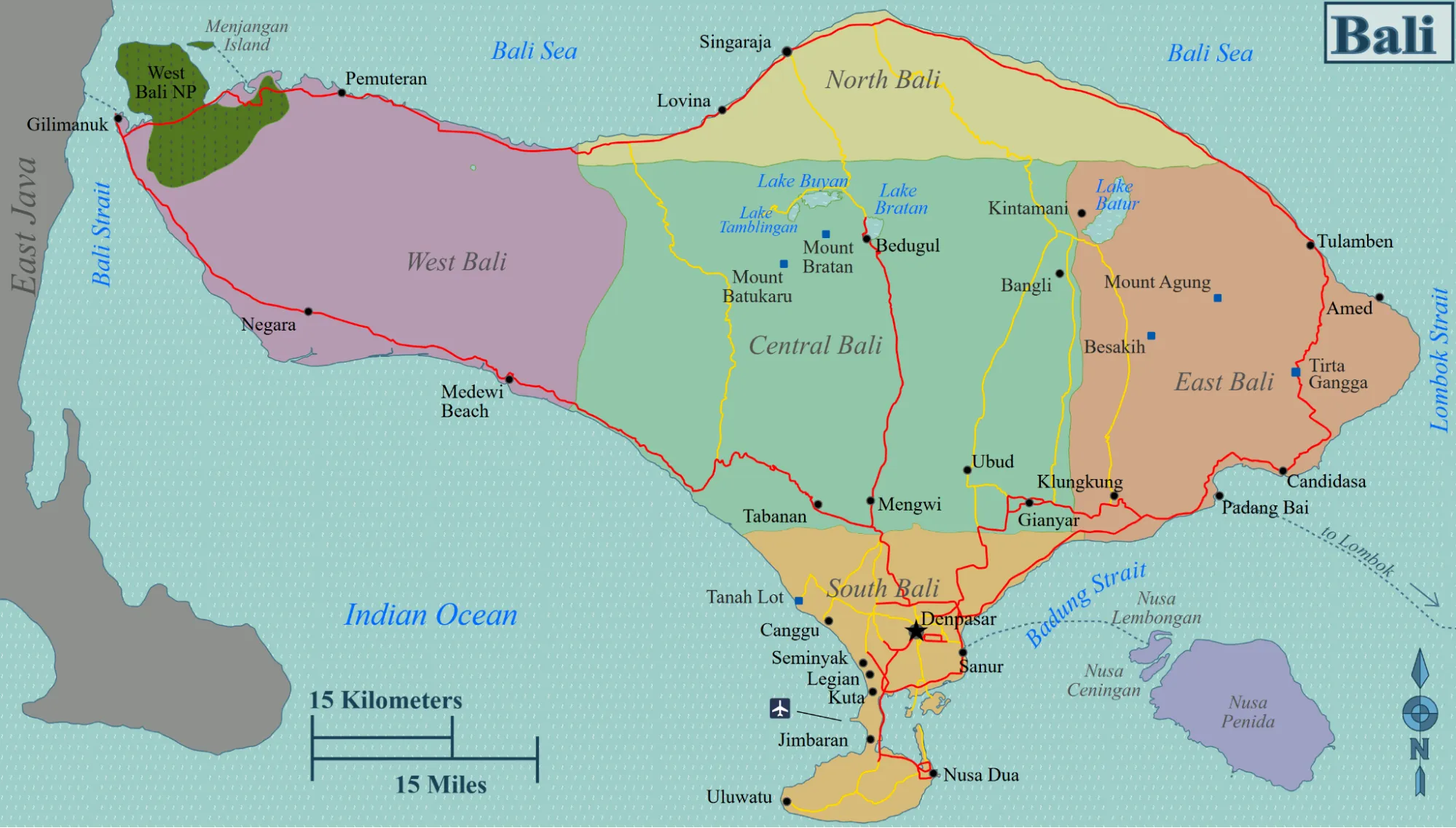
Your choice of location shapes everything from monthly rent to how quickly you can reach a hospital. Bali is a small island, but the difference between the urbanized South and other parts of the island is significant.
South Bali is where you’ll find international hospitals, expat communities, and everyday services concentrated. Sanur, Jimbaran, and Nusa Dua sit along this stretch, and most foreign retirees settle here for practical reasons.
The central highlands around Ubud offer a cooler, more cultural pace, with rice terraces and wellness studios instead of beaches. The cost of living is lower, and the community draws retirees who favor nature over convenience.
Further out, areas like Cemagi on the west coast and Candidasa in the east appeal to retirees who want lower rents and a quieter, more local lifestyle. North Bali around Lovina is the least developed stretch of the coast, with the lowest rents on the island and growing appeal among retirees seeking distance from the south.
| Area | Profile | Indicative Rent (1-2 bed villa, yearly lease) | Best For |
|---|---|---|---|
| Sanur | Flat terrain, beachfront promenade, established expat community | From ~USD 800/month | Retirees who prioritise healthcare and walkability |
| Ubud | Rice terraces, cooler air, arts and wellness culture, hilly terrain | From ~USD 700/month | Retirees drawn to nature and culture over beaches |
| Nusa Dua | Resort-style, landscaped, golf courses | From ~USD 1,200/month | Larger budgets, premium and secure environment |
| Jimbaran | Working coastal neighborhood, fish markets, local feel | From ~USD 600/month | Retirees who want local Balinese community life |
| Cemagi | Quiet coast, newer development, ocean views | From ~USD 500/month | Lower budget, space and nature |
| Candidasa | East Bali, slow pace, rice paddies, snorkelling | From ~USD 400/month | Retirees comfortable with distance from hospitals |
Keep in mind that rental figures above are estimates based on 2026 long-term lease pricing. Actual costs vary by property and season. Consult our property advisors for a tailored cost estimate.
Foreigners cannot own freehold land in Bali under Article 21 of the Basic Agrarian Law (UUPA No. 5 of 1960). Most retirees start with a yearly villa rental, which satisfies the accommodation requirement for a KITAS and lets you try an area before committing long-term. For longer security, leasehold agreements of 25 to 30 years are common.
For more insights on property ownership structures and buying process, see our guide on buying property in Bali as a foreigner. Our property advisors can also help you find secure housing that aligns with your budget and ideal location. Book a free consultation here.
How Much It Costs to Retire in Bali
Living in Bali is significantly cheaper than in most Western countries for a comparable lifestyle. Depending on your lifestyle choices, overall daily expenses run 50% to 70% lower than in Australia, the US, or Western Europe.
While expenses can vary greatly depending on your lifestyle choices, you can still live comfortably on a budget between USD 900 – USD 5,000 per month. Below you’ll find an overview of typical monthly expenses:
| Expenses | Cost Range (USD) |
|---|---|
| Rent-One-bedroom apartment in the city center to a three-bedroom villa in prime areas.- Prices can vary based on property type (whether it’s a standard apartment or a villa with a private pool) and location. | 300 - 1,500 |
| Utilities- Includes electricity, water, and gas.- Depends overall consumption. | 60 - 200 |
| Internet- High-speed internet connection. | 15 - 30 |
| Dining and Groceries- Mix of local and Western food, eating out, and cooking at home. | 300 - 600 |
| Transportation- Includes scooter rental ($50 - $70 per month), car rentals ($200-300 per month), and ride-hailing apps.- Excludes taxi fares, which tend to start from $0.30 to $0.60 per km. | 50 - 300 |
| Healthcare Insurance- Mandatory for all KITAS holders- International coverage valid in Indonesia- Ranges from basic plans to premium coverage with medical evacuation. | 45- 300 |
| Entertainment- Activities such as movies, gym membership, etc. | 100 - 300 |
| Domestic Staff- Mandatory for Retirement KITAS (E33F) holders. - Typically a part-time housekeeper or driver. | 150 - 350 |
| KITAS Application (one-off)- From general KITAS to KITAP (price based on Emerhub rates, excluding renewal fees). | 800 - 3,000 |
| Total Estimated Cost*Excluding one-off KITAS/KITAP fee. **Expenses vary significantly based on lifestyle and housing preferences. | 1,020 - 3,580 |
Plan Your Retirement in Bali with Emerhub
Our local team can be your single point of contact during your move to Bali. We manage your visa application and guide you through biometric registration and immigration coordination. As your stay continues, we handle annual renewals and reporting so you never have to track deadlines yourself.
We also help with the practical side of settling in, from setting up a local bank account to arranging your lease or property structure. If your plans evolve toward property investment or running a business, we can establish a PT PMA (foreign-owned company) and manage the ongoing compliance that comes with it.
If you are still in the planning stage, reach out for a free consultation through the form below. We will review your situation and map out the next steps for a smooth retirement in Bali.
Frequently asked questions
Can I work while on retirement KITAS in Bali?
The Retirement KITAS, Silver Hair Visa, and Second Home Visa are all residential permits. You are not allowed to work for a local employer, run a business, or take on freelance clients while holding any of them. Indonesian immigration treats this seriously, and violations can lead to permit cancellation and deportation. If you are planning to earn income during your retirement in Bali, you will need a different visa category. The Golden Visa is a partial exception, as holders can manage their own investments, but it does not cover employment with an unrelated company. On the other hand, work KITAS covers employment with a local company, while an investor KITAS allows you to direct your own PT PMA. Our local advisors in Bali can help you work out which route fits your situation.
How long until I qualify for permanent residency in Indonesia?
The timeline depends on which permit you hold. If you're on an E33F Retirement KITAS, you can apply for a KITAP (Permanent Stay Permit) after five years. The same five-year timeline applies if you hold a Golden Visa, Work KITAS or Investor KITAS. The Second Home Visa, however, gets you there faster at three years. Once you have a KITAP, it is valid for five years and renewable indefinitely. This removes the frequent renewal cycle that comes with a KITAS. If you see Bali as a permanent home, factor the KITAP timeline into your visa choice from the start.
Can my family join me on a retirement visa in Bali?
All retirement permits allow dependents, though the coverage varies by visa type. The Retirement KITAS (E33F) and Silver Hair Visa (E33E) allow your spouse to apply for a Dependent KITAS tied to your permit. They don’t need to meet the age or income requirements independently, but you will need an officially translated and legalized marriage certificate. The Second Home Visa has the broadest coverage of the three, as it extends to your spouse, children, and parents under the same deposit. The Golden Visa also includes your spouse and children at no additional investment threshold. Each dependent permit shares the same duration as the primary holder's visa.
Can I buy property in Bali as a retiree?
Foreigners cannot own freehold land. However, you can hold a Hak Pakai (Right to Use) title for residential property if you have a valid KITAS or KITAP, or you can purchase property through a PT PMA company under a Hak Guna Bangunan (Right to Build) title. Emerhub can guide you through property ownership structures that comply with Indonesian law.
Do I need to hire a domestic employee for a Retirement KITAS?
The domestic staff requirement only applies to the E33F Retirement KITAS. You need to employ at least one Indonesian national during your stay, and immigration can ask for proof when you renew. Most retirees hire a part-time housekeeper or driver, which typically costs between USD 150 and USD 350 per month depending on the role and the area. The Silver Hair Visa, Second Home Visa, and Golden Visa do not have this requirement.